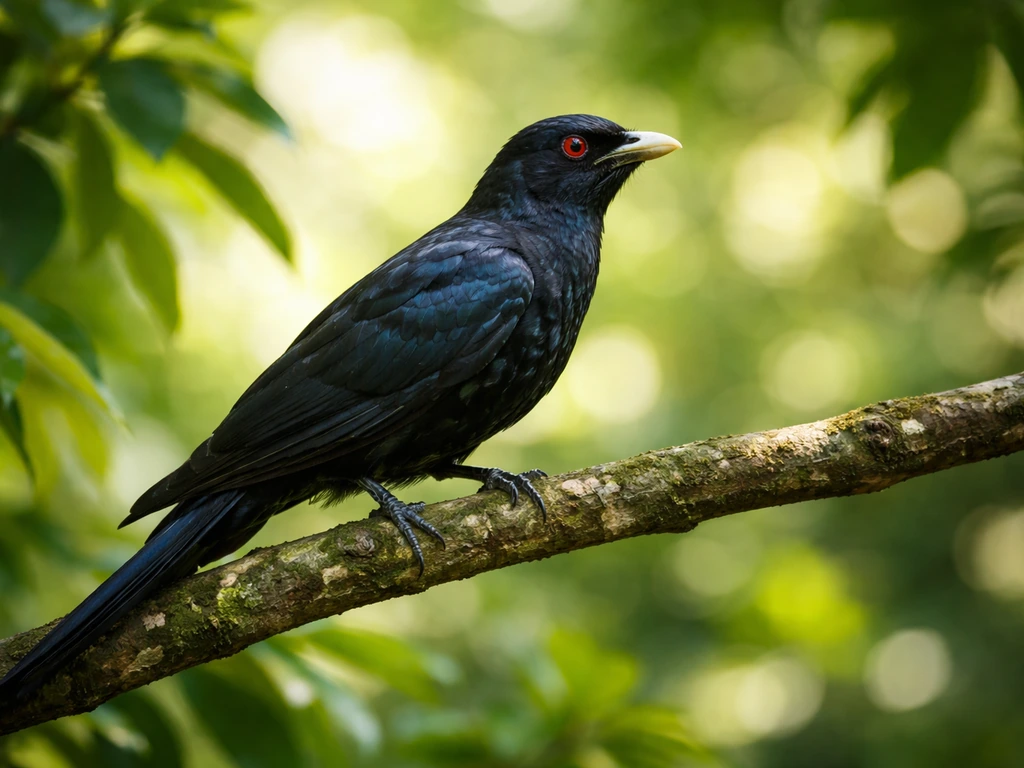
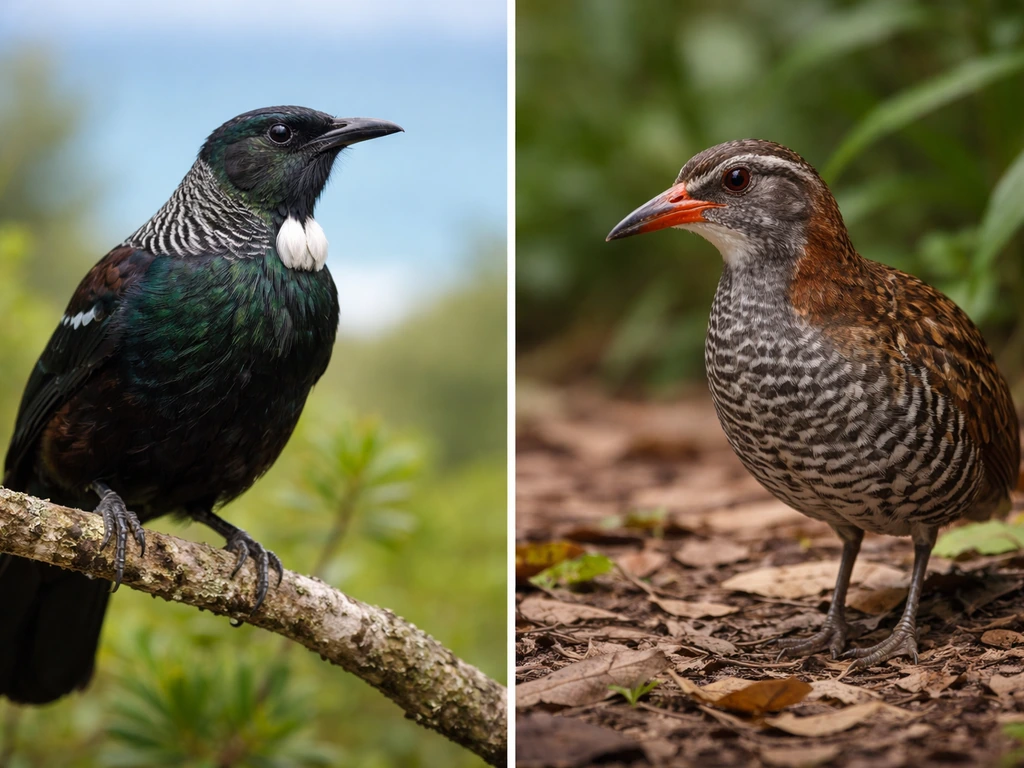
Most people searching 'koko bird meaning' are looking at one of two very real birds: the tūī of New Zealand (Prosthemadera novaeseelandiae), which carries 'koko' or 'kōkō' as its traditional Māori name, or the Guam rail (Gallirallus owstoni), a critically endangered flightless bird whose local Chamorro name is 'ko'ko'', often written simply as 'koko.' Which one fits depends almost entirely on where you encountered the term. If someone in New Zealand or a Māori-language context mentioned a koko bird, they almost certainly mean the tūī. If you saw it in a conservation article, a Guam travel piece, or a Smithsonian exhibit, they mean the rail.
Koko Bird Meaning: Origins, Symbolism, and How to Identify It

Marcus Whitley
2 Jun 2026
Where the name 'koko' actually comes from

The word 'koko' (and its accented form 'kōkō') traces back to Proto-Polynesian roots and is reconstructed in Polynesian linguistics as a term for a specific type of bird. In te reo Māori, 'kōkō' is a well-documented noun listed in the Te Aka Māori Dictionary as meaning tūī, with the full species name being Prosthemadera novaeseelandiae. The New Zealand Department of Conservation officially lists 'koko' as an alternative name for the tūī in government documents, and the New Zealand Garden Bird Survey's species factsheet uses 'kōkō' right alongside 'tūī' as equivalent names for the same bird.
On Guam, 'ko'ko'' evolved separately within the Chamorro language as the local name for the endemic Guam rail. The spelling difference, the apostrophe marks a glottal stop in Chamorro, is linguistically significant, but in casual English writing it almost always gets flattened to 'koko.' That's where the confusion starts online. Both names are genuinely old, genuinely tied to specific birds, and genuinely used by real communities. They just come from different parts of the Pacific.
Merriam-Webster does include 'koko' as an English dictionary headword with 'tui' as the bird-related definition, and it notes a possible Niger-Congo language origin pathway for at least one sense of the English spelling. So the word has picked up multiple etymological threads over time, which is part of why it can feel slippery when you first go searching for it.
Which 'Koko' bird are people actually talking about?
There are three main versions of 'koko bird' you'll run into, and it's worth separating them cleanly.
The tūī (kōkō), New Zealand honeyeater
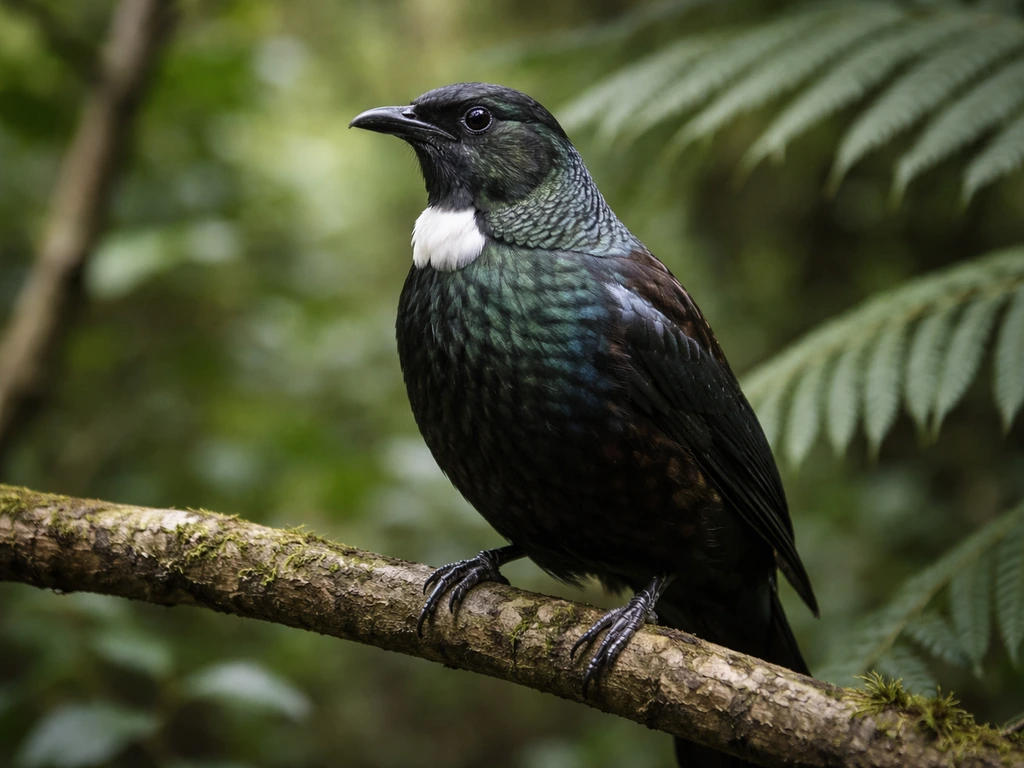
This is probably the most linguistically grounded use of 'koko' as a bird name. The tūī is a large, iridescent black honeyeater with a distinctive white throat tuft and an extraordinary vocal range. In Māori tradition and New Zealand English-language birding, 'kōkō' is an accepted alternative name, not a nickname or a metaphor. It's the same bird called the 'parson bird' by early European settlers (because of that white collar). Wiktionary's Māori entry explicitly defines 'koko' as 'a species of honeyeater, Prosthemadera novaeseelandiae, endemic to New Zealand,' citing Māori lexical sources. If you've seen this term in a New Zealand school curriculum, a birding field guide, or a Māori cultural context, this is almost certainly what's meant.
The Guam rail (ko'ko'), critically endangered island bird
The Guam rail is a small, flightless bird that was listed as endangered in 1984 after invasive brown tree snakes wiped out most of its wild population. The Smithsonian National Zoo, the U.S. Fish and Wildlife Service, and Scientific American all use 'koko' or 'ko'ko'' as the bird's primary common name alongside its scientific name. The Guam Museum Foundation references a 'koko hilitai' legend context, suggesting there's genuine local cultural material attached to the name. If you've seen 'koko bird' in a conservation biology article, a zoo exhibit, or anything mentioning Guam or Chamorro culture, this is the bird.
Fictional, nickname, and pop-culture Kokos

Not every 'Koko bird' reference is a real species. The most famous non-bird Koko is Koko the gorilla, the subject of long-running American Sign Language research whose story is so well-known that National Geographic covered her use of signs including the word 'bird. ' Some search traffic for 'koko bird meaning' is almost certainly people trying to untangle the gorilla Koko's relationship to bird vocabulary.
If you're really asking about kahakos bird meaning, you'll want to verify which bird name and culture the term refers to. This is why the question often turns into the koko bird meaning for the tūī or the Guam rail depending on the context kokok bird meaning. Beyond that, 'Koko' appears as a character name and pet name in various children's media and fiction.
Wikipedia's disambiguation page for 'Koko' lists the Guam rail alongside non-bird entries like the gorilla, which tells you exactly how jumbled this gets in search results.
What the koko bird symbolizes
The symbolism attached to 'koko' depends heavily on which bird and which culture you're working with, and the two main traditions are quite different from each other.
The tūī in Māori culture
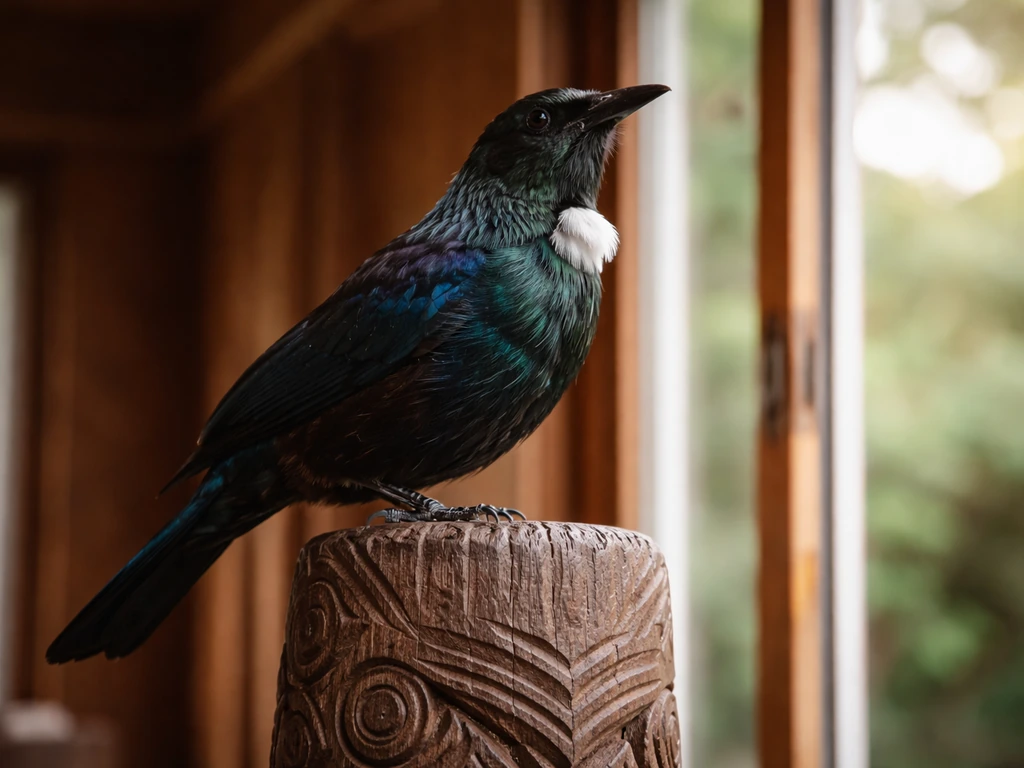
In Māori tradition, the tūī (kōkō) is strongly associated with eloquence, voice, and the beauty of communication. [The Science Learning Hub notes a traditional compliment, 'me he korokoro tūī,' meaning 'a throat like a tūī'](https://www. sciencelearn. org.
nz/images/5373-tui-koko), given to someone who sings or speaks beautifully. This isn't incidental. The tūī has one of the most complex vocal systems of any bird in the world, capable of mimicking other birds and even human speech. It can produce sounds outside the human hearing range simultaneously with audible notes, which gives it a layered, almost otherworldly call.
That vocal richness made it a natural symbol for eloquent speech, poetic expression, and spiritual communication in Māori culture. The tūī is also a taonga (treasured species) under New Zealand conservation law, which layers civic and cultural significance onto the older symbolic meaning.
The ko'ko' in Chamorro culture
On Guam, the ko'ko' carries the weight of being the island's only endemic land bird that survived into modern times. That makes it a symbol of resilience and survival in a very literal sense: the bird was pushed to the brink of extinction by an invasive species and has been brought back through intensive breeding and reintroduction programs on Rota and Cocos Island.
In Chamorro cultural identity, the ko'ko' functions as a kind of national bird, a living connection to the island's pre-colonial ecosystem. The Guam Museum Foundation references local legend material around the bird, situating it within the island's storytelling tradition. When locals talk about the ko'ko', there's often pride and grief mixed together: pride in its survival, grief at what was nearly lost.
How this compares to other bird symbolism
Unlike ravens (death, mystery, transformation) or doves (peace, purity), the koko/kōkō bird doesn't carry universal cross-cultural symbolism that you'd recognize across continents. Its meaning is deeply place-specific. You won't find 'koko bird' appearing in Western European mythology or East Asian symbolism the way cranes or owls do. That actually makes it more interesting in some ways: the meaning is rooted in real ecological and community relationships, not abstracted into generic metaphor. A koel bird, for comparison, carries much more widely shared omen symbolism across South and Southeast Asia. The tūī and the ko'ko' stay closer to their home ground.
Slang, idioms, and how 'koko' shows up in everyday speech
In everyday New Zealand English, 'kōkō' is used matter-of-factly as just another name for the tūī, you'll see it in school materials, garden bird count surveys, and birdwatching social media without any special dramatic weight. It's not slang; it's a legitimate alternate name that educated New Zealanders and Māori language speakers use interchangeably with tūī.
In Hawaiian, 'koko' exists as a separate word with different meanings entirely (including a traditional proverb context, 'Koko 'iole ka ua i ke kula'), which shows that the same spelling carries different semantic weight depending on which Pacific language tradition you're drawing from. This matters practically: if you see 'koko bird' in a Hawaiian context, you should not automatically assume it means the same thing as the Māori 'kōkō.'
Outside Pacific language contexts, 'koko' as a bird term doesn't have a meaningful presence in English slang or idiom. Unlike 'robin,' 'crane,' or 'cuckoo' (which all have English idiomatic uses), 'koko bird' hasn't crossed over into general English metaphor. If someone uses 'koko bird' in casual speech and they're not New Zealand or Guam-connected, they're probably referencing something specific they read or heard rather than using a standard idiom.
What people usually assume when they see or hear about a koko bird
When people outside New Zealand or Guam encounter 'koko bird,' the reaction is usually one of three things. First, they assume it must be a spiritual omen or message bird, this is a common default when any unfamiliar bird name shows up, especially if someone spotted a bird they couldn't identify and found the term in a spiritual or nature-symbolism article. Second, they assume it's a regional nickname for a common bird they already know. Third (especially after a few minutes of searching), they end up confused because Google returns a mix of tūī results, Guam rail conservation pages, and gorilla Koko stories.
The omen interpretation isn't really supported by traditional Māori or Chamorro sources in the way that, say, a raven's appearance is coded into Western folklore. The tūī is meaningful and spiritually significant in Māori culture, but as a living taonga, not typically as an individual omen-bird that signals specific events the way some traditions treat certain species. If you're reading a website claiming that 'seeing a koko bird means X is about to happen in your life,' treat that with skepticism, it's almost certainly importing generic bird-omen content that has nothing to do with the actual cultural tradition around the word.
How to figure out which koko bird someone actually means
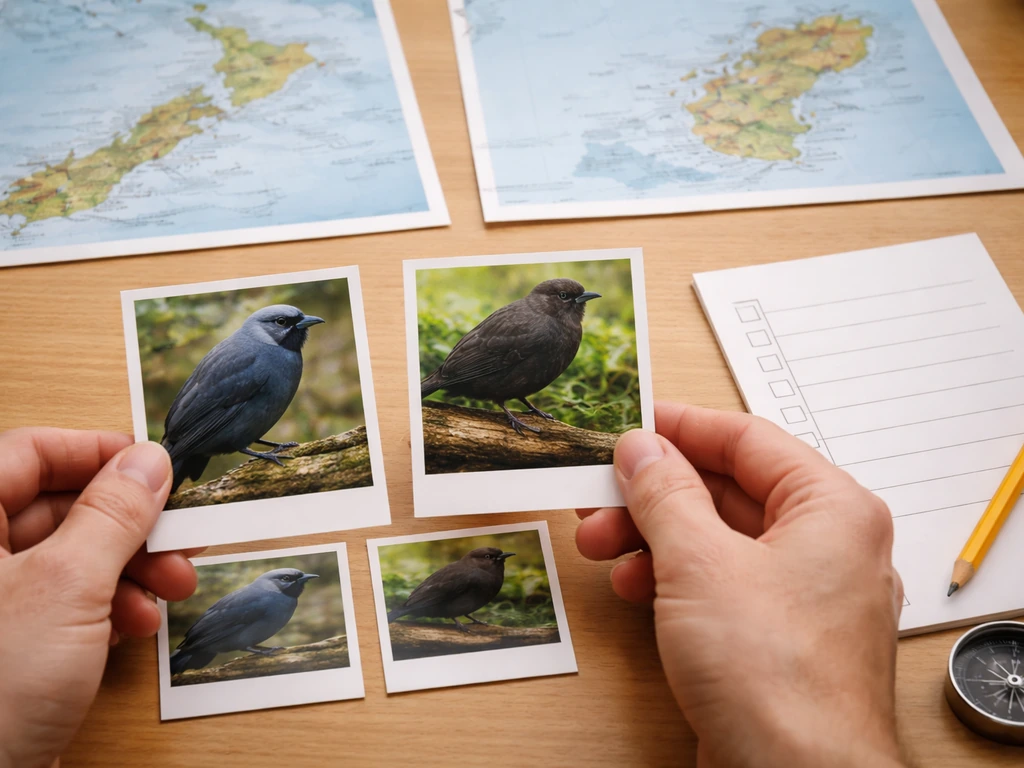
If you're trying to pin down what 'koko bird' means in a specific context, an article, a conversation, a social media post, here's a practical workflow that actually works.
- Check the geographic context first. New Zealand, Māori language materials, or Pacific Island cultural content pointing toward New Zealand? Almost certainly tūī (kōkō). Content from Guam, Chamorro culture, conservation biology, or U.S. Fish and Wildlife materials? Almost certainly the Guam rail (ko'ko').
- Look at the physical description. The tūī is a medium-large glossy black bird with a white throat tuft, a curved honeyeater beak, and a famously complex song. The Guam rail is a small, brownish-gray flightless bird with a striped chest, adapted to ground-level island life. If the article or photo shows either of these, you can confirm immediately.
- Check whether there's an apostrophe or macron. 'Ko'ko'' with an apostrophe strongly signals the Chamorro name for the Guam rail. 'Kōkō' with macrons points to Māori usage for the tūī. Plain 'koko' without diacritics could be either, but context usually clarifies.
- Search the species name directly. Once you have a candidate, search 'Prosthemadera novaeseelandiae' for the tūī or 'Gallirallus owstoni' for the Guam rail. The Smithsonian Zoo page, DOC New Zealand pages, and IUCN species profiles are your most reliable verification sources — they won't conflate the two.
- Be skeptical of spiritual interpretation sites. If a page claims 'koko bird' has specific omen meanings (prosperity, death, change, etc.) without tying that claim to Māori or Chamorro tradition specifically, it's likely generic bird-symbolism content that has borrowed the name without the cultural depth.
It's also worth knowing that 'koko bird' sits in a cluster of similarly-structured Pacific and regional bird name terms that people frequently search together. You can apply the same approach to the kolokolo bird meaning to figure out which regional species or tradition the term refers to. Terms like kokok bird, kolokolo bird, and koel bird each carry their own specific regional meanings, the koel in particular is worth looking into if you're exploring bird symbolism in South or Southeast Asian contexts, since it has a much richer cross-cultural omen tradition than the koko. If you’re comparing koko symbolism to other bird omens, the koel bird meaning is commonly discussed in South and Southeast Asian traditions as well.
The short version, if you need it fast
| Term | Bird | Region | Key symbolism |
|---|---|---|---|
| kōkō / koko | Tūī (Prosthemadera novaeseelandiae) | New Zealand / Māori | Eloquence, voice, treasured native species |
| ko'ko' / koko | Guam rail (Gallirallus owstoni) | Guam / Chamorro | Resilience, survival, endemic identity |
| Koko (pop culture) | Not a bird — gorilla Koko | American English | Language research, cross-species communication |
| koko (general) | Tui (English dictionary sense) | General English | Alternative name, no strong omen tradition |
The honest answer to 'koko bird meaning' is that the term points to real birds with real cultural weight, you just need to know which Pacific tradition you're working within to land on the right one. Once you've identified that, the meaning becomes specific, grounded, and genuinely interesting rather than vague.
FAQ
How can I tell immediately whether ‘koko bird meaning’ refers to the tūī or the Guam rail?
In most cases, the quickest deciding factor is location in the text you found. If it mentions New Zealand, te reo Māori, or general birdwatching categories like “garden bird survey,” it will be the tūī (kōkō). If it mentions Guam, Chamorro, conservation breeding programs, or island endemics, it will be the Guam rail (ko’ko’).
Do the macron (kōkō) and the apostrophes (ko’ko’) change the meaning?
Be careful with spelling and punctuation. “kōkō” is the Māori form for the tūī, while “ko’ko’” (with apostrophes) is a Chamorro spelling marker (glottal stops) for the Guam rail. If an article flattens “ko’ko’” to “koko” without any Guam context, assume it may be mixing sources or oversimplifying names.
Can I use koko bird meaning as an omen or prediction for my life?
Yes, but not in a fixed “universal omen” way. Māori and Chamorro associations are tied to living species and cultural voice or resilience themes, not a standardized “if you saw it then X will happen” prediction system. If a page gives a specific personal forecast tied to seeing a “koko bird,” treat it as modern content that may not reflect traditional sources.
What should I search for if Google keeps mixing in Koko the gorilla when I want bird meaning?
If you’re searching and you keep seeing Koko the gorilla results, you can filter by adding keywords that lock onto the bird usage, like “tui,” “honeyeater,” “Guam rail,” “Gallirallus owstoni,” or “Chamorro.” Without those, generic search engines often blend animal and character results.
If I’m reading in a different Pacific language context, can I assume “koko bird” still means the same thing?
In the New Zealand context, treating “kōkō” as just another everyday name for tūī is usually correct, especially in school, surveys, and birdwatching content. In other language contexts like Hawaiian, “koko” can have unrelated meanings, so don’t assume every “koko” bird reference is the same species or symbolism.
Is ‘koko bird’ used as an English slang or metaphor, or is it usually literal?
A common mistake is reading the word “koko” as an English idiom like “cuckoo” or “robin.” For English speakers outside New Zealand and Guam, “koko bird” usually is not an established metaphor and instead points to a specific article or species-name usage you should interpret literally once the bird is identified.
When people say “meaning,” do they usually mean spiritual symbolism, or something else like cultural identity?
Yes. Many people interpret “meaning” as spirituality when it can be cultural description. For tūī, symbolism commonly centers on voice, eloquence, and communication. For the Guam rail, symbolism often emphasizes survival, resilience, and the community effort behind reintroduction. Once you identify the species, the “meaning” becomes less vague.
What practical clues in a text confirm the species being discussed?
Try a context check on the page: look for scientific name, region, or conservation framing. If you see Prosthemadera novaeseelandiae or “parson bird,” it is the tūī. If you see Gallirallus owstoni, endangered status tied to invasive brown tree snakes, or Guam references, it is the Guam rail.
Next Article
Koel Bird Meaning in English: Species, Symbolism, Origins
Koel bird meaning in English: species ID, word origin, symbolism, cultural uses, and tips to spot the koel correctly.