
When someone says or writes 'kokok bird,' they almost always mean one of two things: a rooster (specifically its crowing sound, which is rendered as 'kokok' in Indonesian and Malay), or an owl (because 'kokok-beluk' is a Malay term for owl, and at least one Indigenous Australian tradition calls the powerful owl 'Kokok'). The most common answer, by far, is the rooster. If you saw 'kokok' in an Indonesian or Malay caption, poem, or social post, it's almost certainly a rooster crow.
Kokok Bird Meaning: What Kokok Really Refers To

Marcus Whitley
6 Jul 2026
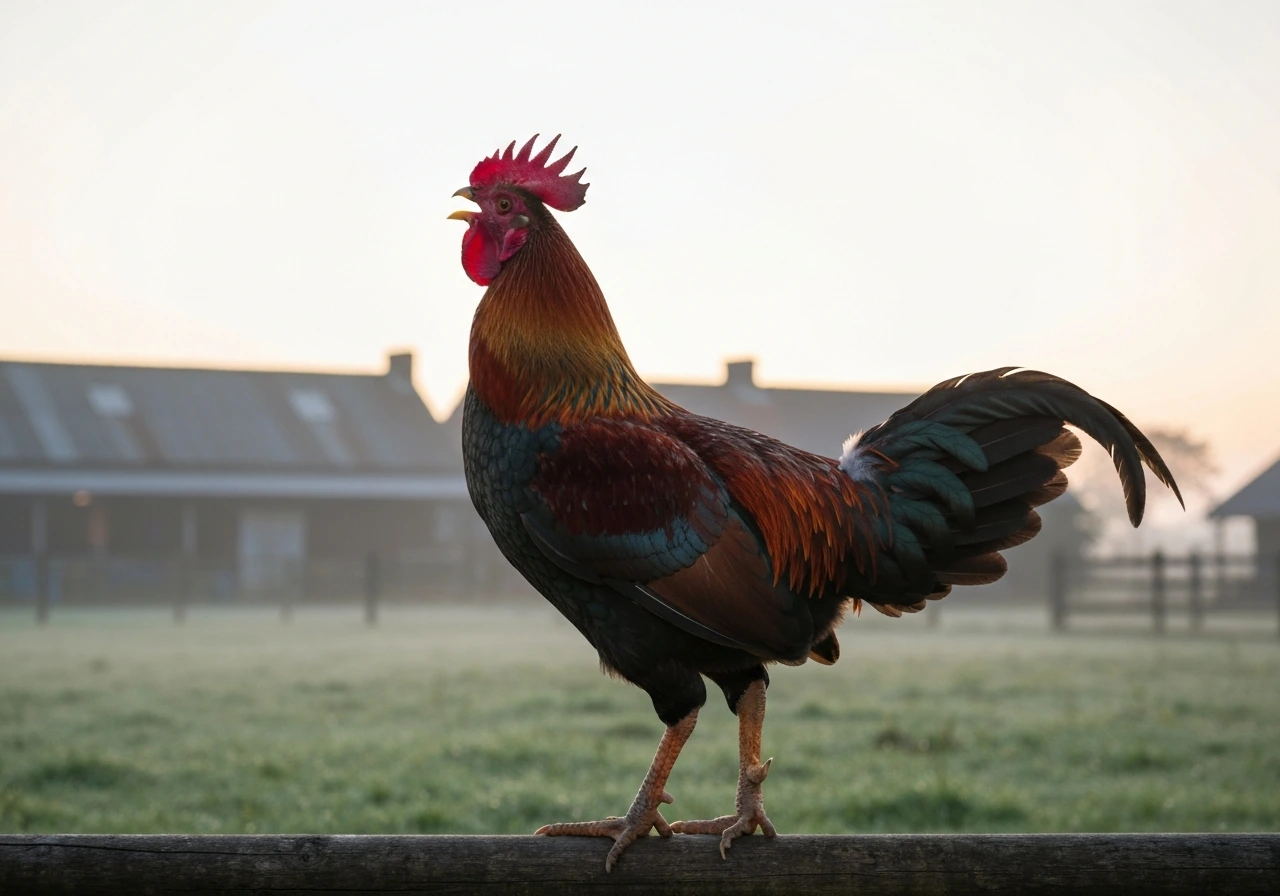
What 'kokok' actually means as a bird sound
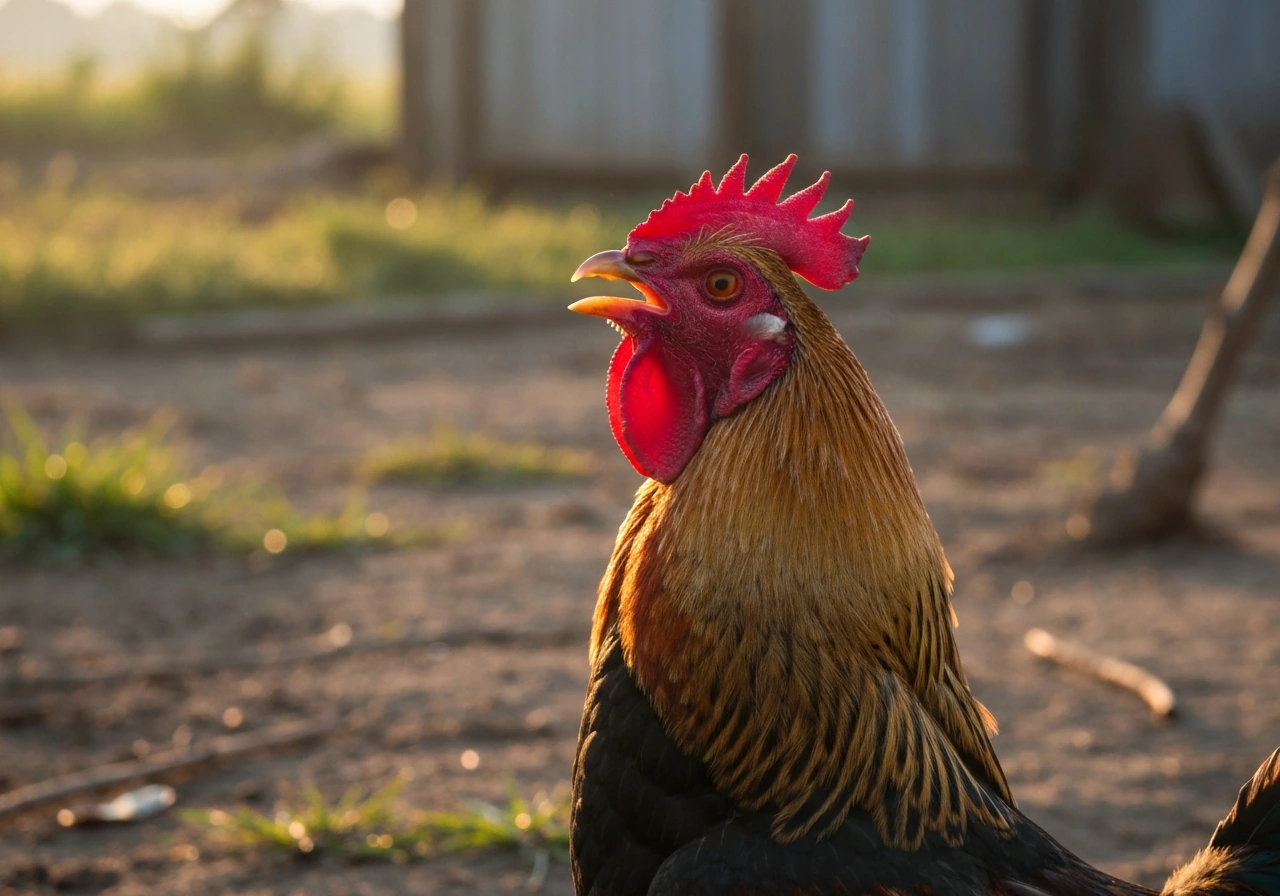
In Indonesian, 'kokok' is a legitimate dictionary word (listed in the KBBI, the official Indonesian language dictionary). It's an onomatopoeia for the sound a male chicken makes, and the verb form 'berkokok' means 'to crow.' The sound itself, when fully spelled out, is usually written as 'kukuruyuk' in Indonesian, which is the equivalent of English 'cock-a-doodle-doo.' So 'kokok' functions as the noun or verb ('the crow' / 'to crow'), while 'kukuruyuk' is the actual phonetic imitation of the sound.
In Malay, the word works similarly but extends a little further. You have 'kokok' for the rooster crow, but also 'kokok-beluk,' which explicitly refers to an owl. That compounding of the word to cover a second bird is worth noting, because it shows how the same root syllable gets stretched to describe different nocturnal or wild calls depending on context.
Cross-linguistically, the syllable pattern 'ko-kok' or similar reduplicated forms show up across multiple languages to describe bird calls, which is part of why the term feels intuitive to speakers from very different regions. Humans tend to map bird sounds onto the consonants and vowels available in their own language, so what sounds like 'cock-a-doodle-doo' in English comes out as 'kukuruyuk' in Indonesian or closer to 'kokok' in certain regional dialects and neighboring languages.
Which bird people usually mean when they say 'kokok bird'
The answer shifts depending on where the person is from and what they're describing. In other words, the kolokolo bird meaning changes with region and the specific context where the term appears. Here's how to read it by region and context:
| Region / Context | Most likely bird | Why |
|---|---|---|
| Indonesia (standard usage) | Rooster (male chicken) | 'Kokok' / 'berkokok' means rooster crow in KBBI |
| Malay-speaking regions | Rooster OR owl | 'Kokok' = crow; 'kokok-beluk' = owl |
| Indigenous Australian tradition (Dawson, 1900) | Powerful owl (Ninox strenua) | The powerful owl is called 'Kokok' and calls 'kokok-kokok' |
| Ethnobiology / folk naming (some Indigenous languages) | Ground owl | 'Kokok' recorded as folk name for ground owl |
| TikTok / viral posts (no regional flag) | Rooster (most probable default) | Indonesian/Malay audiences dominate this usage online |
The powerful owl connection comes from a 1900 ethnographic account documenting Aboriginal Australian beliefs. In that tradition, an owl known as 'Kokok' was considered a serious omen, associated with death and evil. It called with a repeating 'kokok-kokok' sound, which is almost certainly how it earned the name. That's a very different cultural weight than the Indonesian rooster crow, and it's a good example of why pinning down a single answer to 'kokok bird meaning' requires knowing where the word is being used. If you are trying to pin down koko bird meaning, this owl-based usage is the main “other” interpretation to compare against the Indonesian rooster version.
Where you're most likely to encounter 'kokok bird'
Indonesian and Malay poetry and folk sayings
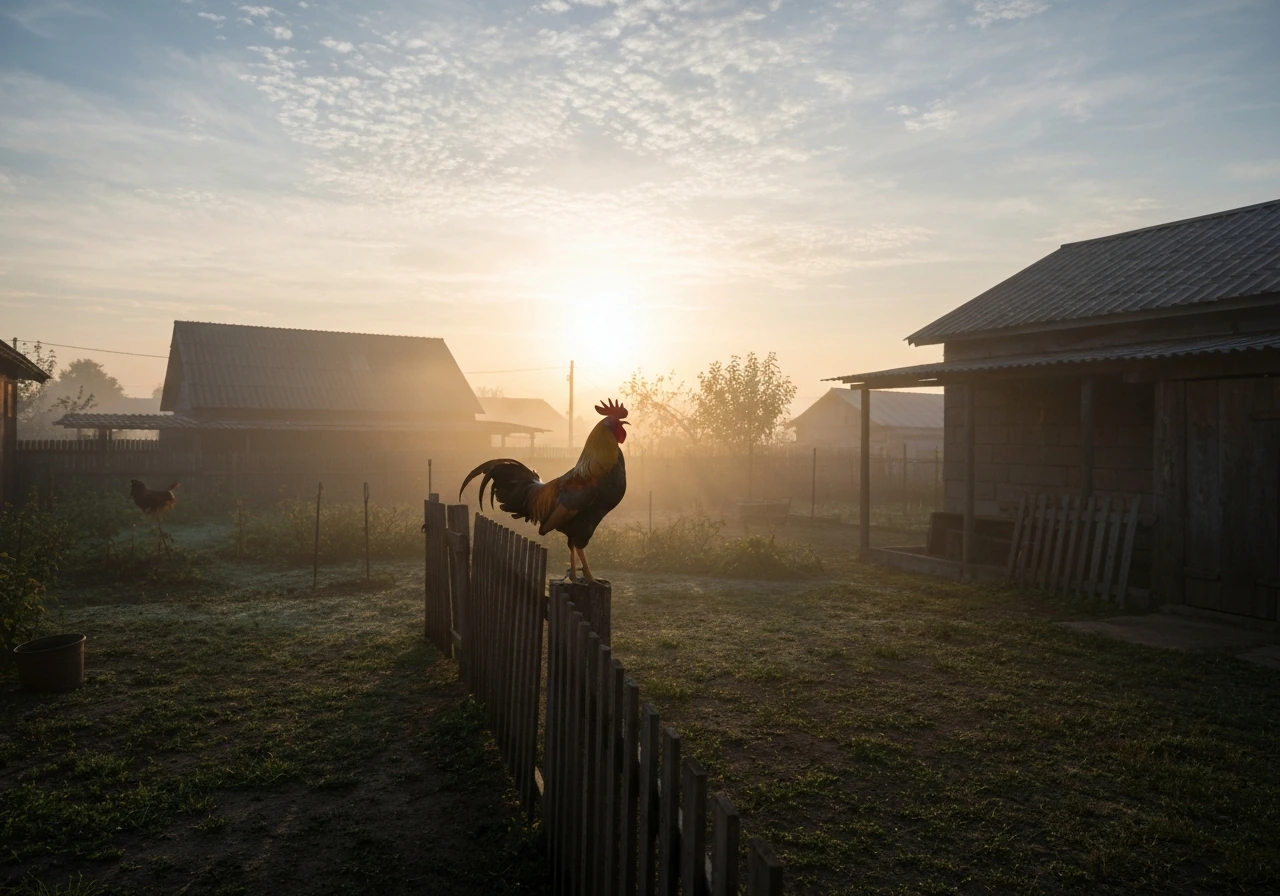
The rooster's crow at dawn is a deeply embedded image in Indonesian and Malay culture. 'Berkokok' at 'dini hari' (early morning) is a recurring phrase in traditional poetry and storytelling, used to signal the arrival of morning, the call to prayer, the end of night. A rooster that 'berkokok' is doing its job: announcing the day. In literature and folk narratives, this carries connotations of alertness, discipline, and the natural order of time.
TikTok, memes, and viral captions
On social media, 'kokok' often appears in Indonesian-language content as a sound effect label, a funny caption under rooster videos, or a nostalgic rural reference. You'll see it in short-form videos set in kampung (village) environments, paired with early morning aesthetic content. It's also been used in playful onomatopoeia battles where commenters list how roosters sound in their language, and 'kokok' reliably shows up from Indonesian and Malaysian users. In a related r/AskReddit discussion about rooster sounds in different languages, commenters explicitly mention “kokok” as the rooster call they hear in their language context.
Folklore and storytelling
Beyond Indonesia and Malaysia, the owl versions of 'kokok' live in older ethnographic and folk traditions. The Aboriginal Australian account of Kokok the powerful owl is specifically tied to death omens and fear, which puts it in the same symbolic category as ravens in European tradition or the koel bird in South Asian folklore. If you're reading older anthropological texts and see 'Kokok' capitalized and referring to a bird with ominous associations, you're almost certainly in Australian Indigenous territory.
Symbolism and cultural meaning tied to 'kokok'
The rooster: dawn, discipline, and spiritual alertness
In Indonesian and broader Southeast Asian culture, the rooster's crow at dawn is tied to spiritual awakening and the rhythm of daily life. The sound signals the transition between night and day, which in Islamic practice connects to Fajr prayer. A rooster that 'berkokok' at the right time is a symbol of natural order. In folk belief, a rooster crowing at unusual hours, especially midnight, can be interpreted as an omen or warning, flipping the symbol from positive to unsettling.
Across Javanese and Balinese traditions, roosters also carry associations with courage and vigilance. Cockfighting, though controversial, has deep ceremonial roots in Balinese Hindu practice, where the blood drawn is considered a ritual offering. This gives the bird a dual symbolic life: both the gentle herald of morning and a creature associated with aggression and sacrifice.
The owl: death omens and nocturnal mystery
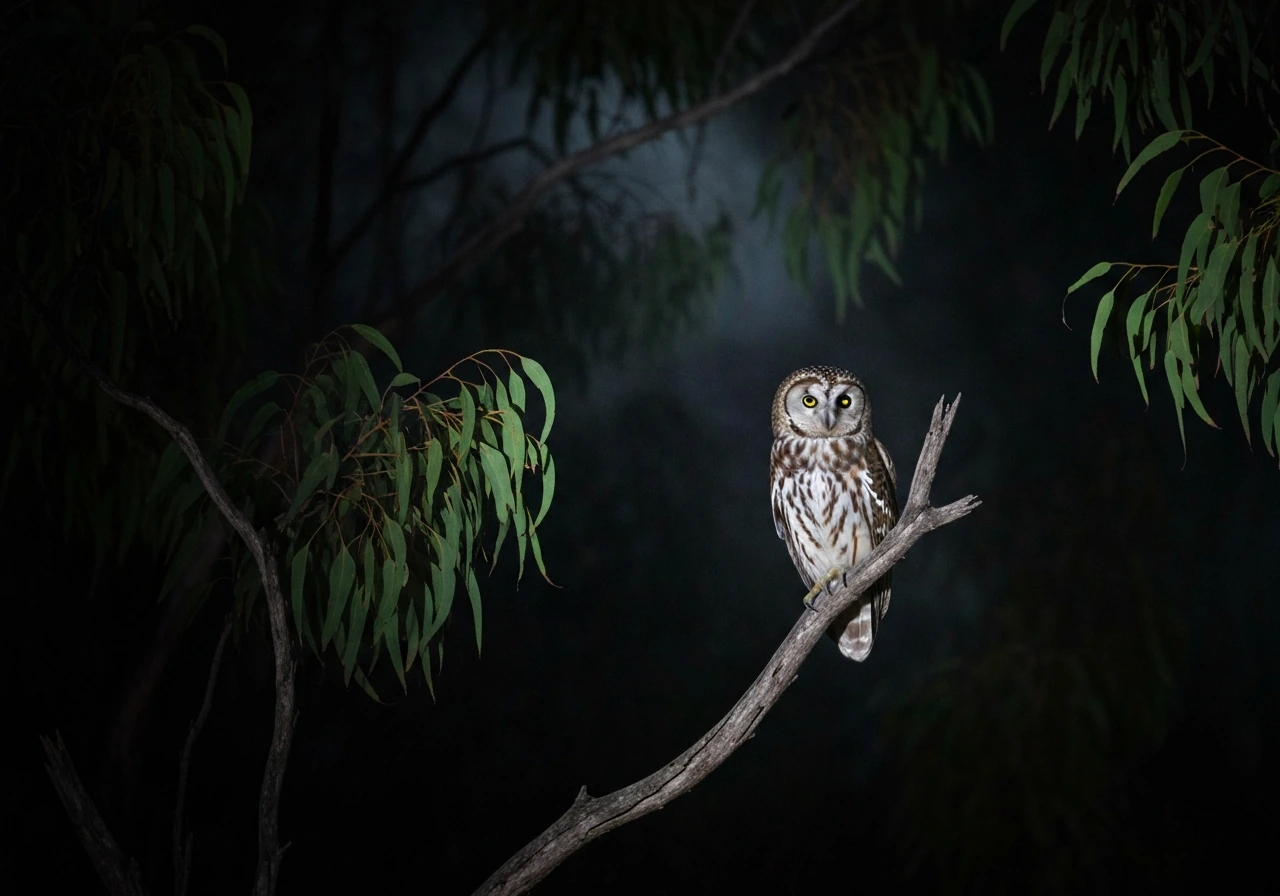
When 'kokok' points to an owl, the symbolism shifts entirely. Explorations in Ethnobiology (2013) includes folk bird-name entries that record “kokok” as “ground owl” in at least one Indigenous language context When 'kokok' points to an owl. The powerful owl of Australian Aboriginal tradition was feared rather than revered. Its call in the night was a bad sign, potentially indicating that someone nearby would die or that malevolent forces were active. This tracks closely with how owls are treated symbolically across many cultures: in Malay folk belief, certain owl calls at night are considered inauspicious, and 'kokok-beluk' carries an eerie, unsettling quality compared to the bright morning energy of the rooster's crow.
If you're interested in how overlapping call-sounds generate overlapping symbolism, it's worth noting that birds like the koel and kolokolo carry similarly layered meanings in their respective traditions, where the sound itself becomes the cultural trigger for interpretation. The koel bird meaning is also often discussed in South Asian folklore, where the bird’s call carries symbolic weight.
How to figure out which bird 'kokok' means in your specific case
Use this checklist to narrow it down:
- Check the language of the source. If it's Indonesian or Malay content, the default answer is rooster. If it's an older English-language ethnographic text discussing Australian Aboriginal beliefs, it's likely the powerful owl.
- Check the time of day mentioned. Dawn or early morning = rooster ('berkokok' at 'dini hari'). Night or late evening = owl (kokok-beluk or the Kokok powerful owl).
- Look at the emotional tone. Is the reference cheerful, nostalgic, or rural? Rooster. Is it ominous, fearful, or connected to death omens? Owl.
- Check whether the sound is reduplicated. 'Kokok-kokok' as a repeated call pattern in an ominous context specifically matches the powerful owl in the Dawson ethnographic account.
- Search the exact phrase with a language tag. Try 'kokok artinya' (Indonesian: 'what does kokok mean') or 'kokok-beluk' to see which direction the results point.
- Look at the season and location. Powerful owls are Australian birds, active year-round but more vocal in winter breeding season (around June to August). Indonesian roosters crow year-round regardless of season.
- Check for capitalization. 'Kokok' with a capital K in an older text often signals a proper name or folk name for a specific bird, not just the generic sound verb.
When 'kokok' isn't a bird at all
There are a few cases where 'kokok' has nothing to do with birds. In some slang contexts, it functions as a nonsense syllable or filler sound, similar to how English speakers might type 'coo coo' to mean someone is acting crazy. It can also appear as a playful or childlike reduplication that mimics a sound without referencing any specific animal. Online, especially in comment sections, 'kokok' sometimes gets typed as an exaggerated laugh or sound effect, particularly in communities where Indonesian internet slang bleeds into broader usage.
There's also the possibility of mishearing. If someone heard a bird call and wrote down 'kokok' phonetically, they may have actually heard a cuckoo (whose call is rendered differently across languages), a dove, or even a coucal. The coucal in particular produces deep, resonant calls that some listeners transcribe with 'ko' or 'kok' syllables, and it appears in folk belief across Southeast Asia with its own set of omens and meanings. Similarly, if you're comparing onomatopoeic bird names and feeling uncertain, the bobolink and koko bird carry their own distinct sound-based naming logic that's worth exploring separately. The bobolink bird meaning is different from the Indonesian and Malay usage of “kokok,” so it helps to keep those references separate.
The safest rule: if someone is asking about 'kokok bird meaning' in a straightforward way with no extra context, assume rooster. Give them the Indonesian/Malay cultural context around the dawn crow, mention the owl connection as a secondary possibility, and point them toward the checklist above if they need to dig further. That covers the vast majority of cases and gives them a real answer they can actually use.
FAQ
How can I tell quickly whether “kokok” means rooster or owl?
If the word appears in Indonesian or Malay text as a standalone sound (“kokok!”) or with “ber-” (berkokok), it almost always refers to a rooster crow. The owl sense is typically signaled more clearly by a compound like “kokok-beluk” or by a context about night omens and fear.
Does the meaning change depending on when the “kokok” sound is described?
Look for time cues. Rooster meaning is tied to early morning or dawn imagery, sometimes connected with phrases about daybreak or prayer timing. Owl meaning is tied to nighttime, especially eerie or ominous scenes where the call is treated as a warning.
What’s the difference between “kokok” and “berkokok” in meaning?
In Indonesian, “kokok” is commonly used like a noun or label for the crow sound, while “berkokok” is the verb meaning to crow. So if you see “berkokok,” interpret it as the action (the rooster crowing), not as a separate bird name.
Why do some sources capitalize “Kokok” and talk about death omens?
If someone capitalizes “Kokok” and frames it as a powerful owl tied to death or evil, that points to the Australian Indigenous tradition account rather than the everyday Indonesian rooster usage. Capital letters plus ominous symbolism are a strong clue you are not reading the same cultural layer.
Can “kokok” be used without referring to a bird at all?
Yes. In slang or playful internet usage, “kokok” can function as nonsense or a general sound effect, not an actual bird reference. If the surrounding post lacks any bird, dawn, or night-call context, treat it as likely stylized audio rather than meaning a specific animal.
What should I do if I suspect “kokok” was a misheard bird call?
Sometimes “kokok” is just a transcription error. People may be describing another bird call (like a cuckoo or dove) using similar syllables. If the original video or audio mentions a different bird or location-specific species, rely on that rather than the written “kokok.”
How do I avoid confusing “kokok” with similar-sounding bird name terms?
Cross-posters sometimes attach “kokok” to other call-based bird names by mistake. If you’re comparing “kokok” to “koko bird,” “kolokolo,” or similar terms, confirm the language and the exact spelling, since small differences can refer to entirely different sounds and traditions.
If I have no context, what’s the most reliable assumption for “kokok bird meaning”?
When the question is asked with no extra clues, the safest default is the rooster, specifically the crow sound mapped to “kokok” in Indonesian and Malay contexts. Then treat the owl interpretation as a second possibility only if the text includes night, omen, or “kokok-beluk” signals.
Next Article
Kahakos Bird Meaning: What People Mean and Symbolism
Unclear kahakos bird meaning: spelling variants, likely origin, symbolism, real-life uses, and a quick ID checklist.