There is no single, fixed phrase called 'intro bird' with one established meaning. When people search 'intro bird meaning,' they are usually trying to decode one of three things: a bird mentioned at the start (intro) of something like a song, book, or speech; the word 'bird' appearing in an introductory phrase or idiom they have just encountered; or a slang use of 'bird' they saw without context and want to understand. The good news is that once you know which category you are dealing with, the meaning becomes obvious fast. Here is how to work through all of it.
Intro Bird Meaning: What Bird Symbolism Usually Implies

Marcus Whitley
14 Jun 2026
What people actually mean by 'intro bird'
The phrase 'intro bird' is not a fixed dictionary entry anywhere, which is exactly why it trips people up. It is a compound search query where the person is combining 'intro' (short for introduction, or literally the beginning of something) with 'bird meaning.' In practice, it shows up in a few distinct situations.
- A literal bird featured at the opening of something: A film, podcast, piece of music, or chapter opens with birdsong or a bird image, and the viewer/reader wants to know what that bird symbolizes in that context.
- An introductory idiom or phrase that contains the word 'bird': Someone just read or heard 'early bird,' 'free as a bird,' or 'bird in the hand' for the first time and is searching for the meaning of that specific 'bird' phrase.
- Slang: Someone encountered 'bird' used to mean a person (usually a woman in British dialect, or as a term for a girlfriend) and suspects there is a specific slang meaning they are missing.
- A proper noun: 'Bird' is a common nickname (jazz legend Charlie 'Bird' Parker being the most famous example), and 'intro bird' could mean someone is trying to identify who or what 'Bird' refers to at the start of an article or video.
The Latin root of 'intro' literally means 'inward' or 'to the inside,' which is why 'introduction' means bringing something in for the first time. When you pair that with 'bird,' the most natural reading is: what does this bird (or bird reference) mean when it appears at the beginning? That framing covers most of what people are actually asking.
Why birds keep showing up in metaphors and introductions
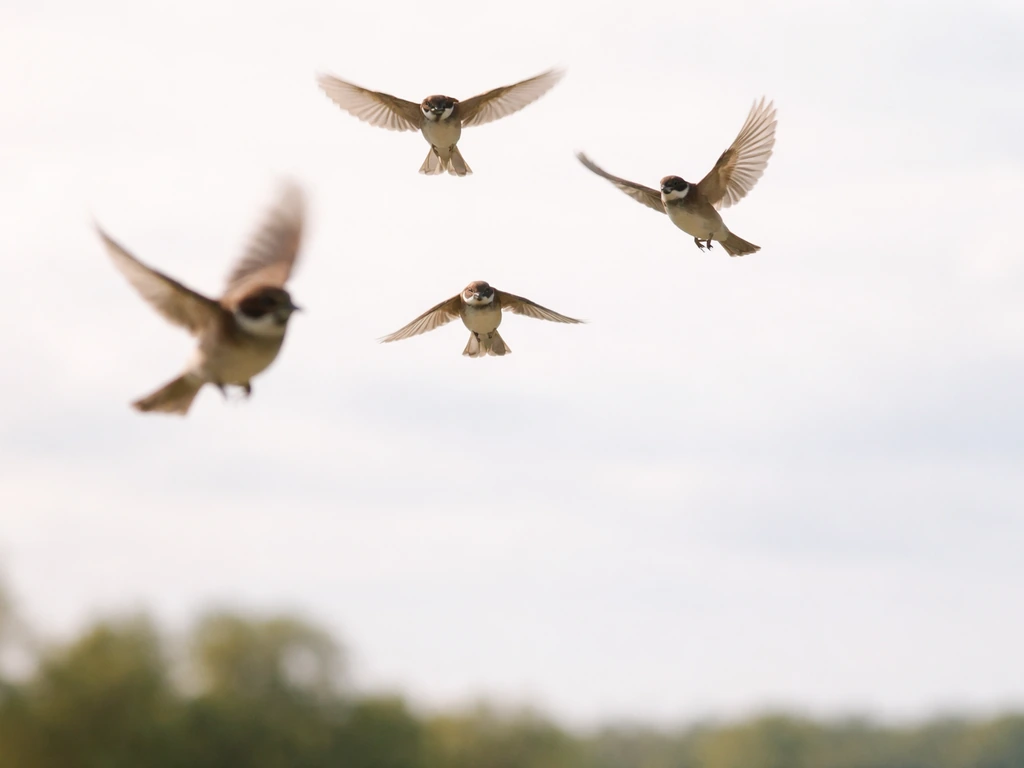
Birds have been symbolic anchors in human language for thousands of years, across nearly every culture. The reasons are practical: birds fly above us, they appear and disappear with the seasons, they sing at dawn, and they seem to move freely in ways humans cannot. That combination of visibility and mystery made birds natural metaphors for freedom, perspective, the soul, transition, and omen. When a storyteller or songwriter wants to open with a signal that something new is beginning, a bird is an intuitive choice. It literally rises, it signals dawn, and it moves between worlds (earth and sky) in a way that carries automatic symbolic weight.
This is also why bird symbolism varies so much by species. A dove opening a speech signals peace and hope. A raven at the start of a poem signals something darker. A crane in a Japanese context signals longevity and good fortune. The bird is doing the introductory work of telling you the emotional register you are about to enter. Understanding that logic makes it much easier to decode any 'intro bird' you encounter.
Common bird idioms and how to read them
If what you searched for is a specific bird idiom and you are not sure which one applies to your situation, here are the most frequently encountered ones with their actual meanings. Merriam-Webster’s “lovebird” dictionary entry includes meanings and usage examples that show it is used for affectionate people or couples.
| Idiom | What it actually means | Typical context |
|---|---|---|
| Early bird | A person who wakes up early or acts before others | Work, productivity, schedules |
| Bird's-eye view | A high, broad perspective on something, as if seen from above | Planning, analysis, storytelling |
| A bird in the hand | Something you already have is more valuable than something you might get (full proverb: 'a bird in the hand is worth two in the bush') | Decision-making, risk, advice |
| Free as a bird | Completely free, with no obligations or restrictions | Emotional states, travel, independence |
| Lovebirds | Two people who are visibly affectionate with each other | Romance, relationships |
| Birdbrain | An insult meaning someone is foolish or not very bright | Casual insults, humor |
The key thing to notice is that none of these idioms are about a literal bird. The word 'bird' is doing figurative work in every single case. When you see 'bird' in a phrase and it does not seem to be describing an actual animal, you are almost certainly looking at figurative or idiomatic language. The surrounding words are your guide: if the phrase is about time ('early bird'), perspective ('bird's-eye'), or freedom ('free as a bird'), you are reading a well-established idiom with a fixed meaning. Merriam-Webster defines “early bird” as an idiom for someone who is up early or does things early 'early bird'.
Slang and dialect: when 'bird' means something else entirely
Outside of idioms, 'bird' carries several slang meanings that depend heavily on who is speaking and where. British English is the main source of slang uses, and they can genuinely confuse someone who grew up with only the standard dictionary sense of the word.
- British slang for a woman or girl: In British English (particularly older or working-class usage), 'bird' has long been used to refer to a woman, often a girlfriend. 'She's a nice bird' or 'his bird' are typical examples. This usage is documented in community dictionaries and is widespread enough that most British people recognize it immediately, even if they do not use it themselves.
- Slang for girlfriend (sometimes with a slightly derogatory framing): Related to the above, 'bird' can specifically mean a romantic partner in informal British speech. The tone ranges from affectionate to dismissive depending on context.
- A vulgar slang term: In some usage communities, 'bird' appears as crude slang for genitalia. This meaning is far less common in mainstream conversation and usually only surfaces in explicitly informal or crude contexts.
The way to tell slang from idiom is mostly about register and geography. If the speaker or writer is British and the sentence is casual or informal, 'bird' meaning 'woman' or 'girlfriend' is a strong possibility. If the text is literary, analytical, or formal, you are almost certainly looking at symbolism or a fixed idiom. If the content is crude or explicitly adult, the vulgar slang sense may apply. Context nearly always signals which sense is intended.
How to figure out exactly what 'intro bird' means in your specific situation
Here is a quick checklist you can run through whenever you encounter 'bird' in an unfamiliar context and need to pin down the meaning fast.
- Where did you see it? A book, song, film, or poem? You are almost certainly looking at symbolism or a metaphor. A casual conversation or social media post? Slang is more likely.
- Is there an actual bird present? If the text describes a real animal (wings, feathers, singing, flying), it is probably literal or symbolic. If there is no actual bird in the scene, it is figurative.
- What is the nationality or dialect of the source? British source plus informal tone almost always points to the slang sense (woman/girlfriend). American or global formal source points toward idiom or symbol.
- What are the surrounding words? 'Early bird catches...' or 'free as a bird' are fixed idioms with known meanings. 'His bird,' 'her bird,' or 'that bird over there' in casual British speech points to slang.
- Is 'Bird' capitalized or used as a name? If yes, it is likely a nickname or proper noun (think Charlie Parker, or a character named Bird in a story).
- Does the bird appear at the very start of something? If a specific bird species shows up in the opening of a creative work, look up the cultural symbolism of that species specifically. The species matters enormously.
Cultural symbolism of birds that come up most often
When a bird appears at the start of something, the species is almost always deliberate. Here is what the most commonly referenced birds actually represent across cultures, which gives you a solid foundation for interpreting any 'intro bird' you encounter in a creative or literary context.
Dove
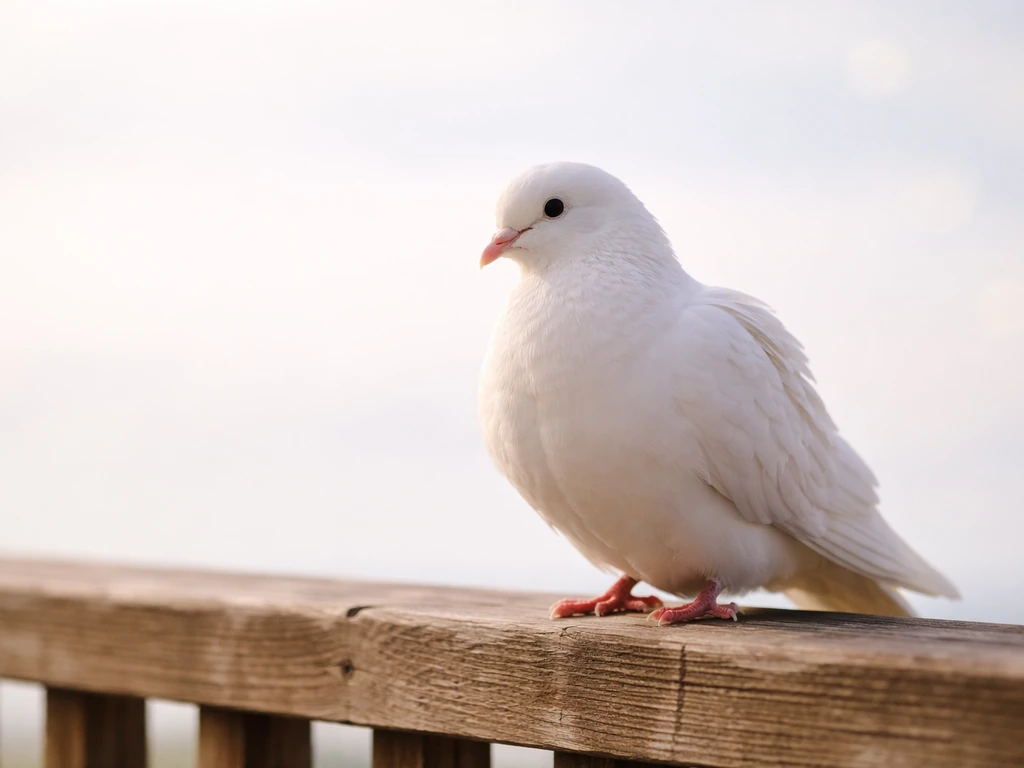
The dove is the most universally recognized symbol of peace and hope across Western and Middle Eastern traditions. In Christian symbolism it represents the Holy Spirit and divine blessing. In secular contexts it stands for reconciliation, gentleness, and new beginnings. A dove appearing at the start of a story or speech almost always signals that what follows is meant to be hopeful, conciliatory, or spiritually significant.
Raven
The raven carries almost the opposite weight of the dove. In Norse mythology, Odin's ravens Huginn and Muninn (Thought and Memory) were divine messengers and omens of fate. In Edgar Allan Poe's famous poem the raven becomes a symbol of grief and inescapable loss. In many Indigenous North American traditions, the raven is a trickster and creator figure, neither purely ominous nor purely benevolent. A raven at the intro of something signals complexity, darkness, wisdom, or a story that will not be simple.
Crane
In Japanese culture the crane is one of the most powerful positive symbols: it represents longevity, good fortune, and fidelity. The folding of 1,000 origami cranes (senbazuru) is a tradition associated with wishes and healing. In Chinese culture the crane similarly signifies immortality and noble character. When a crane opens a story or image in an East Asian cultural context, it is almost always a good omen, a signal of aspiration and grace.
Robin, sparrow, and the 'common' birds
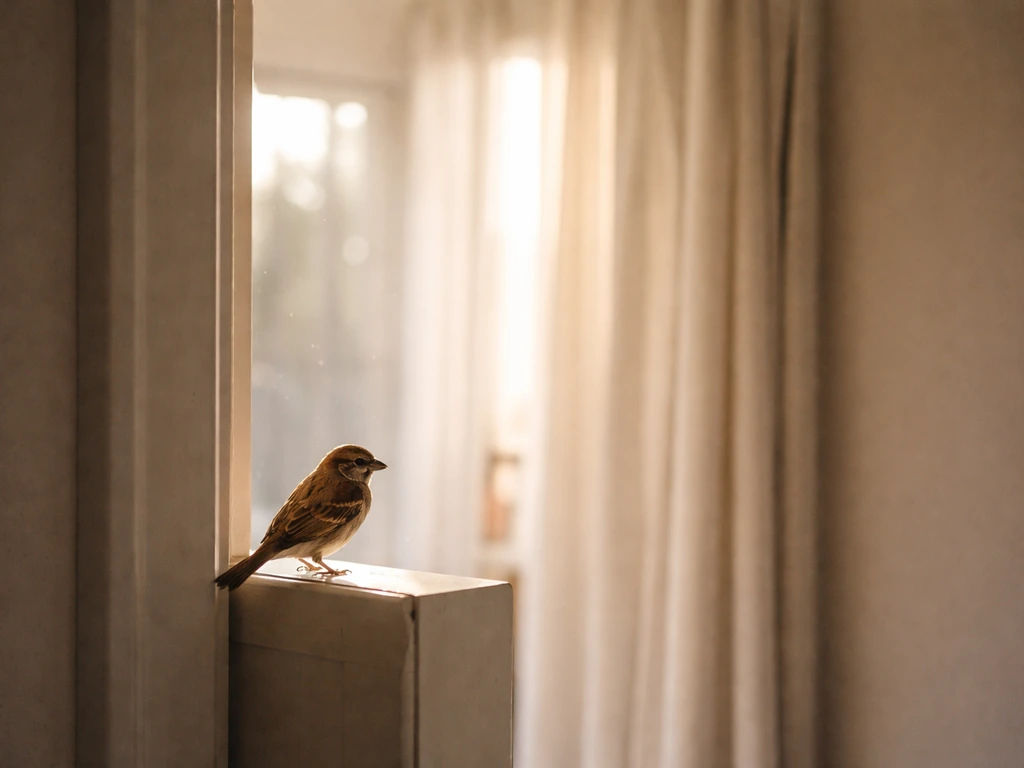
Not every intro bird is a grand symbolic creature. Robins in Western tradition signal spring and new beginnings (they are associated with the first signs of warmer weather). Sparrows, often linked to ordinary life and humility, appear in Biblical texts as symbols of God's attention to even the smallest things. These birds as intro symbols tend to ground a story in the everyday, the humble, or the renewal of ordinary life rather than grand drama.
Real sentences with 'bird' and what each one actually implies
The fastest way to build intuition for reading bird language is to look at concrete examples. Here are several real-world style sentences with 'bird' used in different ways, and what each one is actually communicating.
| Sentence | Type of 'bird' use | What it implies |
|---|---|---|
| 'The early bird catches the worm, so I set my alarm for 5am.' | Idiom | Acting early gives you an advantage; the speaker values productivity and timing. |
| 'He came in, took a bird's-eye view of the project, and immediately spotted the problem.' | Idiom | He assessed the situation from a broad, high-level perspective without getting lost in details. |
| 'She had a bird in the hand and gave it up chasing something bigger.' | Proverb | She sacrificed something certain for something uncertain, and it did not work out. |
| 'After he quit the job, he felt completely free as a bird.' | Idiom | He experienced a feeling of total liberation and lack of restriction. |
| 'His bird wasn't happy about him staying out late.' (British casual conversation) | Slang | 'Bird' means girlfriend here. British informal speech. |
| 'The film opens with a lone raven perched on a dead tree, calling once.' | Symbolic / intro bird | The raven signals that the film will deal with darkness, loss, or something ominous. |
| 'Those two lovebirds can't stop staring at each other.' | Compound idiom | The two people are deeply in love and visibly affectionate. |
| 'Don't be such a birdbrain.' | Slang insult | The speaker is calling someone foolish or dim-witted. |
Notice how the surrounding sentence always gives away which type of 'bird' is being used. The word itself almost never stands alone in a way that is genuinely ambiguous, once you look at the full sentence and context.
Where to go next with bird symbolism
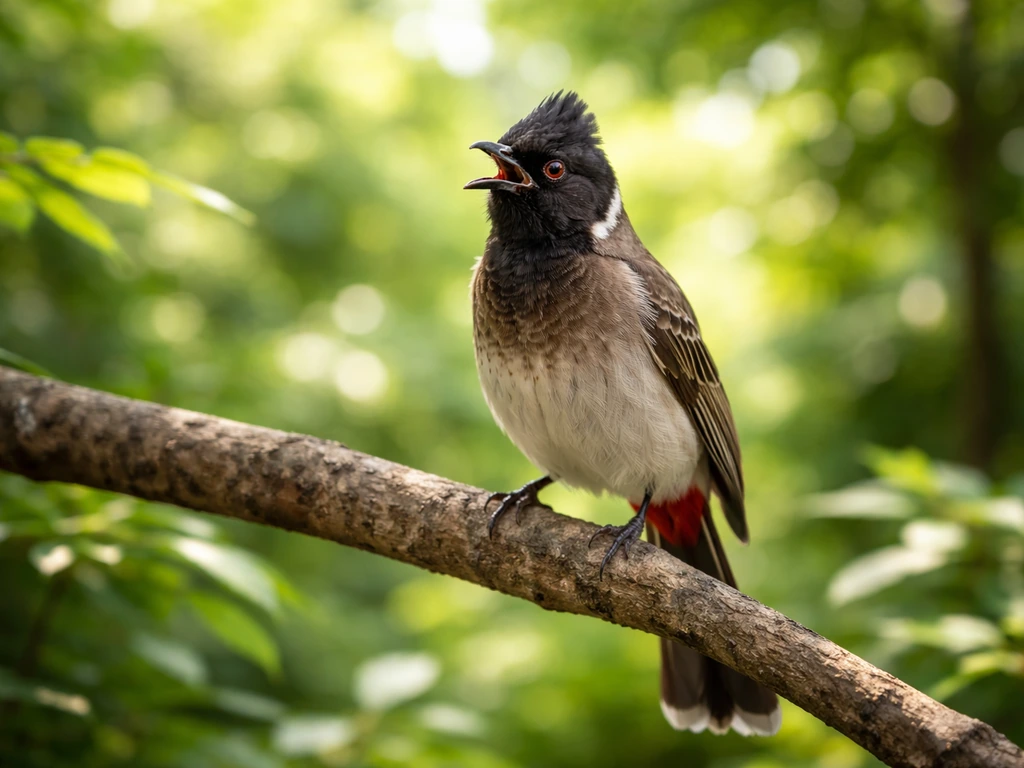
If your original question was about a specific bird rather than the word 'bird' itself, the most useful next step is to look up that species directly. The symbolism of a bulbul (a bird common in Persian poetry and South Asian traditions, where it represents the poet's soul and unrequited love) is completely different from a winter bird appearing in a novel (which typically signals isolation, endurance, or the approach of hardship) or a home bird (a person who prefers staying close to home, or a species that does not migrate). Winter bird meaning is usually determined by the species and what kind of seasonal shift the author is signaling. Each species and each compound phrase carries its own specific freight that general 'bird meaning' guides cannot fully cover.
The core skill you are really building here is learning to read the signal a bird sends based on species, context, and cultural tradition. Once you have that framework, you can decode almost any 'intro bird' you encounter, whether it shows up at the start of a novel, a film, an idiom, or a conversation.
FAQ
If I search “intro bird meaning” and I see a bird at the start of a song or chapter, how do I know whether it is symbolism or just a setting detail?
Treat it as symbolism when the bird is doing narrative work, it introduces a theme, mood, or shift, or it repeats in later passages. If it only describes weather or location with no emotional or plot change, it is more likely literal setting than an “intro bird” signal.
What does it mean if the phrase includes the word “intro” but not as “beginning,” for example “intro bird” in a product name or user interface?
In that case “intro” might mean “introductory” or “beginner mode,” not the start of a story. The bird label could be a brand, a mascot, or a feature name, so you need to check surrounding UI text (what the feature does) rather than relying on cultural symbolism.
How can I tell whether “bird” is an idiom like “early bird” versus symbolism like “the dove opens the poem”?
Idioms usually come with a fixed structure and a common phrase you can paraphrase (early bird means a person who wakes early). Symbolic usage tends to be descriptive and image-like (a dove opens the speech), where the bird’s species and the scene’s emotional tone matter.
Is “bird meaning” always determined by species, or can a writer override the typical symbolism?
A writer can override it, especially in modern or genre-bending work. One signal is whether the text contradicts the usual expectation (for example a “dove” used to frame betrayal). In that case, give priority to the immediate emotional register and later payoff rather than the “default” species associations.
Why do I get different “intro bird” answers depending on the source I read?
Most discrepancies come from mixing categories, such as interpreting idioms as slang, or treating a generic bird reference as if it had one fixed cross-cultural meaning. A practical approach is to identify the category first (intro of a story, idiom, or slang) and only then look for species or culture.
If someone uses “bird” as slang, what are common context clues that it is not a figurative symbol?
Look for direct address or relationship framing (who someone is, dating, or a conversational nickname) and informal tone. Symbolic birds are rarely used as a direct label for a person in casual speech, and they usually pair with verbs and imagery that point to emotion or themes.
What should I do if the “intro bird” appears in a translated text, do I still rely on the same meaning?
Be cautious, idioms and symbolic conventions can shift between languages and cultures. If the bird phrase is close to a known idiom in the original language, it might not map cleanly to an English idiom. The safest move is to interpret based on narrative function (what it signals in that scene) rather than only English associations.
Can multiple birds at the beginning change the interpretation?
Yes. Two birds can act like “emotional contrast” (for example, a dove alongside a raven) or “theme layering” (peace and grief). If both appear prominently, analyze which one is emphasized, how the scene resolves, and whether each bird is tied to a different character or event.
When I see “bird’s-eye” or “free as a bird,” do I need to treat it as “intro bird meaning” at all?
Usually no, those are established idioms unrelated to an “intro” event in a story. “Bird” is being used as a fixed metaphor for perspective or freedom, so the meaning is the idiom’s conventional one, not a species-based omen.
What is the fastest way to interpret a specific bird in an “intro bird” context when I do not know the culture?
Start with the immediate cues, the emotion of the scene, and any repeated motifs. Then treat cultural associations as secondary evidence. If you can identify just one anchor detail (dawn timing, healing imagery, grief imagery), you can often narrow the meaning even without deep cultural background.
Next Article
Bulbul Bird Meaning: Symbolism, Sayings, and Identification
Bulbul bird meaning explained with ID tips, symbolism in sayings, and how to avoid confusing similar terms like ba or er