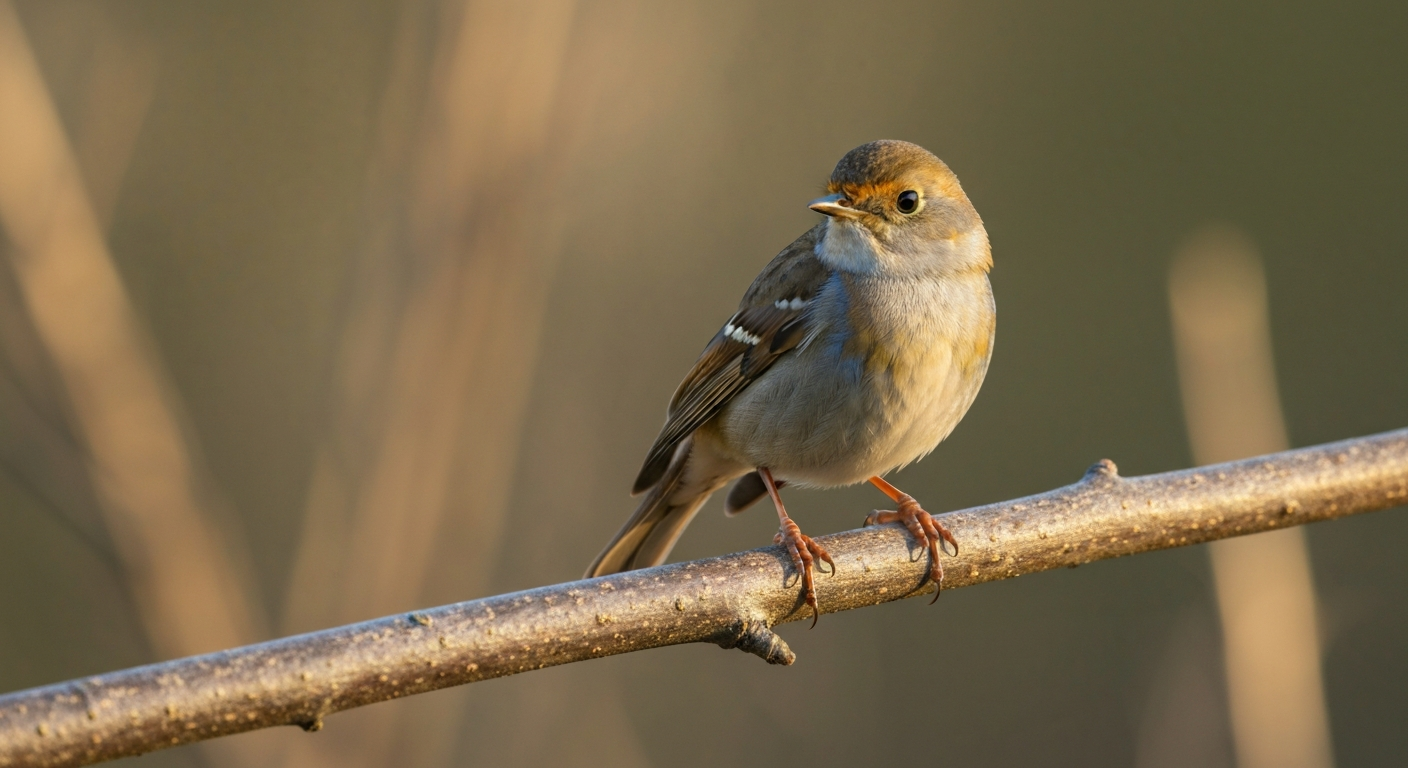
The starling bird meaning comes down to a handful of consistent themes: voice, adaptability, community, and change. People search for this because they saw a starling do something striking (a murmuration at dusk, a lone bird singing outside a window, one flying into a house) and want to know what it might mean beyond the biology. This guide gives you the direct symbolic interpretation most traditions agree on, walks you through how to apply it to your specific situation, and then keeps you honest about what symbolism can and can't actually tell you.
Starling Bird Meaning: Symbolism, Interpretations, and How to Use It

Marcus Whitley
6 Apr 2026
Starling basics: what to know before you interpret anything
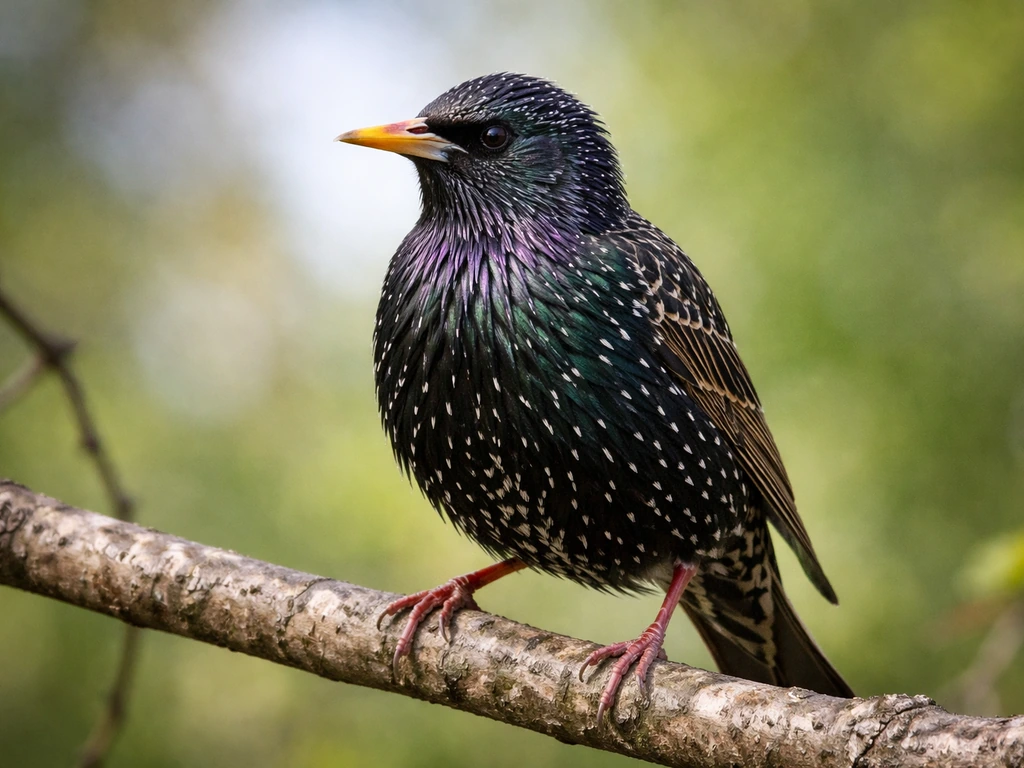
Before jumping to meaning, it helps to know who you're actually looking at. The European starling (Sturnus vulgaris) is a compact, short-tailed bird with a thin, straight bill. In breeding season, the bill turns yellow and the plumage shows a glossy black with unmistakable green and purple iridescence. In fall and winter, white spots cover the head and body, giving it a speckled, almost starry look (which is actually where the name 'starling' is believed to come from). By late winter, those spots wear away and the bird looks mostly dark again.
One common source of confusion: starlings are often lumped in with other dark birds. If you're not sure what you saw, you might be thinking about a common grackle, a brown-headed cowbird, or even a crow. Grackles and starlings in particular get mixed up constantly. Starlings are stockier with shorter tails and move differently in the air. Getting the identification right matters, because you don't want to build a symbolic interpretation around a bird you didn't actually see.
Starlings are also deeply tied to human environments. They're cavity nesters, meaning they look for holes in trees, building eaves, and birdhouses to raise their young. Breeding season in Europe typically runs from March to July. In North America (where they were introduced in the 1890s), you'll see them year-round in urban and suburban areas. Their strong preference for human-made structures is one very practical reason they show up near homes and buildings so often. When you understand the biology, you can interpret the symbolism more clearly, because you stop assuming every encounter is mysterious when some of it is simply habitat.
The core symbolic themes: what starlings actually represent
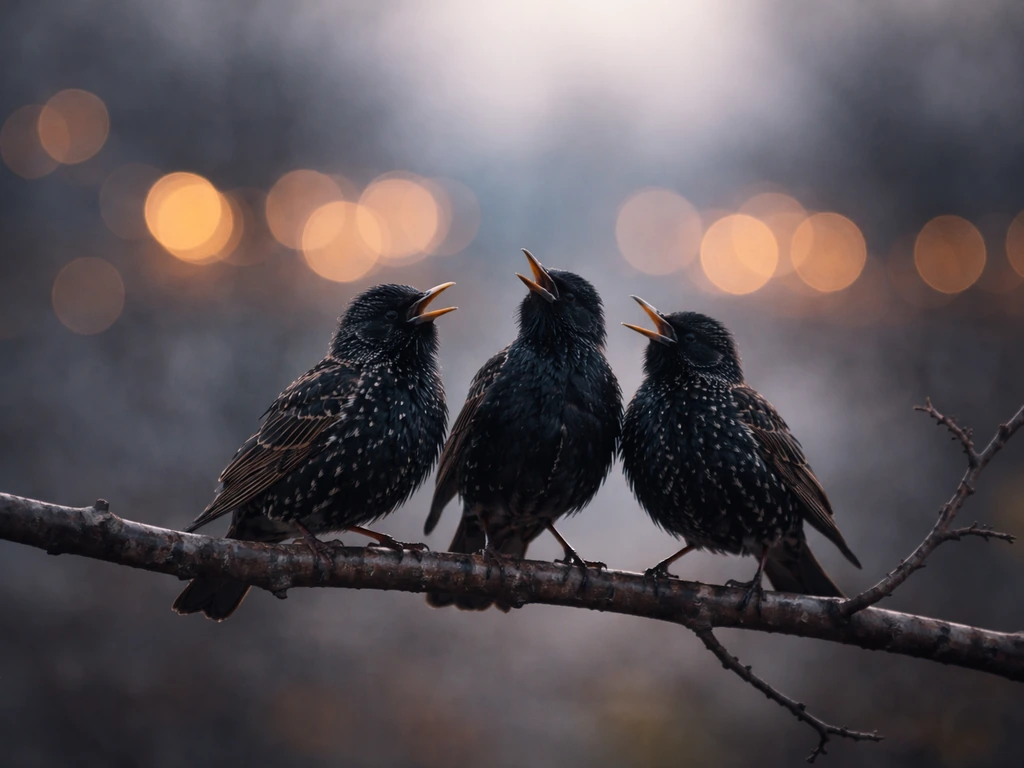
Most symbolic systems, from folk interpretation to modern spirituality writing, converge on the same cluster of meanings for starlings. They're not a bird of solitude or silence. Everything about them points outward: toward communication, collective intelligence, and the ability to thrive in changing conditions.
Voice and communication
Starlings are exceptional mimics. They can reproduce the calls of other bird species and, famously, fragments of human speech. Research into the European starling's complex song has focused specifically on the function of this vocal mimicry, which goes well beyond simple repetition. Symbolically, this translates into themes of finding your voice, expressing yourself clearly, and using language to connect with others. If you're in a moment where communication feels blocked or important, a starling encounter is often interpreted as a nudge to speak up, try a new way of expressing yourself, or pay attention to what's being said around you.
Adaptability and resilience
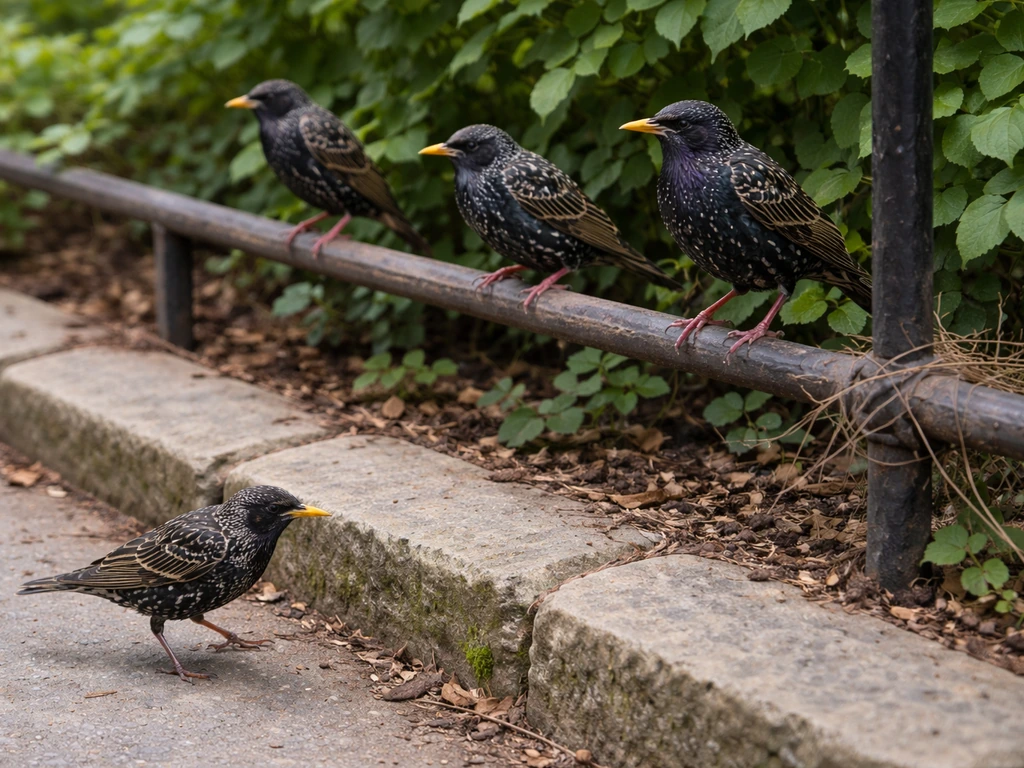
Starlings are remarkably adaptable when it comes to diet and nesting. They've expanded across continents and thrived in nearly every kind of human-influenced environment. That adaptability is one of the most consistent symbolic threads attached to them. Symbolically, starlings represent the ability to pivot when circumstances change, to find resources where others might see none, and to make a home out of a situation you didn't originally choose. This resonates with people going through transitions, relocations, career changes, or relationship shifts.
Community, belonging, and social intelligence
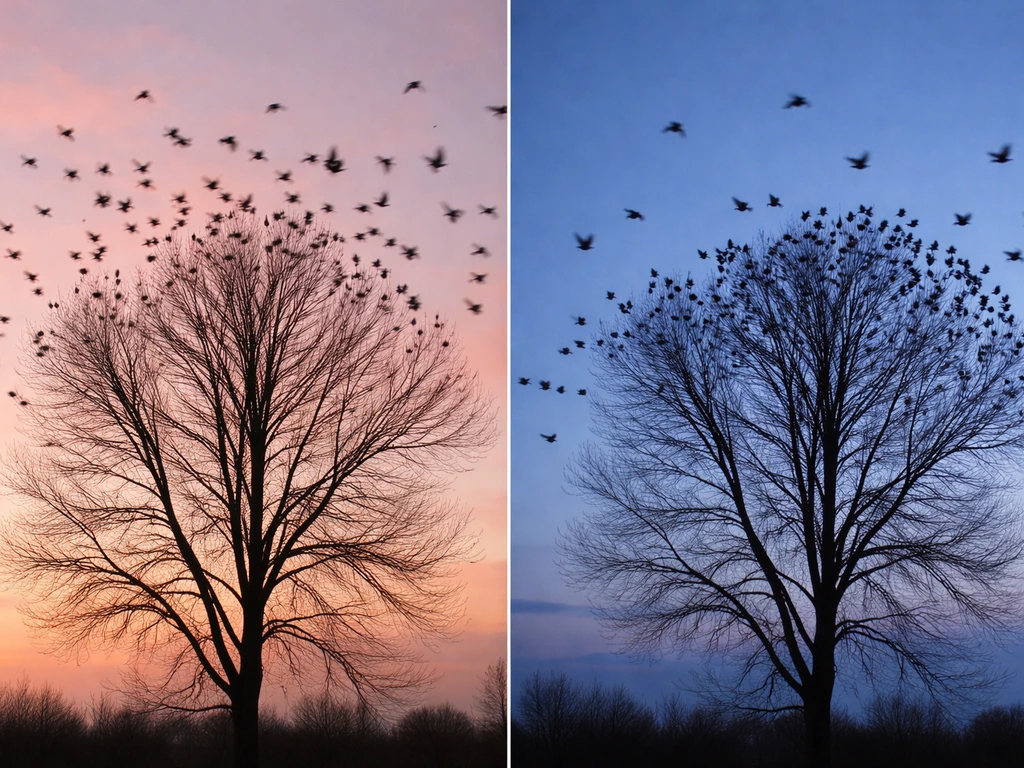
The murmuration is starlings' most visually striking behavior: thousands of birds moving as a single fluid shape in the sky, splitting and merging, changing density at the flock's borders. It's one of nature's genuine spectacles. Symbolically, this group behavior is consistently tied to community, belonging, and the idea of 'finding your flock.' The phrase 'finding your flock' is used so often in starling symbolism writing that it has almost become shorthand for the bird itself. If you're feeling isolated or searching for your people, the starling is often read as a symbol of the social intelligence required to both seek out community and contribute to it meaningfully.
Change and transition
Starlings are strongly seasonal and cyclical in their behavior. Every dawn they scatter from communal roosts and fan out across the landscape; every evening they return in waves before settling in. That daily rhythm, plus their involvement in seasonal nesting cycles, maps well onto symbolic interpretations of change, transition, and movement from one phase to another. Starlings showing up during a noticeable life transition are often interpreted as a prompt to embrace rather than resist that change.
What it might mean when you see a starling: common scenarios
Context shifts the interpretation significantly. Here are the situations people most often ask about, and how they're typically read symbolically.
| Scenario | Common Symbolic Reading | Practical Reality to Also Consider |
|---|---|---|
| Single starling singing at dawn | Communication, voice, a message you need to hear or deliver | Starlings naturally disperse from roosts at sunrise every morning |
| Large flock (murmuration) | Community, collective energy, belonging, change at scale | Winter flocks can number in the thousands; this is normal starling behavior |
| Starling near or nesting at your home | Change entering your space, connection to home and family | Starlings actively seek building cavities for nesting, especially spring/early summer |
| Starling flying into a house | Messages, change, or (in older folklore) an omen of disruption | Birds enter houses by accident; indoor birds are a common folklore omen trigger |
| Starling appearing during a major life decision | Adaptability, trust your ability to adjust | Timing may reflect your own heightened awareness, not external signal |
The 'starling in the house' scenario gets its own attention in symbolism writing. It's frequently interpreted as a sign that change or an important communication is coming into your personal life. This reading partially overlaps with a much older and broader folk belief that any bird entering a home signals disruption, sometimes even death, depending on the tradition. It's worth knowing that background when you're parsing what a specific source is actually telling you.
How different cultures and traditions read starlings
Starlings don't have the same deep mythological presence as ravens or storks in most traditions, largely because they were historically common and widespread, making them feel ordinary rather than portentous. But that doesn't mean they carry no cultural weight.
In British and Northern European folk tradition, starlings were associated with peasant life and communal labor. Their murmurations over agricultural fields before roosting were a familiar seasonal sight, and the birds became loosely linked with harvest time, late-season change, and the end of the growing year. The word 'murmuration' itself (from the Latin for murmuring or humming) reflects the sense of low, collective noise that early rural communities associated with these flocks. Compare this to the stork bird's meaning in European tradition, which tilted sharply toward birth and new beginnings, a much more individually focused omen versus the starling's collective energy.
In some Celtic and early Germanic traditions, mimicking birds were seen as go-betweens, carrying messages across boundaries that ordinary creatures couldn't cross. The starling's vocal mimicry fit naturally into that framework, lending it a role as a bird of communication between worlds, people, or states of being.
In contemporary Western spirituality (the dominant context in which most people are searching for 'starling bird meaning' today), the interpretations center on the themes already described: voice, community, adaptability, and transition. These readings draw loosely from multiple traditions and blend them with modern self-help language. Phrases like 'the starling asks you to find your flock' or 'this bird is a reminder to use your voice' are characteristic of this blended approach. It's not tied to a single cultural tradition, but it's also not arbitrary. It's derived from the bird's actual observable behavior, just interpreted through a personal or spiritual lens.
For comparison, what is the meaning of a sparrow bird in symbolic terms tends to emphasize humility, simplicity, and perseverance, making it a more individually focused symbol where the starling is more collectively oriented. Both are common birds, but they carry very different energetic associations.
Starling in language and metaphor: how people actually use it
Unlike ravens or doves, starlings don't appear heavily in formal literary canon. But they do show up in specific notable places. Eugene Schieffelin's 1890 introduction of European starlings to Central Park (reportedly because he wanted all birds mentioned in Shakespeare's works represented in America) is one of the more famous bird stories in North American history, and it turned the starling into something of a cautionary metaphor for unintended consequences. When writers or speakers say something 'spread like starlings,' they're gesturing at the bird's invasive adaptability, its ability to colonize new spaces rapidly and at scale.
The murmuration has become a metaphor in its own right. In management writing and organizational theory, you'll encounter references to murmurations as examples of leaderless coordination, emergence, and collective intelligence. 'The team moved like a murmuration' is a compliment about fluid, responsive collaboration without heavy top-down control.
In everyday conversation, 'starling' is less often used as a standalone metaphor and more often appears in the context of the behaviors it's associated with. Someone might say, 'She's always picking up everyone's habits and phrases, such a starling,' nodding to the mimicry angle. Or, in a community context: 'We finally found our murmuration,' meaning a group of people who move together in sync. The bishop's bird stump meaning is an example of how bird references can carry very specific, context-dependent connotations in culture and literature, and starlings work the same way: the meaning shifts depending on which aspect of the bird you're invoking.
Starling is also an English personal name, and historically a term of endearment in some British dialects (alongside similar bird-derived nicknames like 'sparrow' or 'robin'). When you see 'starling' used as a name or affectionate address in older British texts, it's leaning into the bird's associations with brightness, song, and sociability, not its invasive side.
How to interpret a starling sighting for yourself
Symbolism works best as a reflective tool, not a prediction engine. When you see a starling and feel like it means something, the useful move is to ask yourself a few questions and see what rises up. Here's a quick framework:
- What's currently active in my life? Starling themes (voice, community, change) tend to resonate most when one of those threads is live for you. If you've been avoiding a difficult conversation, the 'voice' angle is probably what's speaking to you.
- Was it a single bird or a group? Solo starlings lean toward personal communication and self-expression. Large flocks or murmurations lean toward community, belonging, and collective change.
- Where did it appear? A starling near your home (especially during nesting season, spring through early summer) has an ordinary explanation. A starling appearing in an unexpected or unusual place might be more notable to you personally.
- What was the bird doing? Singing signals communication. Mimicking other sounds signals attention to what you're absorbing from your environment. Roosting with a large group signals community and transition.
- What's your gut response? Symbolic meaning is partly what you bring to it. If the sighting feels significant, sit with that. If it feels unremarkable, it probably is.
After working through those questions, a useful next step is to write down what came up, even just a sentence or two. Symbolic interpretation is most practically useful when it points you toward something actionable: a conversation you've been avoiding, a community you've been hesitant to join, a change you've been resisting. Let the starling be a prompt, not a verdict.
If you're drawn to exploring bird symbolism more broadly, it's worth knowing that different birds carry very different symbolic weights. The spurs bird meaning is a good example of how even birds associated with speed and aggression carry layered symbolic freight depending on context. The starling sits at the opposite end of that spectrum, oriented toward collective harmony rather than individual force.
Myths vs. reality: what starling symbolism can and can't tell you
Let's be direct here. A starling appearing near your house does not predict a death in the family, a windfall, or any specific external event. The belief that birds entering a home signal death is a very old and widespread piece of folklore (documented across Southern American, Basque, and other European traditions), but it applies generically to many bird species, not starlings specifically. If someone tells you a starling 'means' a death omen, they're borrowing from a general 'bird in the house' superstition and applying it to whatever bird happened to show up.
The real reason starlings appear near your home is almost always ecology: they're cavity nesters, they're attracted to human settlements, and they actively compete for nesting spots in building eaves and birdhouses, especially in spring. Audubon and USDA APHIS documentation both note that starlings can displace native hole-nesting birds precisely because they're so successful at finding and claiming cavities in human structures. That's biology, not prophecy.
Similarly, murmurations happen before roosting every evening during the right season. Washington Department of Fish and Wildlife documentation notes that starlings leave roosts at sunrise and return in waves before sunset, forming those large pre-roost gatherings people often describe as uncanny or meaningful. The timing makes them feel significant, but the behavior is daily and predictable.
What symbolism can do is give you a lens for reflection. If the 'voice' theme resonates when you see a starling, that resonance is real and potentially useful, but it's about your inner state, not the bird delivering a message from the universe. The most grounded approach holds both things at once: the symbolic interpretation is meaningful as a reflective prompt, and the bird is also just a bird doing what starlings do.
The starling's meaning, at its most honest and useful, is this: pay attention to your voice, notice your relationship to the people around you, and stay adaptable when things shift. Those are genuinely good prompts for almost any moment in life. That they come wrapped in iridescent black feathers and a flock of thousands makes them more memorable, not more mystical.
FAQ
How do I apply starling bird meaning when I saw only one brief moment, like one bird flying by?
If you want a reliable reading, use the “behavior first” rule: decide whether your encounter was mainly about voice (calls or mimicry), community (murmuration or flocking near you), adaptability (nesting or feeding around human spaces), or change (timed around a life transition). Then choose one theme to act on, rather than trying to fit the whole bird into one moment.
Does the season I see a starling in change its meaning?
Yes, but it changes what you should pay attention to. A starling showing up during spring or early summer often aligns with nesting and communication needs, while winter visits more commonly reflect roost patterns and food availability. Symbolically, that means you can frame the nudge as “create and connect” in breeding season, versus “stabilize and stay resilient” in colder months.
I saw a murmuration at an unusual time, does that make it more significant?
Murmurations have a predictable daily rhythm, so avoid treating them as a one-time prophecy. If you catch a flock at a different time than usual (for example, late night or during odd weather), you can still use symbolism, but treat it as a prompt to check your own schedule and stress levels, not as evidence that something extraordinary is about to happen.
What does it mean when a starling gets into the house?
In many “bird in the house” traditions, the omen focus is on disruption or loss, but that is not starling-specific. The grounded approach is to separate the event from the meaning: check for practical causes (open doors, attracted insects, a searching bird). Symbolically, you can still ask what “change coming into personal space” might mean for you without assuming it is fatal or literal.
If starlings are nesting near my home, should I interpret it spiritually or practically?
Starlings are cavity nesters and often compete for holes in buildings, so your yard encounter may be ecological rather than symbolic. If you want to keep the symbolism useful, tie it to “home and boundaries”: ask whether you are making space for others, inviting more connection, or letting something fill your life that is hard to displace.
If the starling mimicked sounds or speech, does that mean it is delivering a message about someone?
Not exactly, because mimicry means the sound you heard is “about communication,” not “about a specific person.” A clearer method is to write down what you noticed (mimicked calls, fragmented speech, patterns of sounds) and connect it to your current communication situation, such as choosing your words carefully, listening more, or speaking up for a shared plan.
What if I am not sure whether the bird was a starling or a grackle or crow?
Yes. Starlings often get confused with grackles, cowbirds, and crows, and the symbolic themes can differ by bird. Before interpreting, do a quick ID check: starlings tend to look stockier with shorter tails, and their iridescence and speckled winter pattern can help distinguish them. If you are not sure, it is better to keep the symbolism general (voice, adaptability, community) or wait for a better look.
How can I tell the difference between helpful starling symbolism and an overconfident prediction?
A useful safeguard is to ask whether your next step is internal or external. Starling meaning is typically most actionable as an internal move (having a difficult conversation, joining the right group, being flexible). If someone claims it predicts an exact event, date, or outcome, treat it as an exaggeration and return to reflective questions.
What should I do right after I have a strong emotional reaction to seeing a starling?
If you want to avoid “chasing signs,” set a time boundary: treat the starling as relevant for a short window, like 24 to 72 hours, and then move on. Write one concrete action you can do in that window, for example, message someone, attend an event, or schedule a conversation.
Can I tailor the interpretation to my feelings, or is that making it up?
Yes, and it helps you pick the most fitting theme. For example, if you feel energized and socially open, emphasize community and “find your flock.” If you feel stuck or unheard, emphasize voice and expression. If you are dealing with a major transition, emphasize adaptability and movement from one phase to another.
Next Article
Perched Bird Meaning, Literal, Symbolic, Usage, Examples
Perched bird meaning: clear literal and symbolic definitions, usage differences, examples, and quick reference.