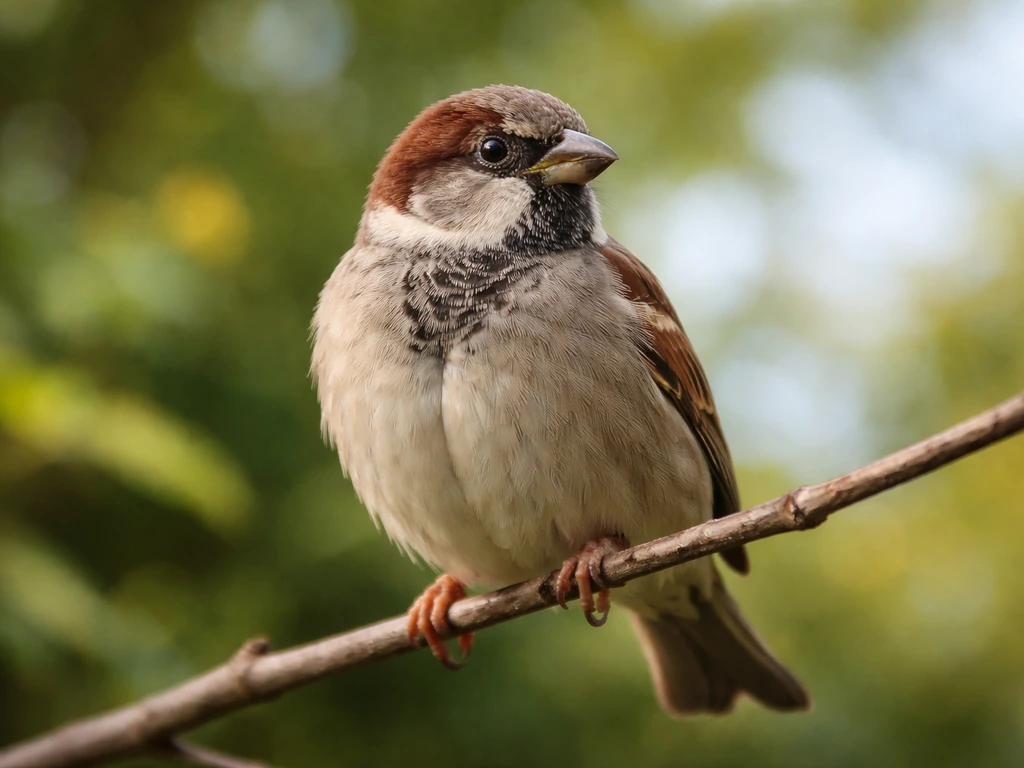
A sparrow bird is a small, seed-eating passerine bird belonging to the Old World sparrow family Passeridae. When most people in everyday English say "sparrow," they usually picture the house sparrow (Passer domesticus), a stocky little bird about 15 to 17 cm long that lives almost exclusively around humans, thriving in cities, farms, and backyards worldwide.
What Is the Meaning of a Sparrow Bird? Symbolism Guide

Marcus Whitley
7 Apr 2026
But beyond the biology, when people search for the meaning of a sparrow bird, they're almost always after something deeper: what does this bird represent? What does it mean when one shows up? What are people really saying when they invoke a sparrow in a story, a phrase, or a spiritual context? The short answer is that sparrows consistently stand for resilience, humility, community, and the quiet dignity of ordinary life.
Everything below builds on that core.
What a sparrow bird actually is
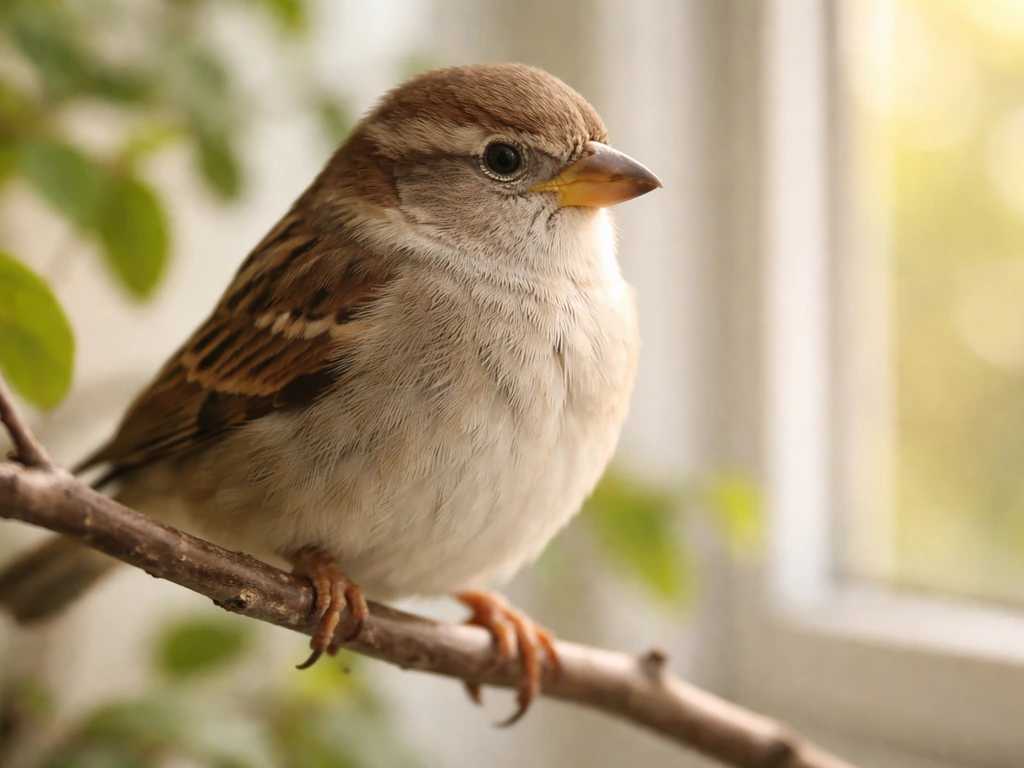
Sparrows belong to the order Passeriformes, the massive group that covers more than half of all known bird species. The Passeridae family, the true or Old World sparrows, is the specific home of the birds most people call sparrows. The house sparrow is the most famous member of this group. It's compact and brownish, with the males showing chestnut-colored wings and a grey crown, while females are a more muted streaky brown. They measure roughly 15 to 17 cm in length and are noticeably stockier than many look-alike small birds like finches or wrens.
House sparrows are intimately tied to human settlements. They don't really live in deep forests or remote wilderness. They show up where people are: on windowsills, in parking lots, around grain stores, in suburban gardens. That ecological fact has directly shaped their symbolism across centuries. A bird that lives beside you, eats what you grow, and raises its family in your eaves is going to mean something. Cultures around the world noticed.
Sparrow symbolism across cultures
The sparrow's symbolism is remarkably consistent across very different cultures, which tells you something real about how universally this bird has been observed. The themes that come up again and again are: humility, perseverance, community, love, and hope in small things.
Ancient Egypt and Greece
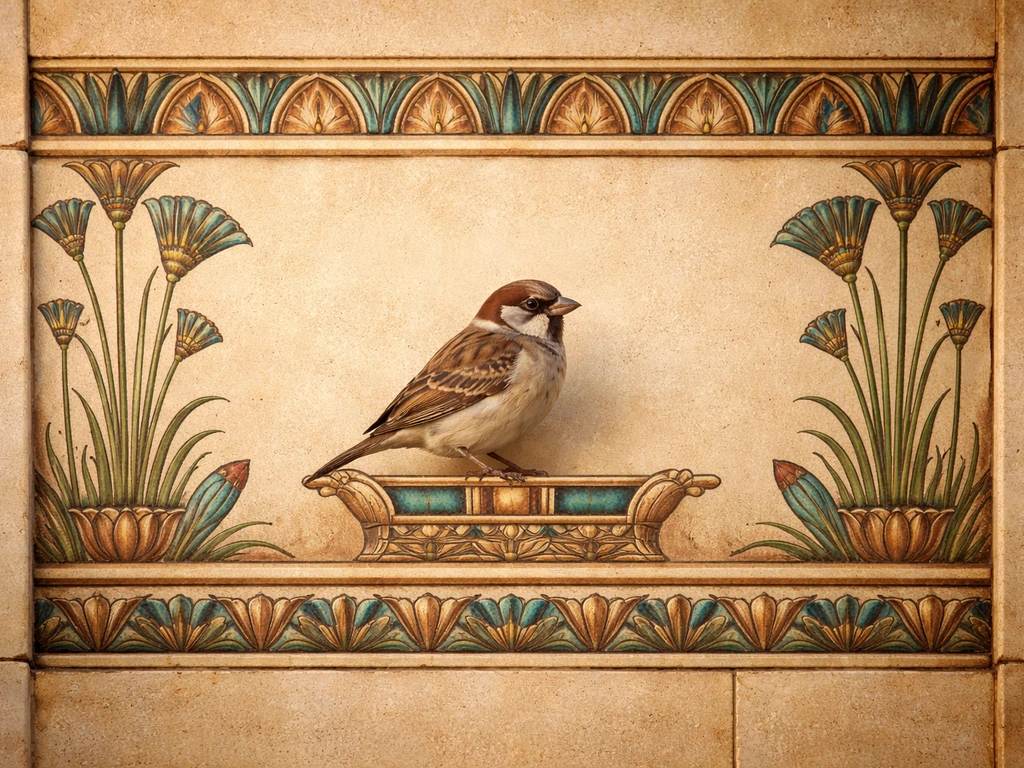
In ancient Egypt, sparrows were believed to catch the souls of the recently deceased, carrying them safely into the afterlife. This gave the sparrow a protective, transitional role between the living world and whatever came next. In ancient Greece, the sparrow was sacred to Aphrodite, goddess of love, which is why sparrows frequently appear in love poetry from that era. The association was less about grand romantic passion and more about the tender, domestic, everyday kind of love that sustains relationships over time.
European and Christian traditions
In the Christian tradition, the sparrow is one of the most pointed symbols of divine care extended to the most ordinary and overlooked. The Gospel of Matthew references God's awareness of even a single sparrow falling, making the bird a direct emblem of the idea that no life is too small to matter. This passage has been quoted and referenced for centuries and remains one of the most recognizable bird references in Western literature. The sparrow in this context means: you are seen, even when you feel invisible.
East Asian traditions

In Japanese culture, the sparrow (called suzume) is associated with friendliness, loyalty, and good fortune. There is a famous Japanese folk tale, "The Tongue-Cut Sparrow," in which a sparrow is harmed by a greedy old woman but forgiven and rewarded by a kind old man. The Wikipedia entry on [Shita-kiri Suzume](https://en. wikipedia.
org/wiki/Shita-kiri_Suzume) describes it as a traditional Japanese fable in which a kind old man and a sparrow are contrasted with greed and jealousy, emphasizing their consequences. The moral centers on generosity and compassion, with the sparrow as a symbol of loyalty and gentle grace. In Chinese symbolism, sparrows are linked to happiness, new beginnings, and the joy of spring. Seeing a sparrow in early spring was traditionally read as a good omen for the season ahead.
Indonesian and other traditions
In some Indonesian traditions, sparrows are thought to carry messages from ancestors, placing them in a role similar to their Egyptian symbolism. Sailors in European maritime folklore sometimes had sparrows tattooed on their bodies, representing the hope of returning home safely. Each sparrow tattoo traditionally stood for 5,000 nautical miles traveled, making the bird a badge of experience and the promise of homecoming.
Common idioms and phrases involving sparrows
Sparrows show up in everyday language in ways people often don't notice. Here are the most common ones and what they actually mean in use:
- "Not a sparrow falls" (or "even a sparrow falls"): Drawn from the biblical passage in Matthew 10:29, this phrase is used to emphasize that nothing goes unnoticed, even the most insignificant event. People use it to argue that small details matter, or that suffering is never truly invisible.
- "Sparrow-fart": A British colloquial expression meaning very early in the morning (as in "up at sparrow-fart"), referencing the time when sparrows first begin chirping at dawn. It's casual and slightly comic, used to emphasize an unreasonably early wake-up.
- "A sparrow in a hawk's nest": Used in various forms to describe someone small and vulnerable placed in a dangerous or hostile environment. The meaning is about being out of one's depth or in over one's head.
- "What care I how fair she be, if she be not fair to me?" (George Wither): While not exclusively a sparrow phrase, sparrows appear frequently in Elizabethan-era love poetry as stand-ins for ordinary, accessible love as opposed to grand, unattainable ideals.
- "House sparrow" used dismissively: In casual English, calling someone or something a "house sparrow" can mean they are plain, common, or unremarkable, often without the speaker intending deep symbolism.
Sparrows in literature, art, and folklore
Sparrows have punched well above their weight in literature and art, especially given that they're about as common and unassuming as birds get. Shakespeare referenced sparrows in Hamlet, with the famous line "There's a special providence in the fall of a sparrow," directly echoing the biblical tradition and placing the sparrow as a symbol of acceptance of fate and the dignity of small things. In that moment, the sparrow isn't just a bird. It's shorthand for the entire idea that life and death have meaning regardless of scale.
In poetry, sparrows became favorites precisely because of their ordinariness. Walt Whitman, John Keats, and many Romantic poets used sparrows to ground lyrical flights in the everyday world. When a poem about love or loss references a sparrow, it's typically anchoring grand emotions in something humble and relatable. The sparrow says: this isn't distant or abstract, this is the bird outside your window.
In folklore, sparrows are often messenger birds or soul-carriers. The ancient Egyptian belief in sparrows escorting souls is echoed across multiple folk traditions in Europe and Asia. In British folklore, a sparrow entering your house was considered either a warning of death or a sign that a spirit was visiting, depending on the regional tradition. The ambiguity makes sense: a bird that freely crosses the boundary between human spaces and the wild world is naturally going to symbolize boundary-crossing in a spiritual sense.
In visual art, sparrows appear in East Asian ink paintings as symbols of simplicity and natural beauty. Japanese ukiyo-e prints frequently feature suzume alongside bamboo or plum blossoms, compositions that emphasize the sparrow's role as a cheerful, energetic presence in the natural world. Western still-life paintings sometimes included sparrows as reminders of the transience of life, fitting them into the broader vanitas tradition.
Spiritual and folklore interpretations: what people mean when they say "sparrow"
When someone mentions a sparrow in a spiritual or metaphorical context today, they're usually drawing on one of a few core ideas. The sparrow is almost never about power, rarity, or grandeur. It's about the opposite of those things, which is precisely what makes it meaningful.
The most common spiritual interpretations people attach to sparrows include: protection and divine care (the idea that even the smallest creature is watched over), community and belonging (sparrows are highly social birds that live and forage in groups), resilience and adaptability (house sparrows survive in almost every environment humans create), and the value of simplicity (the sparrow doesn't dazzle, it just persists and thrives quietly). If someone says a sparrow appeared to them at a meaningful moment, they're usually interpreting it through whichever of these lenses resonates with their situation.
In modern spiritual communities, particularly those that blend various folk traditions, sparrows are often interpreted as signs to pay attention to small blessings or to trust that you are not overlooked even in difficult times. This tracks closely with the historical meanings. Unlike birds such as the stork, whose meaning centers on major life transitions and birth, the sparrow is firmly in the territory of daily life: the ordinary made meaningful.
Sparrows vs. similar small birds: clearing up the confusion
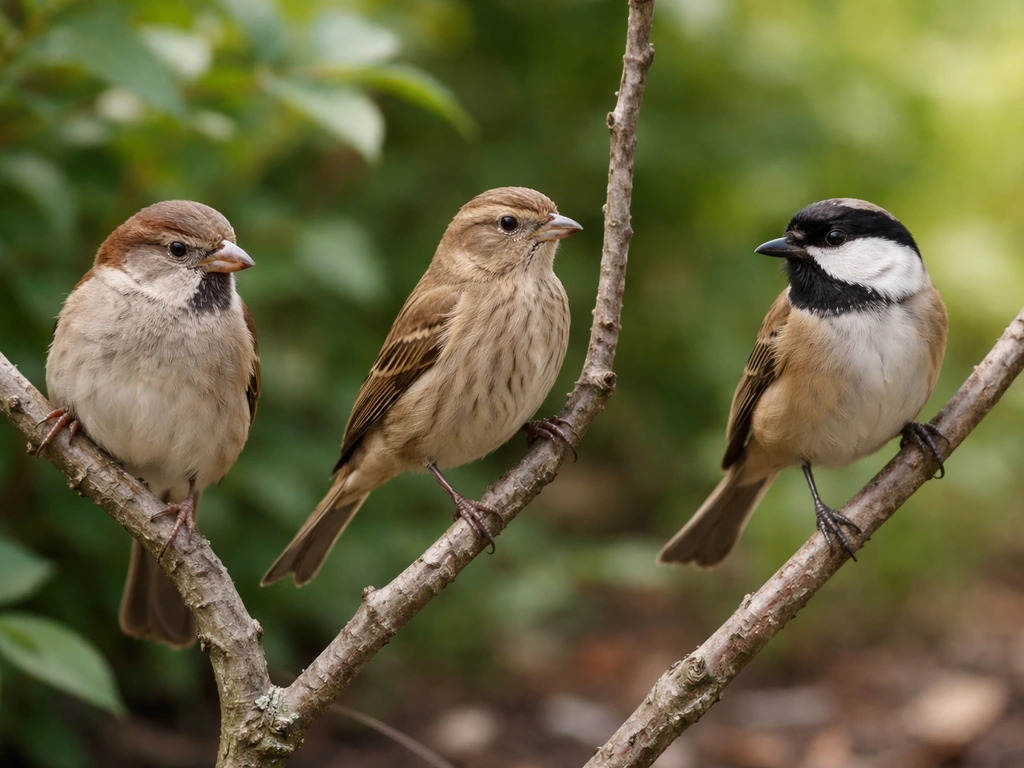
One of the most common sources of confusion around sparrow meaning is that "sparrow" gets used loosely to describe a whole range of small brown birds that aren't actually sparrows at all. This matters because the symbolic meaning can shift depending on which bird you're actually talking about.
| Bird | Family | Key difference from house sparrow | Symbolic overlap with sparrow |
|---|---|---|---|
| House sparrow (Passer domesticus) | Passeridae (Old World sparrow) | The standard reference point; lives around humans | Full sparrow symbolism applies |
| New World sparrows (e.g., song sparrow) | Passerellidae | Not closely related; North American natives | Similar themes of simplicity, resilience, song |
| House finch | Fringillidae | Slightly smaller, males have red coloring | Often mistaken for sparrow; less symbolic history |
| Wren | Troglodytidae | Smaller, upturned tail, louder song | Shares humility/cheerfulness themes but distinct folklore |
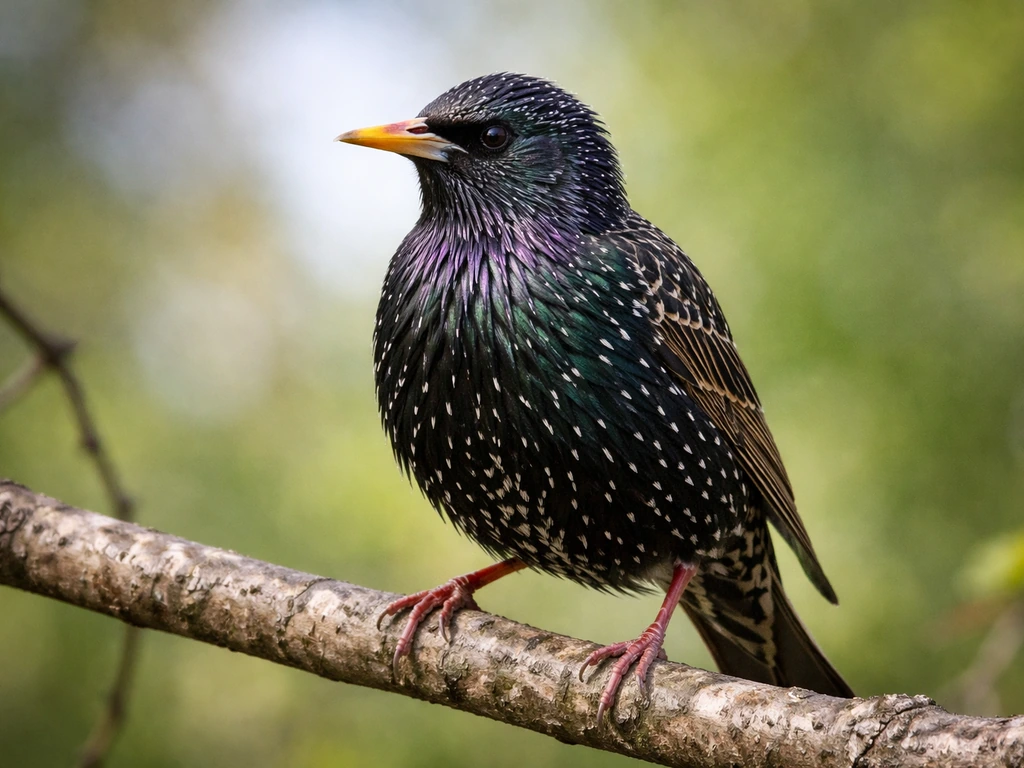
| Starling | Sturnidae | Iridescent feathers, louder, more aggressive | Very different symbolism; see starling meanings below |
In North America especially, "sparrow" is often applied to New World sparrows in the family Passerellidae, which includes birds like the song sparrow, white-throated sparrow, and chipping sparrow. These birds are not closely related to the house sparrow but share the general look and feel, so the symbolic associations tend to carry over in casual use. If you're reading a North American poem or story that references a sparrow, it might be a New World sparrow rather than a true Passeridae sparrow, but the meaning being invoked is almost certainly the same: modesty, simplicity, resilience.
The starling bird carries its own distinct symbolism and is sometimes confused with sparrows in urban environments because both are small, common, and associated with human spaces. But starlings are stockier, have iridescent plumage, and are far more aggressive. The symbolism diverges sharply: starlings are more often associated with community in a collective, almost murmuration-like sense, while sparrows represent individual resilience within community.
There's also occasional confusion around sporting references. If you've come across "spurs bird meaning" in a different context, it's worth noting that spurs as a bird term has its own distinct meaning rooted in competitive and combative symbolism, quite different from the gentle associations sparrows carry.
How to interpret a sparrow sighting or reference in your own situation
Here's the practical approach. If you've seen a sparrow and you're wondering what it means, or if someone has referenced a sparrow in something you're reading, the interpretation process is pretty straightforward. Start with context: where did this sparrow appear, and what was happening around that moment?
- Identify the context: Is this a real bird sighting, a literary reference, a phrase in a message, or a symbol in artwork? The meaning shifts slightly depending on the medium.
- Apply the core themes: Ask which of the sparrow's main symbolic meanings fits your situation best. Protection and being seen? Community and belonging? Resilience through difficulty? Ordinary life deserving attention? One of these will almost always apply.
- Consider the cultural lens: If the reference is from a biblical or Christian text, the meaning is almost certainly about divine care and the value of every life. If it's East Asian in origin, think happiness, loyalty, or spring beginnings. If it's European maritime, think homecoming and hope.
- Don't over-complicate it: Sparrows mean simple, grounded things. If you're tempted to read something elaborate into a sparrow appearance, dial it back. The whole point of sparrow symbolism is that it celebrates the unelaborate.
- Check whether it's actually a sparrow: In North America especially, confirm the bird isn't a house finch, wren, or other small bird. If the symbolic meaning you're looking for involves a very specific tradition, the species identification matters.
If you encountered the sparrow in a text or phrase and you're trying to parse the idiom, the most likely meanings are either the biblical "no sparrow falls unnoticed" tradition (you are seen and valued) or the casual English use of sparrow as shorthand for something plain, common, and unpretentious. Neither is negative. The plain and the common have their own kind of grace in sparrow symbolism.
It's also worth knowing that sometimes bird references in unusual or archaic texts carry meanings that are specific to that text's world. If you've come across something like a bishop's bird stump, that's an example of how specific and surprising bird references in literature can get, well beyond what common symbolism would suggest. When a reference feels off or unexpectedly specific, the surrounding context of the text matters more than general sparrow symbolism.
The bottom line is that a sparrow, in almost any context you encounter it, is pointing you toward smallness as a virtue, toward everyday life as meaningful, and toward the idea that ordinary things deserve notice. That's been the sparrow's message for thousands of years across dozens of cultures, and it holds up today just as well as it ever did.
FAQ
If I saw a small brown bird and it looked like a sparrow, does the symbolism still apply?
It can, because “sparrow” is sometimes used in everyday speech for other small brown birds (for example, New World sparrows in North America). If the story or location points to a specific species (like “song sparrow” or “chipping sparrow”), the meaning usually stays in the humility, resilience, community lane, but the tone may tilt slightly more toward vocal presence or springlike energy depending on the bird mentioned.
Is sparrow symbolism usually positive, or can it mean something bad?
Most “sparrow meaning” moments people report are interpreted as encouragement to notice what is already supporting you, rather than as a warning sign. If the context feels tense, a helpful check is the action around the bird (did it pause nearby, enter a room, or vanish quickly) since that tends to shape whether people read it as protection, interruption, or a prompt to reconnect with others.
How can I tell whether “sparrow” in a sentence is spiritual meaning or just “something small and ordinary”?
Yes, especially with language. In older or religious contexts, “no sparrow falls unnoticed” is tied to being seen and valued, while in casual writing a sparrow can simply mean something modest, ordinary, or unassuming. If you are reading poetry or an old text, look for nearby keywords like providence, fall, or divine care to distinguish spiritual framing from everyday metaphor.
What should I do if I keep seeing sparrows and want to respond meaningfully?
If you are using sparrows for interpretation in your own life, consider narrowing the message to one practical theme: protection and care, belonging, persistence, or appreciating small blessings. Then translate it into a concrete next step (for example, check in on a friend, follow through on a small task you have delayed, or simplify your routine), instead of expecting a single dramatic event.
Can sparrow symbolism guide major decisions, like moving or career changes?
Sparrows are more often read as “ordinary life made meaningful” than as major transformation. So if you are using bird symbolism for a life decision, treat sparrow messages as guidance for daily consistency and community support, not as a substitute for planning, finances, or major risk assessment.
What does it mean when a sparrow enters a home?
People sometimes interpret a sparrow entering a house as a boundary-crossing omen, but the meaning is not universally one thing. A practical way to approach it is to record the specifics (time of day, behavior of the bird, your emotional context) and then choose the interpretation that matches your situation (comfort and being seen, or a reminder to address something you have been avoiding).
Do sparrow meanings change based on the bird’s behavior (flying by, landing, chirping, hopping near me)?
If you want the symbolism to fit the moment, match the symbolism to the bird’s behavior. For example, sparrows foraging near you often leads to an “abundance in small things” reading, while a sparrow lingering at an edge (window, doorway, fence line) often gets read as a transitional or protective theme.
How do I avoid mixing up sparrow symbolism with other birds in the same area?
There are also “false friends” in symbolism. Starlings, swallows, and finches can be mistaken for sparrows visually in urban areas, but they often bring different meanings (for instance, starlings are more commonly tied to collective energy). If your source text mentions a bird by name, trust that naming over appearance.
Next Article
Starling Bird Meaning: Symbolism, Interpretations, and How to Use It
Interpret starling bird meaning fast: symbolism of voice, change, community, and how to apply it to real sightings.