The potoo bird means many things depending on where you are and who is telling the story, but the core symbolic thread is consistent: this is a bird of the night, the unseen, and the uncanny. Across South and Central America, it carries names that translate to 'ghost bird,' 'Mother of the Moon,' and 'soul of the dead,' all drawn directly from its haunting nocturnal calls, its supernatural ability to disappear against a tree branch in broad daylight, and its unblinking, wide-eyed stare. In modern global culture, the potoo has taken on a second life as an internet icon, its absurd frozen expression turning it into a meme mascot for awkwardness and existential dread. Both layers of meaning, the ancient and the viral, point to the same quality: a bird that seems to exist slightly outside the normal rules.
Potoo Bird Meaning: Symbolism, Natural History & Dreams

What 'potoo bird meaning' actually covers
The word 'potoo' is onomatopoeic, meaning it mimics the sound the bird makes. English dictionaries record it as a noun for any bird in the family Nyctibiidae, a small group of nocturnal birds native to the Neotropical region. Merriam-Webster defines potoo simply as 'any of several chiefly nocturnal birds (family Nyctibiidae) of tropical and subtropical America that resemble the related nightjars.' The name entered English via Caribbean and Jamaican English, where early naturalists encountered the species and transcribed its call as 'po-too' or 'poor-me-one,' the latter still used as a common name in parts of the Caribbean. In Brazilian Portuguese the bird is most widely called urutau (also spelled urutaú), and in Guarani-influenced regions of South America it goes by the name that many ethnographers gloss as 'ghost bird,' a compound of the Guarani words for 'bird' and 'ghost' or 'devil' (roughly guyra + táu). That etymology alone tells you a great deal about how Indigenous communities processed this animal's presence in the forest. For a related entry on regional bird-name translations, see the papiha (papiha bird meaning in English) entry.
Quick ID: what a potoo looks like
There are currently seven accepted species in the family Nyctibiidae according to the IOC World Bird List, with one notable recent taxonomic split: the Rufous Potoo was reclassified into its own genus, Phyllaemulor, separating it from the six remaining Nyctibius species. The species most people encounter in folklore, art, and internet culture is the Common Potoo (Nyctibius griseus), though the Great Potoo (Nyctibius grandis) also features prominently in Amazonian legends due to its louder, more dramatic call.
In terms of appearance, potoos are medium to large birds, ranging from roughly 21 cm for the White-winged Potoo to around 58 cm for the Great Potoo. Their plumage is a masterclass in cryptic coloration: mottled streaks of grey, brown, cream, and black that replicate the texture of weathered bark almost perfectly. The head is large and slightly flattened, the bill is short but opens to a surprisingly wide gape for catching insects in flight, and the eyes are the feature that stops people cold. Potoo eyes are enormous and bright yellow or orange, equipped with slits along the closed eyelids (technically notches in the eyelid margin) that allow the bird to detect movement even when its eyes appear completely shut. That detail, the ability to see while seemingly asleep, feeds directly into the symbolism of watchfulness and hidden awareness.
- Size: 21 to 58 cm depending on species; Great Potoo is the largest
- Plumage: cryptic grey, brown, and cream streaking that mimics tree bark
- Eyes: large, yellow or orange, with notched eyelids that allow detection of movement even when closed
- Bill: short and hooked, opening to a wide gape for aerial insect-catching
- Tail: long and graduated, held close to the body when perching upright
- Legs: short and weak, adapted for perching rather than walking
The calls: why potoos sound like grief
If appearance alone would not earn the potoo its ghostly reputation, the voice seals the deal. The Common Potoo produces a descending series of mournful, hollow whistles, often described as sounding like a person crying softly from deep in the forest. Ornithologists Pérez-Granados and Schuchmann, in a 2020 study published in the Journal of Ornithology, documented the annual vocal activity patterns of both the Common and Great Potoo, finding that calling peaks during the breeding season and tends to concentrate around dusk and pre-dawn hours, exactly the liminal windows when human listeners are most likely to experience unease. The Great Potoo's call is rawer and louder, a wailing sound that carries considerable distance through open forest.
The Caribbean English name 'poor-me-one' is itself a direct transcription of the Common Potoo's call as heard by English-speaking listeners, and it carries the same emotional weight embedded in the sound. You hear it, and the interpretation of loneliness and loss feels almost automatic. Field recordings held in the Macaulay Library at Cornell Lab of Ornithology and on the Xeno-canto archive (some of which are also mirrored on Wikimedia Commons) give you an immediate sense of why virtually every cultural tradition that knows this bird associates its voice with mourning, departed souls, or nocturnal spirits.
Behavior and camouflage: the bird that becomes a branch
Potoos are obligate nocturnal hunters. During the day, they roost on exposed perches, most often the broken stub of a dead branch or the top of a fence post, and adopt a rigid upright posture with the bill pointed skyward. This posture, combined with their cryptic plumage, makes them functionally invisible. A 2018 study in the Wilson Journal of Ornithology specifically examined the perch-site flexibility of the Common Potoo, confirming that the bird actively selects perches where its body shape and coloration blend most effectively with the substrate. The result is one of the most convincing examples of behavioral camouflage in any bird species: standing directly beneath a roosting potoo and not seeing it is a common experience even for experienced birders.
At night, potoos shift into sit-and-wait aerial predators, launching from their perch to catch large moths, beetles, and other flying insects before returning to the same spot. They are largely solitary outside of breeding, and nesting is minimal by any standard: the single egg is laid directly into a natural hollow or depression on a branch, with no nest material added. Both parents share incubation, maintaining that same upright frozen posture over the egg. The combination of stillness, silence during the day, and plaintive calling at night creates a behavioral profile that maps almost perfectly onto how many cultures imagine ghosts or departed spirits: present but invisible, silent but then suddenly, disturbingly audible.
Habitat and range: where you might actually find one
Potoos are restricted to the Neotropical region, spanning from Mexico and Central America through most of South America east of the Andes, with the Common Potoo also reaching Trinidad, Tobago, and Jamaica. BirdLife International's species factsheets place the Common Potoo's range across a broad band of lowland and foothill habitats from southern Mexico to northern Argentina. The Great Potoo occupies overlapping but somewhat more humid Amazonian and Atlantic Forest zones. Different species occupy different elevation bands, forest types, and habitat edges, with some, like the White-winged Potoo, restricted to specific Amazonian ecosystems.
Habitat preferences run toward forest edges, second-growth woodland, gallery forest along rivers, and open areas with scattered large trees. This edge-habitat tendency actually increases the chances of human encounters compared to strictly interior forest species, which partly explains why potoos appear so consistently in the folklore of farming and river communities as well as deep forest traditions. In terms of conservation status, most Nyctibius species are currently assessed as Least Concern by the IUCN Red List, though they are rarely common and their nocturnal habits make population monitoring genuinely difficult.
Symbolism at a glance
Before going region by region, it helps to see the main symbolic threads mapped together. The potoo's symbolism is unusually coherent across unrelated traditions because it flows so directly from observable, concrete traits. The bird is nocturnal, so it connects to darkness and the spirit world. Its call sounds like mourning, so it links to grief and death. Its camouflage is near-perfect, so it symbolizes hidden presence and the unseen. Its unblinking stare suggests watchfulness and awareness beyond what is normal. These are not arbitrary cultural projections; they are logical responses to a genuinely strange animal.
| Trait | Symbolic meaning |
|---|---|
| Nocturnal activity | Connection to the spirit world, death, the underworld |
| Haunting, mournful call | Grief, lost love, departed souls, bad omens |
| Cryptic camouflage | Hidden presence, the unseen, deception, mystery |
| Unblinking wide-eyed stare | Watchfulness, supernatural awareness, vigilance |
| Stillness during the day | Patience, meditation, the invisible guardian |
| Forest edge habitat | Threshold creature, liminal between wild and human worlds |
| Single-egg, minimalist nest | Solitude, self-sufficiency, the lone mourner |
Traditional, indigenous, and regional folklore
A note before this section: much of the traditional knowledge associated with potoos belongs to Indigenous communities who have not always been consulted about how their stories are shared. The accounts below are drawn from secondary ethnographic sources, published academic work, and community bird-lore repositories. Oral traditions vary significantly between communities, and the versions summarized here should be understood as documented variants rather than authoritative or universal statements about any group's beliefs.
Guarani and Tupi-speaking regions (Brazil, Paraguay, Argentina)
The Guarani name for the bird, urutau, is widely glossed by ethnographers and linguists as deriving from a compound meaning something close to 'ghost bird' or 'devil bird,' and the associated folklore is consistent with that etymology. One widely documented legend, appearing in multiple published retellings of Guarani oral tradition, describes urutau as the spirit of a young woman abandoned by her lover, condemned to cry forever in the forest at night. The story varies in detail across communities but retains the core elements: a figure transformed by grief, an inability to leave the forest, and a voice that is unmistakably human in its sadness. This narrative type connects the bird tightly to themes of lost love, mourning, and the idea that certain emotions are so powerful they become permanent presences in the world.
Brazilian popular culture and the 'mãe-da-lua' tradition
In Brazilian Portuguese-language folklore, the urutau carries the additional title mãe-da-lua, meaning 'Mother of the Moon.' This name frames the bird not primarily as a symbol of grief but as a lunar creature, active during the moon's hours and in some tellings understood to be a guardian or spirit associated with the moon itself. The BOU (British Ornithologists' Union) blog post 'Chasing the ghost bird' summarizes this tradition alongside the grief narrative, noting that both symbolic frames coexist in Brazilian popular consciousness. Document regional folklore variants and scholarly commentary (e.g., 'mãe‑da‑lua' / 'Mother of the Moon', death‑omen motifs, protective/guardian roles) using trustworthy secondary sources (British Ornithologists' Union blog summarizing literature; Skutch’s life‑history with folklore notes) as signposts to locate primary ethnographic citations See 'Chasing the ghost bird — BOU blog (summarizes folklore and research leads)' for a concise summary of literature and pointers to ethnographic sources and Skutch's life‑history notes.. Brazilian community birding platform WikiAves documents local names and includes user-contributed notes on folk beliefs associated with the species, providing a useful bridge between field observation and living folklore.
Caribbean and Jamaican traditions
In Jamaica, where the Common Potoo is resident, the bird's local name 'poor-me-one' is loaded with the same emotional register as the Guarani tradition: a cry of loneliness and abandonment rendered directly in language. Jamaican folk tradition associates the call with bad luck or an omen of death, and hearing it near a house at night was historically considered inauspicious. The bird's nocturnal call in an otherwise silent rural landscape would have made this association feel almost inescapable to anyone without an ornithological framework for understanding it.
Andean and Amazonian traditions
In Peruvian and broader Amazonian traditions, ethnographic literature documents potoos (particularly the Great Potoo, whose call carries farther) being associated with departed souls calling from the forest. Some published accounts from Amazonian communities describe the bird as a vehicle for souls in transit, a messenger between the living and the dead rather than a threatening omen. This framing positions the potoo closer to the symbolic role that ravens or owls play in European traditions: not evil in itself, but a creature that moves between worlds and marks their boundary. It is worth noting that specific community attributions for these beliefs vary considerably, and readers interested in the details should seek out community-authorized ethnographic publications.
Common symbolic themes explained
Night and the spirit world are the potoo's most persistent symbolic registers. Because the bird is nocturnal and heard far more often than seen, it exists at the edge of perception for most people who share its habitat. Across traditions, night creatures that are heard but not easily found tend to become associated with spirits, and the potoo fits this pattern almost too well. Its voice emerges from darkness, seems to come from everywhere and nowhere, and stops abruptly, much like the folk-cultural idea of a ghost.
Death and mourning follow naturally from the call's acoustic character. The descending, wailing quality of the Common Potoo's song hits the same emotional frequencies as human crying, and the folklore universally reads it that way. This is not a coincidence: humans are neurologically primed to respond to sounds that resemble infant or human crying, and the potoo's call lands squarely in that range. The symbolism of death here is less about danger and more about grief, the ongoing presence of those who are gone.
Watchfulness and hidden awareness come from the eyes and the notched eyelids. The idea that a creature can observe you while appearing to be asleep carries obvious spiritual weight. In several traditions, guardians or protective spirits are imagined as perpetually watchful, never fully at rest. The potoo's biology literally enacts this, which is part of why the bird fits so naturally into guardian or sentinel symbolism in some regional accounts.
Camouflage and the unseen connect to broader themes of hidden truth and invisible presence. A bird that sits in plain sight and cannot be found is a powerful natural metaphor for anything that exists but eludes perception: secrets, spirits, grief that does not show on the surface, the sacred hidden within the ordinary. Writers and artists have found this a useful metaphorical hook precisely because it is grounded in something real and verifiable.
The potoo in literature, art, film, and internet culture
Literature and music
The urutau has featured in South American literature and poetry as a symbol of mourning and solitude for well over a century, appearing in Brazilian Romantic and Modernist writing as a shorthand for grief and the forest's mystery. In music, 'Urutau' has been used as a song or album title by multiple Brazilian artists, drawing on the same emotional associations. The bird's name carries immediate cultural resonance for Brazilian and Paraguayan audiences in the way that 'raven' does for Northern European or North American readers: a single word that conjures a specific atmosphere of night, loss, and the uncanny.
Visual art and photography
Potoos have attracted serious attention from wildlife photographers specifically because of the camouflage challenge: getting a clear image of a roosting potoo is a genuine technical and tracking achievement, and the resulting photographs, showing the bird in its invisible-against-bark posture alongside portraits of its enormous staring eyes, circulate widely in natural history photography communities. Contemporary art has also engaged with the urutau motif: an exhibition note referenced by art press Snap Editions records the use of the urutau figure in Brazilian contemporary art, where its dual identity as grief-spirit and camouflage master lends itself to conceptual work about visibility, mourning, and what gets hidden in plain sight.
Memes and social media
The potoo's second cultural life is entirely digital and entirely about that face. Photographs of the Great Potoo in particular, with its huge round eyes, slightly open bill, and expression that reads as permanently startled or deeply unimpressed, went viral in the early 2010s and have remained a fixture of nature-based meme culture since. The bird's expression maps onto a particular kind of internet humor: blank-faced bewilderment at the absurdity of existence. 'Awkward potoo,' 'horrified potoo,' and various captioned versions circulate across Reddit, Instagram, and X with regular consistency. This modern layer of meaning runs parallel to the traditional symbolism rather than replacing it. The bird is funny because it looks so out of place being observed, which ironically reinforces its older identity as a creature that is usually never observed at all.
Practical interpretations: dreams, tattoos, and spiritual signs
If you are here because you dreamed of a potoo or saw one under unusual circumstances and want to understand what it might mean, the most grounded approach is to work with the traits that shaped the symbolism in the first place. Dreaming of a potoo most commonly gets interpreted along the lines of hidden watchers, unseen presences, or something that is present in your life but not yet visible. The grief and mourning associations mean that a potoo in a dream may also connect to loss, to someone or something that has departed, or to emotions that have been suppressed and are now calling out from the edges. These are soft interpretive frameworks, not prescriptive rules.
As a tattoo subject, the potoo is a relatively recent but increasingly popular choice. People drawn to it tend to be working with themes of solitude, hidden depth, the overlap of humor and sadness (that face genuinely functions on both registers), or an affinity for creatures that do not fit neatly into categories. The camouflage aspect appeals to people who identify as observers rather than the observed. The mournful call aspect resonates with people processing grief or loss. The meme associations give the tattoo a self-aware, slightly ironic quality that allows it to be simultaneously meaningful and not too heavy.
For those approaching this from a spiritual or sign-based perspective: encountering a potoo (or hearing its call, which is far more likely) in a context that feels significant is most consistently read in the traditions that know the bird as a message from the boundary between living and dead, a reminder that something unseen is present, or an invitation to sit still and pay attention to what you might be missing. The practical instruction embedded in the bird's own behavior is actually quite direct: be still, be patient, and see more than you appear to.
Using potoo symbolism in writing and conversation
The potoo is a genuinely flexible symbol for writers because it operates on multiple registers simultaneously. You can use it for straight gothic or melancholic atmosphere, for understated humor, or for the kind of ambivalence that modern literary fiction often goes looking for. The key is anchoring whatever you write in a specific, concrete detail from the bird's real behavior, which is what gives the symbolism its weight.
Here are a few examples of how the symbolism translates into actual usage. For grief or haunting: 'Her voice in those last messages was all urutau, descending in the dark, impossible to locate.' For hidden observation: 'He stood at the edge of the party in his grey coat, motionless as a potoo on a branch, watching everything.' For the camouflage angle in a thriller or mystery: 'The thing about the best secrets is that they hide like potoos, in plain sight, against something ordinary.' For a lighter, internet-humor register: 'My energy this Monday is pure potoo, frozen in place, technically awake, absolutely not fine.' The bird works for all of these because each draws on something documentably real about the animal.
How the potoo compares to other birds on this site
The potoo occupies a specific symbolic niche that overlaps with but is distinct from related bird-meaning entries. For a contrasting symbolic niche, see the peasant meaning bird entry. It is worth situating it briefly against a few neighbors in the site's taxonomy.
| Bird | Primary symbolic register | Cultural base | Mood/tone | Distinguishing feature |
|---|---|---|---|---|
| Potoo | Night, grief, camouflage, the unseen | South/Central America, Caribbean | Haunting, eerie, darkly funny | Invisible in plain sight; call sounds like crying |
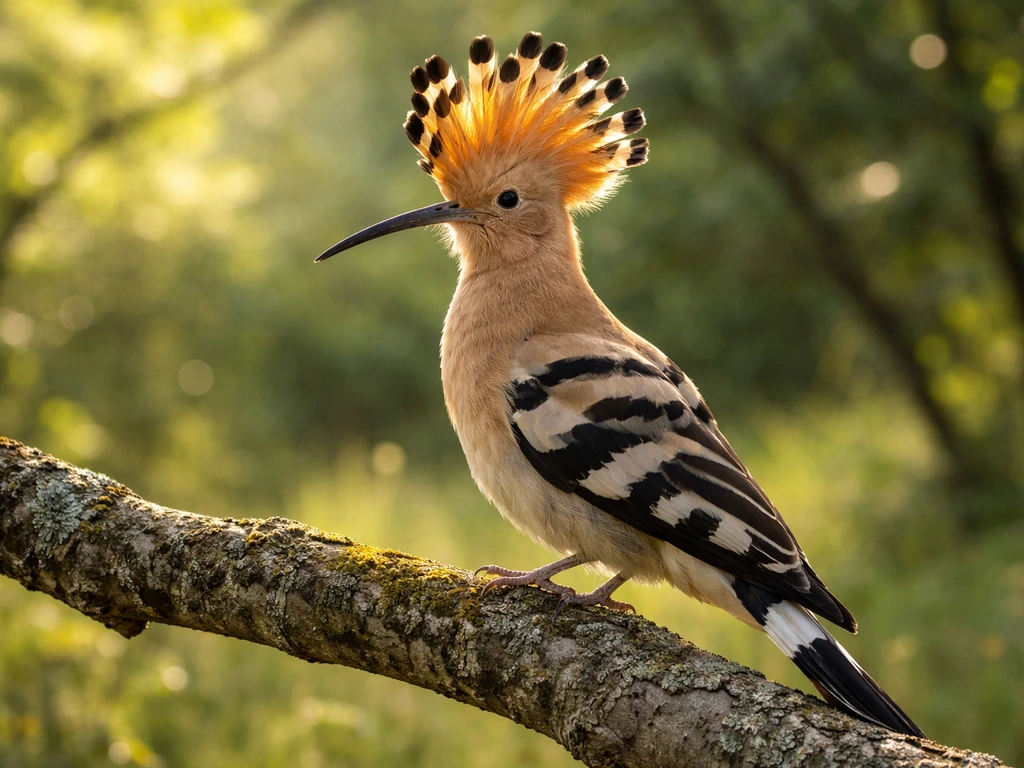
| Hoopoe | Wisdom, royalty, guidance, the soul | Middle East, Africa, Europe, South Asia | Regal, spiritual, literary | Crown of feathers; messenger in Quran and Persian poetry |
| Shoebill | Stillness, patience, ancient power, death omen | East/Central Africa | Primordial, unsettling, majestic | Prehistoric appearance; unnerving stillness |
| Phoebe | Renewal, return, seasonal faithfulness | North America (folk/literary) | Gentle, optimistic, personal | Name used as human name; Thoreau's journals |
| Khope | Regional/esoteric | Specific regional tradition | Specialized | Niche cultural reference |
| Papiha | Longing, the rains, romantic separation | South Asia (Hindi poetry) | Melancholic, lyrical, romantic | Associated with the monsoon in Urdu/Hindi verse |
The shoebill is the most direct parallel in terms of atmosphere: both birds are deeply strange-looking, associated with death omens, and carry an unsettling quality rooted in their physical appearance and behavior. But where the shoebill's symbolism tends toward ancient, impersonal power, the potoo's is more personal and emotional, centered on grief and hidden presence. The hoopoe, covered in its own entry, is the potoo's tonal opposite: a bird of wisdom and guidance rather than mourning and concealment. If you are exploring night-bird symbolism, the potoo is in a category of its own within this site's coverage.
Quick recognition checklist and symbolic keywords
For birdwatchers: how to find and recognize a potoo
- Look for an upright, elongated silhouette on a dead branch stub or fence post at the forest edge
- The bird will be stock-still and facing you; it will not move unless closely approached
- Plumage is mottled grey-brown; scan for the shape rather than the pattern
- Eyes are the giveaway if the bird turns: large, brilliant yellow-orange, unmistakable
- Listen at dusk and pre-dawn for a descending series of mournful whistles
- In the Caribbean, the 'poor-me-one' call is a reliable ID; in South America, the descending wail of the urutau
- Great Potoo calls are louder, more wailing; Common Potoo calls are softer and more melodic
For writers and symbolism seekers: core keywords
- Night, darkness, the liminal
- Grief, mourning, lost love
- Hidden presence, camouflage, the unseen
- Watchfulness, supernatural awareness
- Ghost bird, soul of the dead, spirit messenger
- The moon, lunar guardian, mãe-da-lua
- Solitude, the lone watcher
- Awkward stillness (modern/meme register)
- Forest edge, threshold creature
Further reading and where to go next
For natural history detail, the Birds of the World species account for Nyctibius griseus (Cornell Lab, subscription required) is the most authoritative single source for identification, behavior, and range. Nigel Cleere's monograph 'Nightjars: Potoos, Frogmouths, Oilbird and Owlet-Nightjars of the World' remains the standard field-guide reference for the family. Nightjars: Potoos, Frogmouths, Oilbird and Owlet‑Nightjars of the World, Nigel Cleere (field‑guide monograph) provides detailed identification, plumage descriptions, size measurements, and distinguishing characters for potoos and related nocturnal taxa blank" rel="noopener noreferrer">Nightjars: Potoos, Frogmouths, Oilbird and Owlet‑Nightjars of the World — Nigel Cleere (field‑guide monograph). For acoustic experience, the Macaulay Library at Cornell and Xeno-canto both hold extensive recordings of all potoo species, and hearing the call is genuinely essential context for understanding the symbolism. For range and conservation, BirdLife International's species factsheets provide current assessments and distribution maps. For a related symbolic comparison, see the khope bird meaning entry. For folklore, the BOU's 'Chasing the ghost bird' blog post is a good entry point into the secondary literature. See the site's entry on opila bird meaning for a related take on nocturnal bird symbolism and regional folklore. For a related perspective on how iridescent plumage shapes cultural associations, see our opaline bird meaning entry.
Within this site, related entries that complement the potoo discussion include the shoebill bird meaning (for comparison on death-omen symbolism and physical strangeness), the hoopoe bird meaning (for a contrasting tradition of wisdom and guidance), the phoebe bird meaning (for North American bird naming and folk significance), and the papiha bird meaning in English (for another tradition where a bird's call becomes the primary vehicle for human emotional projection). Each of these entries maps a different part of the territory that the potoo occupies from its own corner.
The short version, and a note on cultural sensitivity
The potoo means grief, hidden presence, the uncanny, and watchfulness, across every tradition that has encountered it long enough to give it a name. Its symbolism is unusually well-grounded because it flows directly from documentable, observable behavior: a bird that vanishes in plain sight, calls like someone crying in the dark, and watches you with luminous eyes that never fully close. That combination of traits has produced consistent symbolic readings from Indigenous Amazonian communities to Jamaican folk tradition to contemporary internet culture, though the emotional register shifts from haunted to absurd depending on the context.
A cultural sensitivity note: the Guarani, Tupi, and various Amazonian traditions that generated the deepest folklore around this bird are living communities with ongoing relationships to their oral traditions. The legends summarized in this article draw on published secondary sources, and anyone wishing to use or build on Indigenous traditional knowledge in creative or commercial contexts should consult community-authorized publications and follow free, prior, and informed consent principles as outlined by bodies like the American Anthropological Association and the United Nations. The potoo's symbolism belongs to these communities first; the rest of the world borrowed it because it is that good.
If you are just starting to explore bird symbolism, the potoo is an excellent entry point precisely because its meaning is so legible. You do not need a field guide or a mythology textbook to understand why humans hear that descending wail in the dark and think of the dead. You just need to listen.
FAQ
What is the clear, SEO-friendly definition I should research for “potoo bird meaning”?
Research concise dictionary-style definitions (one sentence) plus etymology. Source types: major dictionaries (Merriam‑Webster, Collins, Dictionary.com), etymological/linguistic studies on 'potoo' and regional names (Portuguese, Guarani/Tupi). Example sources: Merriam‑Webster entry; regional etymology papers or theses on 'urutau'.
Which taxonomic and species-status questions must be confirmed?
Confirm accepted species in genus Nyctibius, recent splits (e.g., Rufous Potoo → Phyllaemulor), and English common-name standards. Source types: IOC World Bird List, Clements/eBird checklist, BirdLife species pages, IUCN Red List.
What natural-history details are required to support symbolism claims (appearance, calls, behavior, habitat)?
Document plumage, size, distinguishing marks, typical posture, vocal descriptions, nocturnality, foraging and nesting habits, and habitat/range. Source types: Birds of the World species accounts, field guides/monographs (Cleere), peer‑reviewed behavioral studies, Macaulay Library/Xeno‑canto audio, eBird range/status pages.
Which acoustic and multimedia evidence should be cited for the 'haunting call' motif?
Collect representative recordings, spectrograms, and acoustic studies showing call structure and seasonality. Source types: Macaulay Library, Xeno‑canto, acoustic monitoring studies (e.g., Pérez‑Granados & Schuchmann 2020), multimedia galleries in Birds of the World.
What ethnographic and folklore questions must I answer to cover traditional and indigenous associations?
Identify regional names and meanings (Guarani/Tupi 'urutau'), local myths (death omens, moon associations, guardian roles), variation by region, and whether claims are attested or speculative. Source types: peer‑reviewed ethnographies, community‑sanctioned publications, colonial missionary accounts (with caution), regional folklore collections, and reputable bird‑folklore summaries. Apply ethical sourcing for Indigenous knowledge (AAA code; FPIC guidance).
How should I qualify uncertain or conflicting folklore claims?
Note provenance, cite primary or high‑quality secondary sources, use cautious language for oral traditions not published with community permission, and reference ethics guidance on Indigenous knowledge. Source types: original ethnographic studies, community publications, AAA ethics statement, UN/FAO FPIC guidance.
Hoopoe Bird Meaning: Sound, Symbolism, and How to Identify It
Learn hoopoe bird meaning and sound, symbolism, cultural links, and how to confirm the bird with real ID cues.