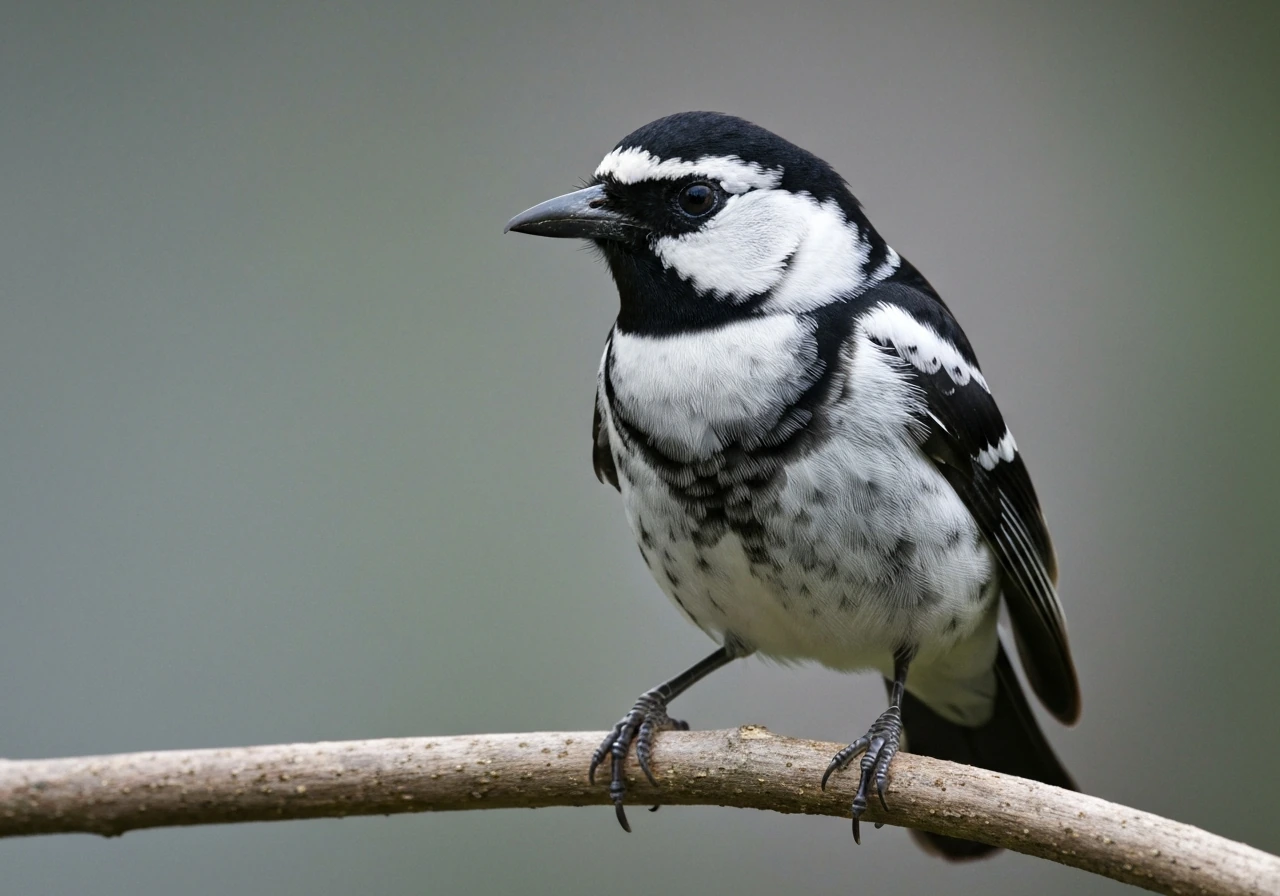
A pecking bird is any bird engaged in the sharp, repetitive striking motion of its bill against a surface, whether that surface is bark, soil, grain, another bird, or a windowpane. In the figurative sense, 'pecking bird' imagery is shorthand for persistence, aggression, hierarchy, or relentless small effort. The phrase sits comfortably in both a biology textbook and a boardroom metaphor, and knowing which meaning applies changes everything about how you read it.
Pecking Bird Meaning: Literal, Symbolic & Usage Guide and Idioms

Marcus Whitley
16 Jul 2026
What 'pecking bird' actually means: the quick version
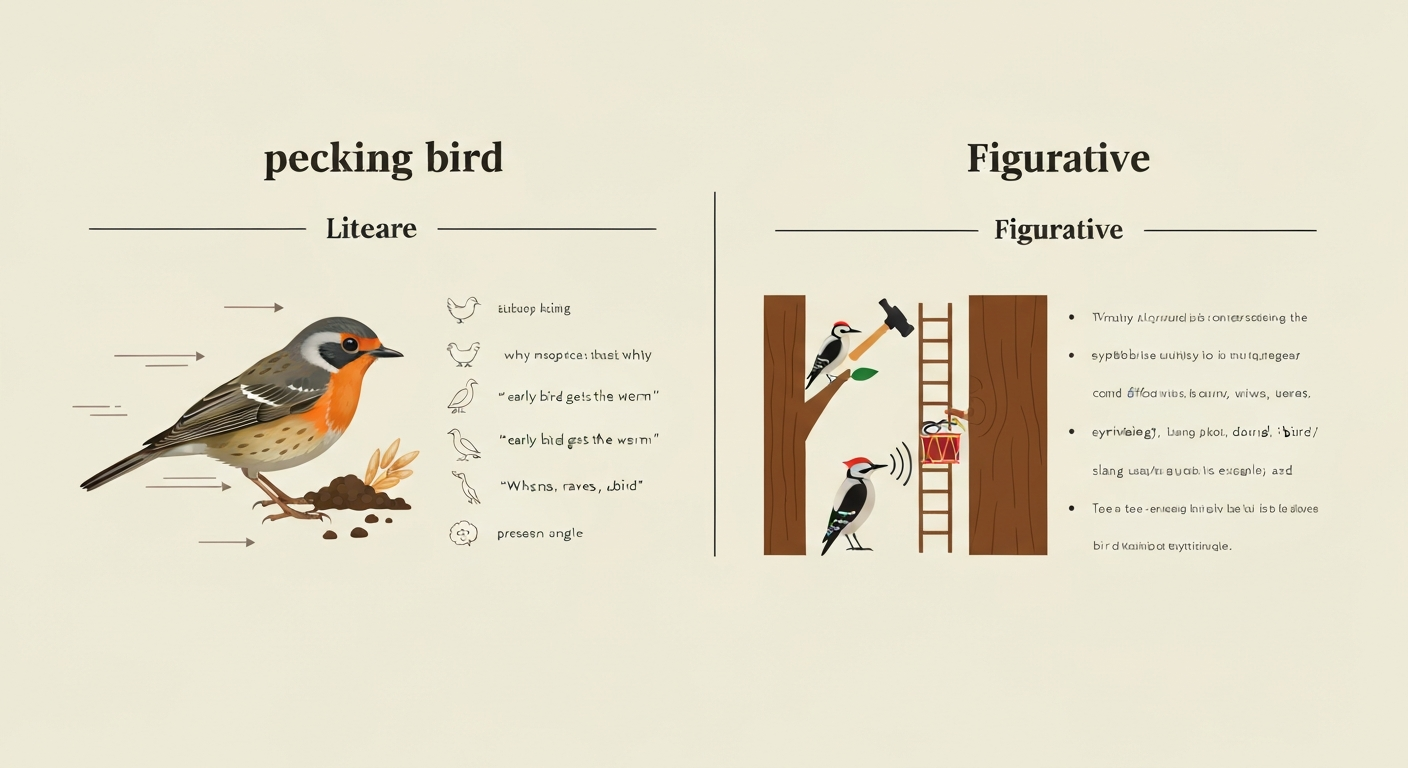
At its simplest, a pecking bird is a bird that pecks: it uses its bill in short, directed strikes to eat, communicate, defend itself, or build something. But 'pecking' carries freight well beyond ornithology. It shows up in social science (the pecking order), everyday idiom (to peck at your food), slang, dream interpretation, literature, and cultural symbolism stretching back to ancient Rome. The word 'peck' itself has been in English since at least the 14th century, and its figurative life is nearly as old.
- Literal sense: any bird striking a surface with its bill in a purposeful motion
- Behavioral sense: a specific action category used in ethograms, covering feeding pecks, aggressive pecks, preening pecks, and drumming
- Figurative sense: persistent, often irritating small effort, or an assertion of social rank
- Idiomatic sense: 'pecking order' describes a dominance hierarchy in any group, human or animal
- Cultural sense: pecking birds appear in divination, folklore, art, and literary symbolism worldwide
Why birds peck: the biology behind the behavior
Birds peck for at least five distinct reasons, and researchers who use Tinbergen's framework for behavioral biology separate these by asking both 'what triggers it right now' and 'what is it for in the long run.' The proximate trigger (hunger, a rival's approach, a parasite on a feather) is different from the adaptive function (getting calories, maintaining rank, keeping feathers flight-ready). Both questions matter if you want to understand what you're actually watching.
Feeding
The most obvious reason: birds peck to eat. The mechanics vary enormously by species. Shorebirds probe soft sediment using densely packed Herbst corpuscles and Grandry corpuscles in their bill tips, which act like remote-touch sensors to detect buried invertebrates without seeing them. Woodpeckers use a very different strategy: they chisel into wood and then use a long, barbed, sticky tongue to extract insects. Chickens and other galliforms simply strike downward at grain or soil. The bill shape, the force applied, and the target all vary, but the fundamental action (a directed strike with the bill) is the same.
Drumming and communication
Woodpeckers drum on resonant surfaces not to find food but to broadcast a territory or attract a mate. This is one of the most studied forms of non-foraging pecking. A 2022 study published in Current Biology found that the woodpecker skull actually functions as a stiff hammer rather than a shock absorber during high-speed drumming, transmitting force efficiently rather than cushioning the brain from impact. The bird's hyoid bone, which wraps almost completely around its skull, plays a structural role in this. Drumming rates and rhythms are species-specific enough that experienced birders can identify a woodpecker species by its drum pattern alone.
Preening
Allopreening (one bird preening another) often involves gentle, precise bill work around the head and neck where a bird cannot reach itself. These preening pecks are social gestures as much as hygiene, and they are coded separately in behavioral ethograms because they look different from aggressive strikes and have a completely different social meaning.
Aggression and dominance
Aggressive pecking is harder and more targeted than a feeding peck. In chickens and other flock species, aggressive pecks establish and maintain dominance hierarchies. Applied animal behavior research distinguishes between gentle pecks and injurious pecks in poultry ethograms, and feather-pecking (where birds direct pecks at the feathers of flockmates) is a welfare problem in commercial farming linked to environmental frustration and crowding. The behavior is considered a 'redirected' foraging behavior: the bird's motivation to forage is thwarted, and it redirects that energy toward a flockmate.
Nesting and construction
Many cavity-nesting species excavate their nest holes by pecking. Woodpeckers are the most obvious example, but other species, including some kingfishers and nuthatches, use or modify existing cavities partly through bill work. The pecking here is purposeful and sustained, sometimes taking days or weeks.
Species that make pecking their signature move
Different bird families have made pecking famous for different reasons, and knowing a few examples sharpens your reading of both the biology and the metaphor.
| Species/Group | Primary pecking context | Notable detail |
|---|---|---|
| Woodpeckers (Picidae) | Foraging, drumming, nest excavation | Drum rates are species-specific; skull acts as stiff hammer, not shock absorber |
| Chickens and galliforms | Feeding, aggressive pecking, dominance | Foundation species for 'pecking order' research; feather-pecking is a documented welfare issue |
| Corvids (crows, ravens) | Foraging, problem-solving, caching | Precise bill use; known to peck open containers and investigate novel objects |
| Gulls (Laridae) | Feeding, aggressive displacement | Red spot on herring gull bill triggers chick pecking — a classic stimulus-response model in ethology |
| Shorebirds (sandpipers, ibises) | Foraging by probing and surface pecking | Bill-tip organs with mechanoreceptors allow tactile detection of buried prey |
The herring gull example is worth expanding on because it became a landmark in behavioral science. Niko Tinbergen (whose four-question framework mentioned earlier shaped how we study animal behavior) showed that gull chicks peck at the red spot on their parent's bill to trigger regurgitation of food. The red spot is a 'supernormal stimulus': a cardboard model with an exaggerated red spot actually provoked more pecking than a realistic model of a gull's head. This is one of the most replicated findings in classical ethology and helps explain why the pecking behavior of birds is so finely tuned to specific visual triggers.
What pecking birds have meant across cultures
Bird-pecking has carried symbolic weight in human cultures for thousands of years, and the meanings are less uniform than you might expect.
Divination by pecking: alectryomancy
One of the most specific historical meanings comes from alectryomancy, the practice of divination by watching a rooster peck grain from a circle of letters. The rooster's pecking sequence spelled out answers to questions or predicted future events. This practice was documented in ancient Rome and Greece, and accounts of it appear in several classical texts. The rooster's pecking was not incidental: the bird's authority to 'speak' through its bill was built into the ritual's logic. If you ever encounter a painting or illustration of a rooster surrounded by letters or grain, that's almost certainly what it depicts.
Myth and religious symbolism
In various traditions documented in classical scholarship on birds in the ancient world, pecking birds could be harbingers, messengers, or agents of divine will. Woodpeckers held a sacred status in Roman mythology as birds of Mars, the war god. Their persistent pecking on wood was read as martial energy and determination. In some folk traditions, a bird pecking at a window is interpreted as a warning or omen, a reading that persists in contemporary dream symbolism.
Art and literature
Pecking birds appear in visual art across centuries, often carrying the same double valence they hold in language: industry and nourishment on one hand, aggression and destruction on the other. In Dante's Inferno, tormented souls are pecked by birds as punishment. In folk art traditions, birds pecking grain are emblems of abundance and fertile harvest. The image is versatile precisely because pecking itself is versatile: it creates (a nest cavity) and destroys (a rival's feathers), it feeds and it threatens.
Dream symbolism
In popular dream-interpretation traditions, a bird pecking you is frequently read as a sign of nagging anxiety, an unresolved problem demanding attention, or an external pressure you have been ignoring. A bird pecking grain in a dream is often interpreted more positively: patience and small efforts accumulating into something meaningful. As with most dream symbolism, context and the dreamer's own associations matter as much as any fixed meaning.
The language of pecking: idioms, slang, and how words developed
Pecking order: where it came from
The phrase 'pecking order' has a surprisingly precise origin. Norwegian zoologist Thorleif Schjelderup-Ebbe published observations of chicken flocks in 1921 and 1922, describing a linear dominance hierarchy he called the Hackordnung (hack order) or Hackliste (hack list) in German, from hacken, meaning to hack or peck. When the concept was translated into English, it became 'peck order' and then 'pecking order.' A 2022 centennial review of dominance hierarchy research confirms that Schjelderup-Ebbe's terminology went into widespread English use by the mid-20th century, and Merriam-Webster now defines 'pecking order' as both the literal dominance hierarchy in birds and 'a social hierarchy in which each member of a group dominates those below it.'
Other idioms and phrases
- 'Peck at' something: to eat without appetite or enthusiasm, or to work at something in a half-hearted, intermittent way ('She pecked at her salad'; 'He's been pecking at that project for months')
- 'Peckish': a British and Australian informal adjective meaning slightly hungry, derived from the idea of a bird pecking for food
- 'Peck on the cheek': a quick, light kiss, using the bird-peck image to describe brevity and lightness
- 'Peck order' (older variant): same meaning as 'pecking order,' occasionally seen in older texts
A word of caution about 'pecker'
The word 'pecker' is where things get contextually complicated. In standard use, a pecker is simply something that pecks, most commonly a woodpecker. Merriam-Webster's entry for 'pecker' documents this as the primary sense. The Merriam‑Webster entry 'PECKER, Merriam‑Webster Dictionary' documents the primary bird sense and also records American vulgar slang and the British idiom meaning courage, which explains the word's cross‑regional ambiguity PECKER — Merriam‑Webster Dictionary. But in American English, 'pecker' carries a well-known vulgar slang meaning, while in British English the same word means courage or spirits (as in 'keep your pecker up,' meaning stay cheerful). These regional divergences make the word a genuine communication hazard in cross-cultural writing. The pecker bird meaning entry on this site covers those distinctions in detail. For the purposes of writing about pecking birds, using 'woodpecker' or 'pecking bird' in full avoids any ambiguity.
Etymology: where 'peck' came from
The Online Etymology Dictionary traces 'peck' in the bird-bill sense to the mid-14th century, likely derived from a Low German or Middle Dutch root related to picking or poking. It is related to 'pick' (as in picking food), and the two words have overlapped in meaning for centuries. The noun 'peck' meaning a unit of dry measure (a quarter of a bushel) is an older and unrelated word. The figurative use of 'pecking' for small, irritating, repeated actions appears in English texts by at least the 16th century, making it one of the longer-lived bird-derived metaphors in the language.
Literal vs. metaphoric: knowing which sense you're dealing with
One of the most useful things you can do when you encounter 'pecking bird' or any pecking-related phrase is ask: is this describing actual bird behavior, or is it using that behavior as a frame for something else? The two senses behave differently in text, and mixing them up leads to genuine misreadings.
| Dimension | Literal sense | Metaphoric/figurative sense |
|---|---|---|
| What is being described | A bird physically striking with its bill | Persistent pressure, dominance, small repetitive effort, or social rank |
| Typical context | Nature writing, field guides, biology papers, birdwatching reports | Management writing, social commentary, literary fiction, idiom usage |
| Key signal words | Specific species name, bill, strike, drum, forage | 'Pecking order,' 'pecking away at,' 'peck at,' without a bird subject |
| Tone | Descriptive, observational, neutral | Often implies tedium, hierarchy, frustration, or persistence |
| Dream/symbolic use | Rare — dreams featuring literal birds pecking | Common — the pecking is the symbol, not the bird |
| Risk of misreading | Low if species context is clear | Higher when 'pecker' is used or when cultural background differs |
How to read pecking references in different contexts
Scientific and field writing
In scientific writing, 'pecking' is a technical behavioral category. Researchers distinguish feeding pecks from aggressive pecks, preening pecks, and drumming in their ethograms. If you see 'peck rate' or 'peck frequency' in a paper, it refers to a measurable behavioral unit, not a metaphor. Species-specific accounts from resources like Cornell Lab's All About Birds use 'drumming' for territorial woodpecker behavior and 'foraging pecks' for food-directed strikes, keeping the categories distinct.
News and social media
News headlines about 'pecking order' almost always mean dominance hierarchy, often in political or corporate contexts. On social media, 'pecking at' something means working on it slowly and without much progress. A post about a bird actually pecking something will usually include a photo or a species name. If neither is present, assume the figurative meaning.
Poetry and literary fiction
In literary contexts, a pecking bird is often doing symbolic work. It may represent persistence (think of the image of water wearing away stone, but with a bird and wood), anxiety, death, or transformation. The Poe tradition of birds as psychological presences (the raven, most famously) has shaped how English-language readers receive birds in poetry. A bird pecking in a poem is rarely just hungry: it is usually pressing on something, insisting on being noticed.
Dream and spiritual interpretation
In dream interpretation literature, a pecking bird is typically read as a message about something demanding your attention. The species matters: a woodpecker pecking in a dream often carries associations with persistence and hidden resources (the bird going beneath the surface to find food), while a crow or raven pecking may carry darker connotations depending on the tradition. If you are interpreting a pecking bird dream, the emotional tone of the dream (threatening vs. industrious) is usually a more reliable guide than any fixed symbolic dictionary.
Using 'pecking bird' in your own writing
Here are a few sample sentences showing how the phrase lands in different registers, which may help you calibrate your own usage.
- Natural history/descriptive: 'The downy woodpecker worked its way up the trunk in a spiral, its pecking sharp and rhythmic against the dead oak.'
- Figurative/professional: 'She had been pecking away at the manuscript for three months, adding a paragraph here, cutting two there.'
- Idiomatic/social: 'The new hire quickly figured out the pecking order at the agency and adjusted her approach accordingly.'
- Dream/symbolic: 'In the dream, a large dark bird kept pecking at the locked door — a detail she interpreted as unfinished business she had been avoiding.'
- Literary: 'The poem opens with a solitary bird pecking at frozen ground, a figure for the mind's own stubborn searching.'
One register note: in formal academic writing, 'peck' and 'pecking' are acceptable and widely used in behavioral ecology. In creative writing, they carry a slightly blunt, concrete quality that works well for grounded, physical imagery. Avoid using 'pecking' as a synonym for nagging or criticizing in professional communication unless the tone is clearly informal, since the word can tip into dismissiveness.
Common misreadings to watch out for
- 'Pecking order' does not imply that the top of a hierarchy is always the most aggressive: in some species, dominance is established with very few actual pecks once rank is settled
- 'Pecker' in British English is not vulgar — it means spirit or courage, and 'keep your pecker up' is an entirely polite encouragement
- A bird pecking at a window is most often explained by territorial behavior (the bird sees its reflection and perceives a rival) rather than any symbolic intention, despite popular omen readings
- Feather-pecking in poultry is not the same as the social pecking that establishes dominance: it is a welfare-linked behavior associated with frustration and crowding, not rank
- The word 'peck' as a unit of dry measure (as in 'a peck of pickled peppers') is etymologically unrelated to the bird behavior
Where to explore next
If this article brought you here for the biology, the woodpecker bird meaning page goes deep on the symbolism, etymology, and cultural history of that specific family. See the woodpecker bird meaning page for more on the symbolism, etymology, and cultural history of that family. For patterns of mixed black-and-white plumage and their symbolic meanings, see the pied bird meaning entry. If you arrived for the behavioral angle, the bird pecking meaning page focuses on what the action itself signifies when you observe it in the wild or in a domestic context. The pecker bird meaning entry covers the linguistic minefield around that particular word in detail, including the British versus American senses and why headlines using it sometimes cause unintended confusion.
For broader symbolic territory, the great speckled bird meaning page explores how a bird's visual pattern becomes a cultural and religious emblem, which is a useful companion piece for understanding how any bird characteristic, including how it moves and what it does with its bill, can accumulate meaning over time. The scratching bird meaning entry offers an interesting comparison: scratching and pecking are both ground-level foraging behaviors, but they carry quite different symbolic and idiomatic weights. The pied bird meaning page covers another dimension of bird symbolism built around appearance rather than behavior, and the peyote bird meaning entry explores a very specific ceremonial context in which a bird figure carries encoded cultural significance.
Images worth having in mind
If you are looking for visuals to accompany pecking bird content, three types of images do the most work: a close-up photograph of a woodpecker mid-strike against bark (ideally showing the bill at the moment of contact, which illustrates both the biomechanics and the determination); a behavioral diagram showing the five categories of pecking (feeding, drumming, aggressive, preening, and nest excavation) as labeled illustrations; and a photograph of a shorebird probing soft sediment, which illustrates how a tactile-foraging peck looks completely different from a woodpecker's hammer strike. The contrast between those two images alone communicates more about pecking diversity than a paragraph of text.
FAQ
What authoritative biological frameworks and sources are needed to explain why birds peck in the article's biology section?
Use Tinbergen’s four‑questions framework as the organizing principle (mechanism, development, function, phylogeny) and cite a contemporary review of that framework (e.g., Cambridge Core chapter on Tinbergen). Supplement with species‑level natural‑history sources such as Cornell Lab of Ornithology All About Birds for representative examples (woodpecker drumming, shorebird probing, galliform dominance pecks). Add biomechanics and anatomy papers (e.g., Current Biology woodpecker impact study; reviews of bill‑tip organs and Herbst corpuscles) and ethology/ethogram literature (applied‑ethology reviews on peck orders/feather‑pecking). Concrete research questions to answer: 1) What proximate neural, hormonal and sensory mechanisms trigger pecking across contexts? 2) How does pecking behaviour develop from juveniles to adults? 3) What adaptive functions differ among peck types (feeding, drumming, aggressive pecks, preening pecks)? 4) How widespread are pecking behaviours across bird clades and which species exemplify each context? 5) What measurable biomechanics (forces, accelerations) and anatomical specializations support specific pecks?
Which species‑level and field‑guide sources should I consult to provide concrete examples and observational details?
Use Cornell Lab of Ornithology’s All About Birds species pages and similar authoritative field‑guides for species accounts (woodpeckers, chickens/galliformes, shorebirds, corvids). Consult eBird and species monographs for quantitative or seasonal occurrence notes. Concrete research questions: 1) Which species best exemplify feeding pecks, drumming, social/aggressive pecks and preening pecks? 2) What are typical rates, targets, seasonal timing and contexts reported for those species? 3) Are there citizen‑science datasets that quantify pecking behavior or related activities for these species?
What biomechanics and anatomy research is needed to explain the mechanics of pecking and woodpecker adaptations?
Cite peer‑reviewed biomechanics studies (e.g., Current Biology 2022 woodpecker impact paper) and anatomical/sensory reviews on the bill‑tip organ and mechanoreceptors (Herbst/Grandry corpuscles). Concrete research questions: 1) What accelerations and forces are recorded during pecking/drumming in representative species? 2) Which cranial, hyoid and neck structures transmit or mitigate impact? 3) How does bill shape and tissue composition vary with pecking function? 4) How do tactile receptors and neural pathways provide feedback for precise pecking?
What ethology and welfare literature should inform sections on non‑foraging pecking (feather‑pecking, dominance pecks)?
Use ethograms and applied‑ethology reviews (e.g., critical reviews of how peck orders are measured; reviews of feather‑pecking and poultry welfare). Include experimental and management studies that document environmental, developmental and genetic drivers of injurious pecking. Concrete research questions: 1) What standardized ethogram categories separate gentle/affiliative pecks from aggressive or redirected pecks? 2) How reliably are different peck types distinguished by observers? 3) What environmental or social interventions reduce injurious pecking in domesticated birds?
Which lexicographic and etymological sources are needed for the idioms and word‑history section?
Consult major dictionaries and etymological references (Merriam‑Webster, Cambridge/Collins, Online Etymology, and OED if available) for documented senses and first‑use citations. Use the centennial review of the pecking‑order literature (Schjelderup‑Ebbe origins) for the idiom’s history. Concrete research questions: 1) What is the earliest recorded English use of 'pecking order' and how does it trace to Schjelderup‑Ebbe’s German terms? 2) How has figurative usage (social hierarchy) extended from literal pecking in corpora over time? 3) Which dictionaries provide dates and corpus evidence for related phrases like 'peck at' and 'peckish'?
What corpus and frequency resources should be used to separate literal vs figurative uses and regional differences?
Use large corpora and tools such as COCA, BNC, English‑Corpora.org, and Google Books Ngram Viewer to quantify diachronic frequency, collocates and register differences. Concrete research questions: 1) How has the relative frequency of literal vs figurative 'pecking' changed from 1900–present? 2) Which collocates (e.g., 'order', 'drum', 'feather') reliably signal idiomatic vs literal senses? 3) What regional or genre differences (US vs UK, spoken vs written) are evident?
Next Article
Pied Bird Meaning: What Pied Means and How It’s Used
Understand pied bird meaning: what pied means in plumage and how the phrase can be literal or symbolic.