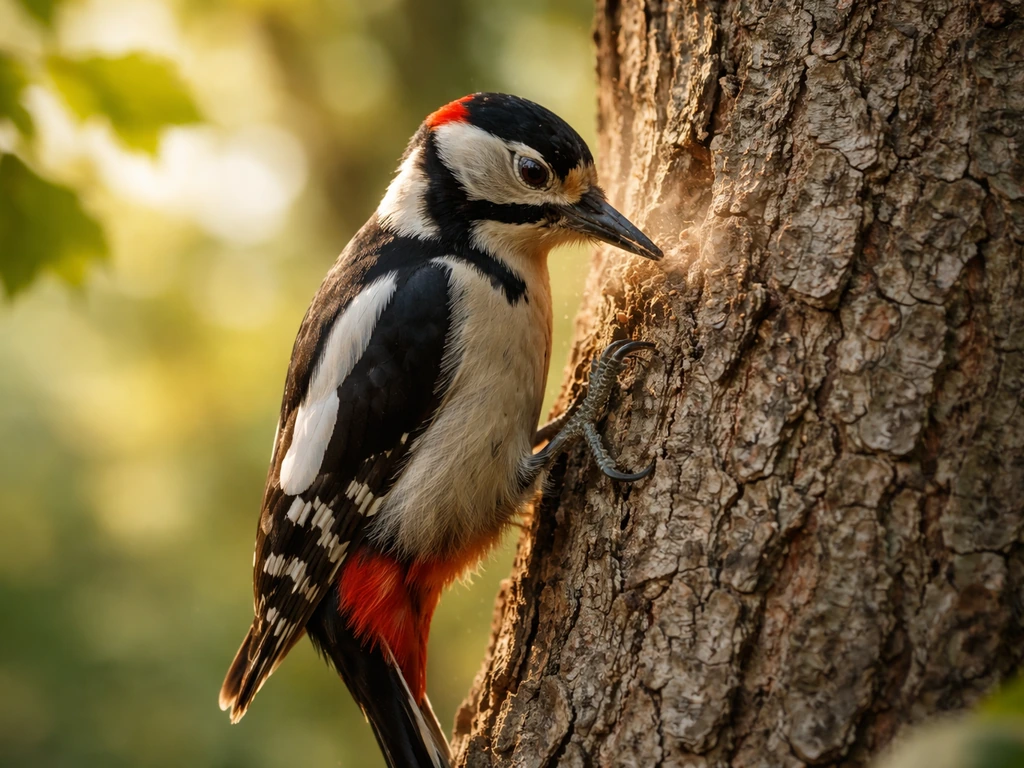
A 'scratching bird' most commonly refers to a bird that forages by raking through leaf litter, soil, or debris with its feet to uncover food. In educational and birding contexts, hens are the textbook example, but towhees, sparrows, juncos, and quail all qualify. When the phrase appears outside a nature or classroom setting, it usually carries a metaphorical meaning rooted in that same behavior: searching persistently, digging through the surface to find what's hidden, or restless survival instincts at work. There is no single fixed idiom called 'scratching bird' in English folklore, so the interpretation almost always depends on where you encountered it.
Scratching Bird Meaning: Definitions, Symbolism, Examples

Marcus Whitley
10 Jun 2026
How 'scratching bird' actually gets used

The phrase shows up in three distinct registers, and mixing them up is where most confusion starts. Once you know which register you're dealing with, the meaning locks in pretty quickly.
Literal: a behavioral label for real birds
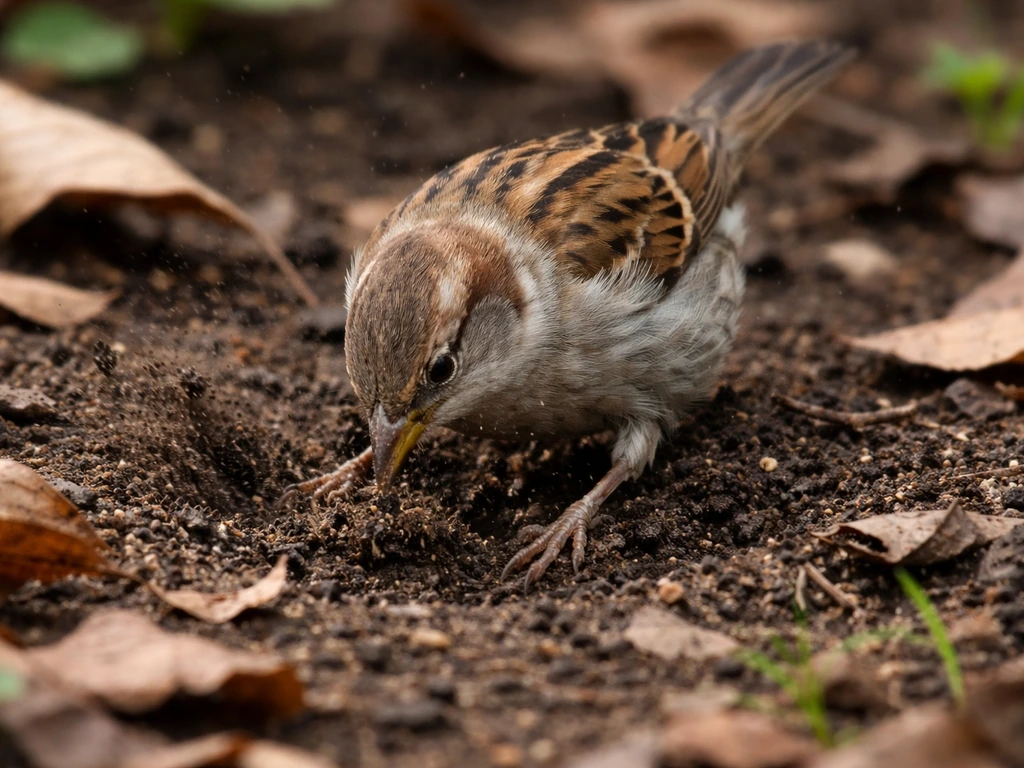
In biology classrooms and bird field guides, 'scratching bird' is a genuine category. Indian school curricula include exercises like 'Scratching bird : hen :: _ : crow,' treating it as a formal behavioral classification the same way you'd say 'wading bird' or 'diving bird.' The Smithsonian holds a collection item literally titled 'Scratching Birds,' using the phrase as a descriptive tag for observable behavior. Birding sources describe the Eastern Towhee, Spotted Towhee, California Quail, Vesper Sparrow, and Dark-eyed Junco all as birds that scratch, peck, or rake at ground litter to uncover seeds, insects, and berries. Dark-eyed Juncos are described as pecking or scratching at leaf litter to find food blank" rel="noopener noreferrer">Dark-eyed Junco all as birds that scratch, peck, or rake at ground litter to uncover seeds, insects, and berries.. Birdorable describes the Eastern Towhee as scratching at leaf litter to uncover seeds, insects, and berries blank" rel="noopener noreferrer">Eastern Towhee, Spotted Towhee, California Quail, Vesper Sparrow, and Dark-eyed Junco all as birds that scratch, peck, or rake at ground litter to uncover seeds, insects, and berries.. When the context involves leaf litter, soil, feeding, or species identification, the meaning is straightforwardly literal.
Metaphor and everyday speech
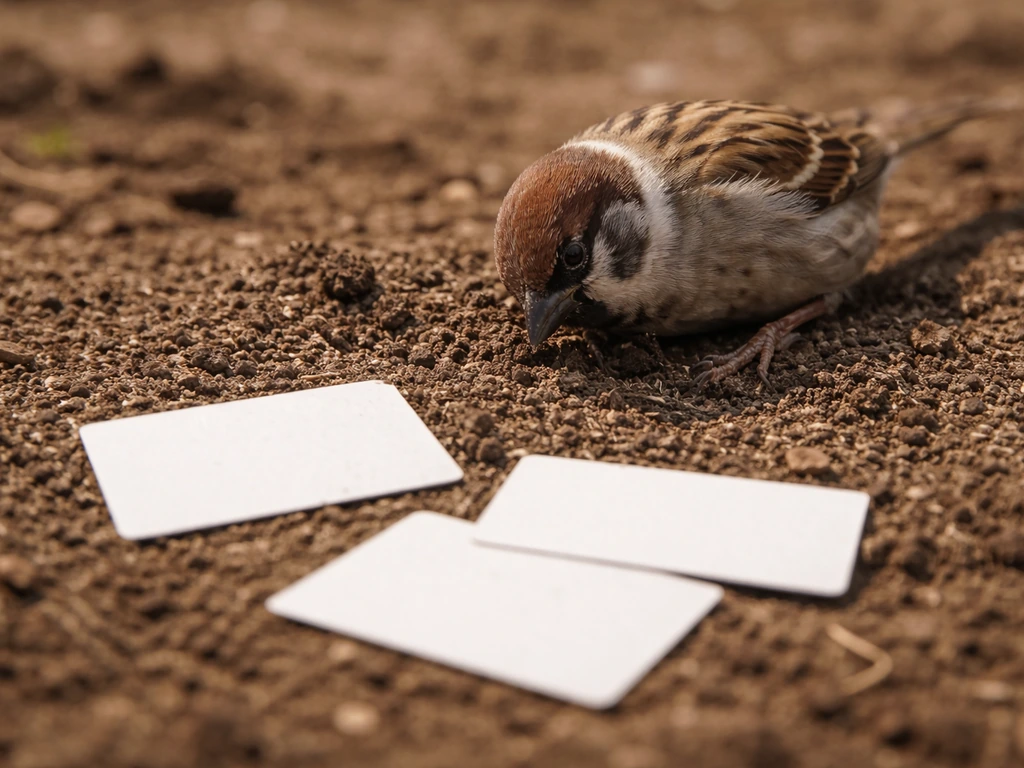
Outside of nature writing, 'scratching like a bird' or describing someone as a 'scratching bird' taps into the imagery of persistent, ground-level searching. It can suggest someone who is resourceful but working with little (scratching out a living), restless and always digging for something just beneath the surface, or agitated and unable to settle. The behavior is unglamorous but effective, which gives the metaphor a particular flavor: this isn't soaring eagle symbolism. It's survival-mode, find-what-you-can energy.
Slang and social media captions
On social media, a caption pairing a photo or video of a bird scratching at the ground with the word 'mood' or a joke about 'still searching for my purpose' is drawing on the same metaphor consciously and humorously. Someone might caption a video of a hen scratching around a yard with 'me looking through my emails for that one thing I know is in there.' The literal and metaphorical collapse into each other in those moments. In spiritual or fortune-telling posts, you might also see scratching bird imagery used as an omen prompt, though this is looser and less codified than, say, raven or crow symbolism.
What a scratching or foraging bird tends to symbolize
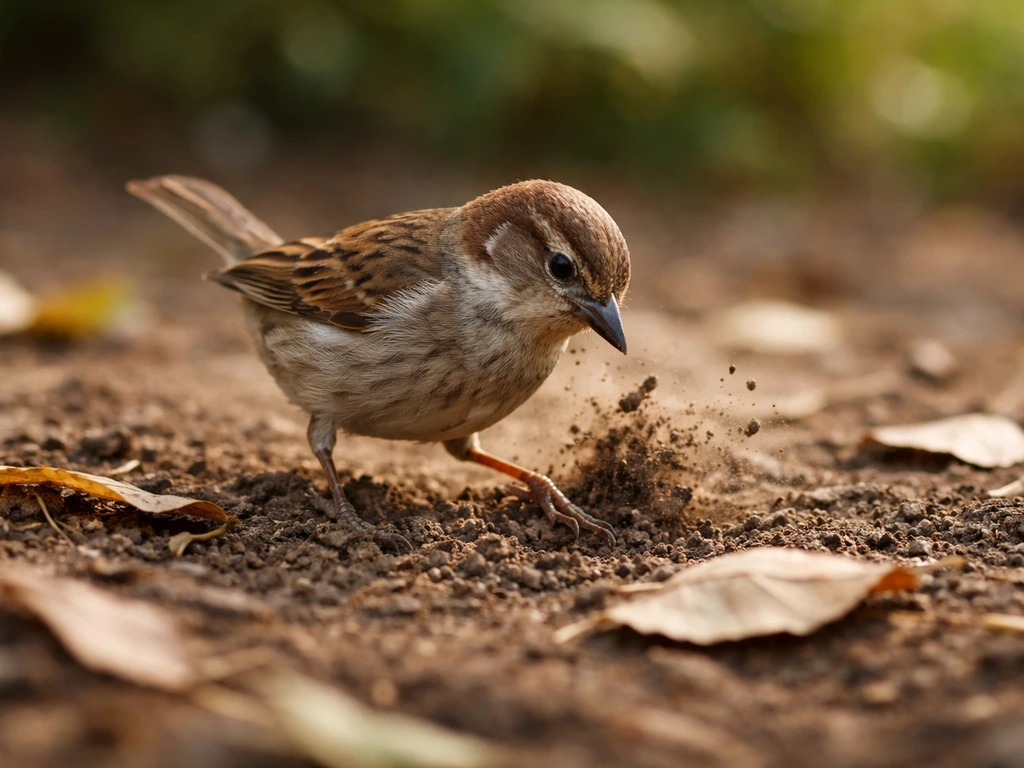
Even when no one explicitly calls it 'symbolism,' the behavior of ground-scratching birds carries a consistent set of cultural associations across different contexts. These aren't arbitrary. They come directly from what the behavior looks like and what it accomplishes.
- Persistence and resourcefulness: scratching through dirt or litter to find food is patient, methodical work. It reads as determined effort rather than flashy talent.
- Survival instinct: ground foragers operate close to the earth, dealing with what's available rather than waiting for ideal conditions. This ties the image to resilience and making do.
- Curiosity and restless searching: the constant movement and investigation of a scratching bird can symbolize an inquiring mind or an inability to stay still until something is uncovered.
- Disruption and unsettling the surface: scratching disturbs what's settled, which in folklore and metaphor can signal a coming change or the revealing of something hidden.
- Humility and groundedness: unlike birds of prey or high-flyers, scratching birds work at ground level, which gives them symbolic associations with practical people, workers, and those who stay close to real life.
- Attention-seeking: a bird making noise as it scratches through dry leaves is hard to ignore. In some interpretive contexts, this maps onto someone who keeps making their presence known until they get a response.
What 'scratching bird' means in different settings
Captions and social media
When a scratching bird appears in a caption, the meaning is almost always metaphorical and self-aware. Look at what the caption is responding to: is the tone funny and relatable (searching, digging, not finding what you want)? Is it spiritual (a sign, a message)? Or is it just an observation about the bird's behavior? Most of the time, a caption like 'scratching bird energy' or 'same, bird, same' is using the image as a mirror for the poster's mood, and the symbolism is roughly 'persistent searching' or 'restless foraging.'
Folklore and omens
There is no single, well-documented folk tradition built specifically around a 'scratching bird' as an omen the way there is for ravens or owls. What does exist is a general pattern: ground-level bird behavior has been read as a weather signal in various farming traditions (birds scratching more energetically before a storm, for instance), and in some folk beliefs, a bird acting unusually or persistently near a home is read as a sign. If you've seen a 'scratching bird omen' interpretation somewhere online, it's more likely a modern, loosely constructed spiritual reading than an ancient codified belief. Compare that to pecker bird or woodpecker symbolism, where specific pecking behaviors do have longer folkloric records. The pecker bird meaning is often tied to persistence and uncovering what is hidden pecker bird or woodpecker symbolism. If you’re specifically looking for pecking bird meaning, the symbolism often shifts toward targeted persistence and uncovering information pecker bird or woodpecker symbolism. The scratching bird's omen meaning, when it appears, usually comes down to 'something is being uncovered' or 'pay attention to what's beneath the surface. If you’re curious about specific symbolism tied to animals, you might also look up peyote bird meaning for a more niche, belief-oriented comparison. Great speckled bird meaning is often discussed in the same “what is being uncovered” lens, but it depends on the species and context in which you see it. '
Literature and poetry
In literary contexts, a scratching bird is almost always used for sensory or atmospheric effect. The image of a bird scratching at dry leaves gives a scene texture: it signals a particular kind of quiet, an undercurrent of small life, or an unsettled feeling. One poem line using 'scratching the air' as a sound image shows how writers lean into the scraping, restless quality of the behavior to create mood rather than deliver a symbolic message. When you encounter a scratching bird in a poem or story, ask what emotional work the image is doing. Is the scene unsettled? Is a character searching? Is there a contrast between the small, ground-level activity and something larger? Those are your interpretive keys.
Everyday speech and conversation
In casual conversation, calling someone a 'scratching bird' or saying someone is 'scratching around like a bird' is informal but not unusual. It usually means they're searching for something with more persistence than precision, or that they're working with limited resources. In that setting, the pied bird meaning is often framed as a sign of persistent searching and what might be hidden just beneath the surface. It can be said affectionately (a hard worker who never stops looking) or dismissively (someone who never finds what they're after because they're not looking in the right places). The tone of the speaker gives you most of the interpretive work here.
Cultural patterns around scratching and foraging birds
Across different traditions, ground-foraging birds occupy a specific symbolic niche that's distinct from both aerial birds (eagles, hawks, swallows) and water birds (herons, ducks). They tend to carry associations with the earth, practical wisdom, and the everyday rather than with the divine, the prophetic, or the noble. In many Indigenous North American traditions, ground-dwelling birds are connected to the soil itself, to planting cycles, and to the kind of knowledge that comes from close attention to ordinary things. In European folk traditions, chickens and hens (the quintessential 'scratching birds') appear frequently in domestic omens, with their behavior around the yard sometimes interpreted as signals about the household's fortune. A hen scratching toward the house was read differently than one scratching away from it.
The foraging behavior itself maps cleanly onto a broader symbolic vocabulary. Think about how the word 'scratch' is used in idioms across English: 'scratching the surface,' 'scratch a living,' 'scratch around for answers.' All of these carry the bird behavior's implicit meaning: you're digging, you're not getting much depth, but you're persisting. The scratching bird is almost the mascot of that kind of effort. It's worth noting that the pecking bird meaning (a related but distinct behavior) shares some of this territory, particularly around persistence and repetitive action, but pecking tends to carry more aggressive or targeted symbolism, while scratching stays closer to searching and uncovering. (You might also be looking at the bird pecking meaning.) pecking bird meaning.
In East Asian symbolic traditions, ground-foraging birds like chickens carry strong associations with diligence and daily sustenance, showing up in proverbs about consistent effort rewarded over time. The rooster, a scratching bird by behavior, holds major symbolic weight in Chinese culture as a sign of punctuality and persistence, which dovetails with the behavior-based reading. The scratching action is less emphasized than the bird itself in those traditions, but the connection to earth-level, daily-effort symbolism holds.
How to figure out which meaning applies to your situation
The single most useful thing you can do is look at the surrounding context. That context almost always tells you which meaning is in play. Here's a practical framework for working through it:
- Check for nature or science language: if the text mentions leaf litter, soil, foraging, feeding, species names, or habitat, the meaning is literal. You're looking at bird behavior, not symbolism.
- Check for omen or spiritual framing: words like 'sign,' 'luck,' 'fortune,' 'omen,' 'message,' or 'meaning in your life' signal a symbolic or spiritual interpretation. This is the register where you'd read the behavior as a message.
- Check for metaphorical or emotional language: if someone is describing human behavior using bird imagery, or if a caption is clearly self-referential, you're in the metaphor zone. 'Scratching bird energy' or 'scratching around for answers' both fall here.
- Identify the specific bird if you can: a hen is the default educational example. A towhee or sparrow in a nature guide is pure natural history. A rooster in a proverb carries cultural weight specific to that tradition. The species matters.
- Consider the source: a worksheet or field guide means literal. A poem or song means literary/atmospheric. A spiritual blog or fortune-interpretation post means symbolic. Social media usually means metaphorical and casual.
- Look for explicit cultural attribution: if the source says 'in [specific tradition], a scratching bird means...' take that seriously as a cultural interpretation. If no attribution is given, treat the symbolism as loosely constructed or modern.
Comparing the main interpretations side by side
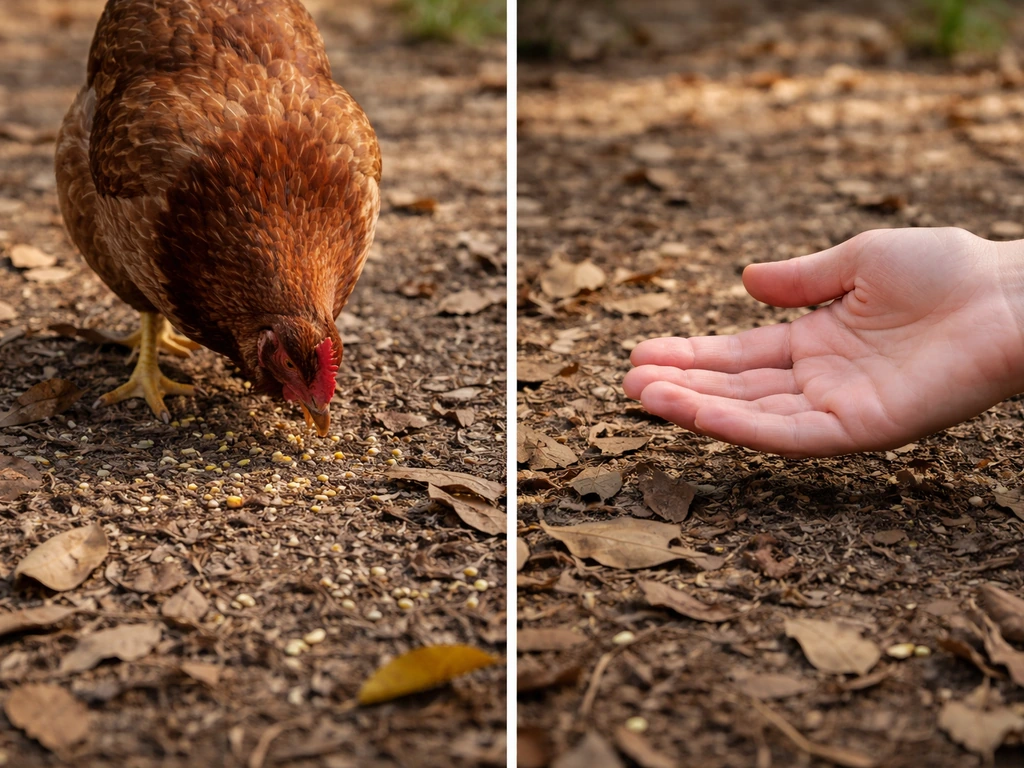
| Context | Most likely meaning | Key signal words or cues | Example |
|---|---|---|---|
| Educational or field guide | Literal behavior: ground-foraging | Leaf litter, seeds, foraging, species name | 'Hen is a scratching bird' on a worksheet |
| Social media caption | Metaphor: persistent searching or relatable restlessness | Mood, same, still looking, vibes | Photo of a sparrow with caption 'me all week' |
| Folklore or old saying | Omen or domestic sign about fortune/change | Sign, omen, luck, fortune, warning | Hen scratching toward the door = visitor coming |
| Literature or poetry | Atmospheric/sensory image, often unsettled mood | Sound imagery, contrast, scene-setting | Scratching sound in the leaves signals something stirring |
| Casual conversation | Someone working hard with little, or searching without precision | Scraping by, scratching around, making do | 'She's just scratching around like a bird, no real plan' |
| Spiritual or symbolic blog | Personal message: dig deeper, something is hidden | Message, spirit animal, meaning for you, universe | Seeing a scratching bird = time to uncover what's buried |
Your quick checklist and example interpretations
Run through this checklist whenever you're trying to pin down what 'scratching bird' means in a specific instance you've encountered:
- Where did you see or hear this phrase? (worksheet, field guide, social post, poem, conversation, spiritual article)
- Is a specific bird species named or pictured? (hen = educational default; towhee/sparrow/junco = birding; rooster = cultural/proverbial)
- Does the surrounding text mention food, soil, leaf litter, or foraging? If yes, go with the literal behavior interpretation.
- Does the surrounding text mention signs, omens, luck, or spiritual messages? If yes, treat it as symbolic.
- Is the phrase being used to describe a person or human situation? If yes, it's a metaphor about searching, surviving, or persisting.
- Is the tone humorous or self-aware? If yes, it's casual metaphor, not deep symbolism.
- Does the source give an explicit cultural or traditional origin? If yes, follow that attribution. If no attribution is given, don't treat the symbolism as ancient or universal.
Three quick example interpretations
Example 1: You see 'scratching bird : hen' in a school worksheet asking you to fill in an analogy. This is purely literal and categorical. The answer you're looking for involves another bird matched to another behavior. No symbolism, no metaphor.
Example 2: A spiritual wellness article says 'if you see a scratching bird near your home, it may be a sign to dig deeper into a situation you've been avoiding.' This is a modern symbolic reading. It's using the behavior as a metaphor for introspection and has no single ancient source backing it up. It's valid as a personal interpretive frame, but don't treat it as a fixed folk tradition.
Example 3: A friend says 'I've been scratching around like a bird trying to find a decent job this month.' This is casual metaphor. The meaning is clear: persistent but somewhat scattered searching, not finding much, surviving on whatever turns up. No birds were consulted in the making of that sentence. That's the phrase doing what metaphors do, borrowing the image of a ground-foraging bird and applying it directly to human experience.
FAQ
How can I tell whether “scratching bird meaning” is literal or metaphorical in a specific post?
If the phrase is used like a descriptor (for example, “a scratching bird feeding on seeds”), it is usually literal ground foraging. If it appears as a mood tag, caption, or advice (“scratching bird energy,” “a sign to dig deeper”), it is typically metaphorical and depends on the writer’s intent.
Is “scratching bird” meaning the same as “pecking bird” meaning?
Try to separate “scratching” from “pecking.” Scratching reads more like broad searching and uncovering, while pecking often implies more targeted, repeated hitting at something specific. If the image shows deliberate raking in leaf litter, the “scratching bird” frame is usually the better match than a pecking frame.
Why doesn’t “scratching bird” have one single fixed meaning like some folk omens?
In English, there is no standard, widely recognized idiom “scratching bird” with a fixed dictionary definition. Most meanings are constructed by context, so you should interpret it as “persistent ground-level searching” unless the surrounding text explicitly points to omen, metaphor, or classroom category.
What does “scratching bird” mean when it appears on school materials or diagrams?
If you saw “scratching bird” in a worksheet or curriculum analogy, it usually functions as a behavioral label (bird type matched by feeding action), not symbolism. The fastest cue is whether the surrounding material asks you to pair categories (for example, “scratching bird : hen :: ____ : crow”).
How should I evaluate “scratching bird omen” claims I see online?
If someone claims a specific “scratching bird omen” tied to an ancient tradition, treat it cautiously. Unlike older, better documented symbols (for example, raven or owl associations), scratching bird omen claims are often modern, loosely assembled readings rather than codified folklore.
What’s the best way to interpret “scratching bird energy” in a caption?
For captions, check whether the text is self-aware humor, advice, or pure observation. “Same, bird, same” style lines usually mean relatable persistence or anxious searching, while “sign to pay attention” style lines mean introspection or attention to hidden issues.
What does “scratching bird” usually do in literature, symbolism-wise?
In poems or stories, the image is usually doing sensory or atmospheric work, such as creating texture, quiet busyness, or a restless undercurrent. Ask what emotional state the scene supports, whether a character is searching, and whether small earth-level activity contrasts with something bigger.
If someone says “I’ve been scratching around like a bird,” is that usually positive or negative?
In casual talk, “scratching around like a bird” most often points to persistent searching with limited precision or resources. It can be affectionate (hard working, never gives up) or dismissive (keeps looking but doesn’t find), so the speaker’s tone is the deciding factor.
What should I assume if the phrase is used alongside bird species names?
If the phrase appears in a wildlife setting with identifiable species (towhees, juncos, sparrows, quail, hens), the meaning is almost certainly about behavior, feeding habits, and ground foraging. Avoid metaphor unless the article stops describing species and starts advising or labeling emotions.
Can “scratching bird” really predict weather or storms?
If the source mentions “weather” or “before a storm,” treat it as a belief or anecdotal interpretation, not a reliable rule. Ground-scratching can increase for many non-weather reasons (food availability, habitat conditions), so use it as context for curiosity, not a prediction method.
Next Article
Woodpecker Bird Meaning Explained: Symbolism, Signs, and More
Woodpecker bird meaning: symbolism, spiritual omens, dreams, and practical reasons for tapping at home or windows.