When someone uses the word 'parrot,' they could mean the actual tropical bird with the hooked bill and flashy feathers, or they could mean someone who mindlessly repeats what they heard without thinking about it, or they could be referencing a dream symbol, a cultural omen, or a figure of speech. The fastest way to figure out which meaning applies is to look at the context: is it a verb (she just parrots everything her boss says), a noun in a figurative sentence (he's such a parrot), a literal sighting, or a description of a dream? Once you pin down the context, the meaning snaps into focus quickly.
Parrot Bird Meaning: Symbolism, Idioms, Etymology

Marcus Whitley
10 Jul 2026
The everyday meaning of 'parrot': bird, verb, and slang
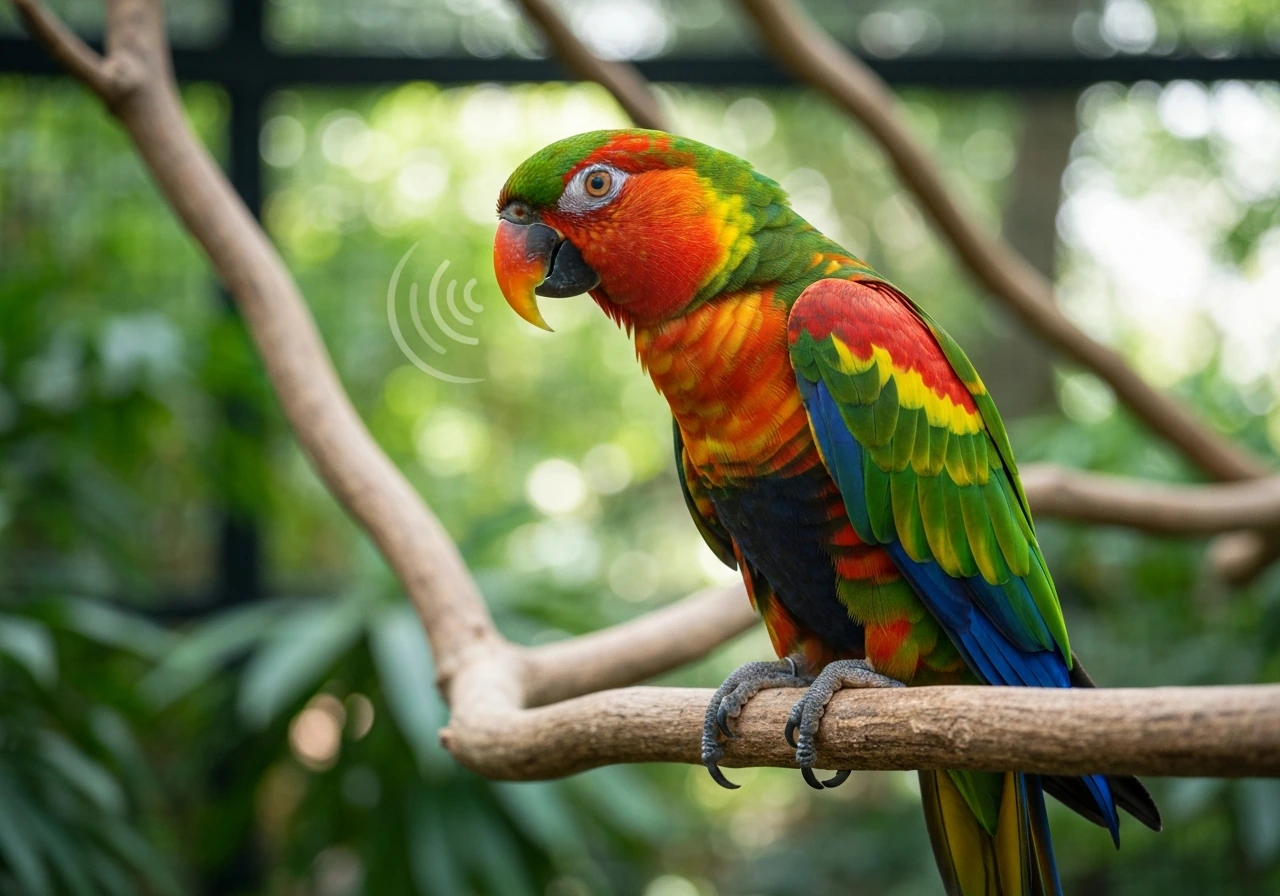
As a noun, a parrot is a member of a large group of typically brightly colored tropical birds known for their strong hooked bill and, famously, the ability of certain species to mimic human speech. There are roughly 400 species in the parrot order (Psittaciformes), ranging from the giant hyacinth macaw down to tiny parrotlets. The mimicry ability is what gave the parrot its cultural power as a symbol and, eventually, its role as a metaphor in language.
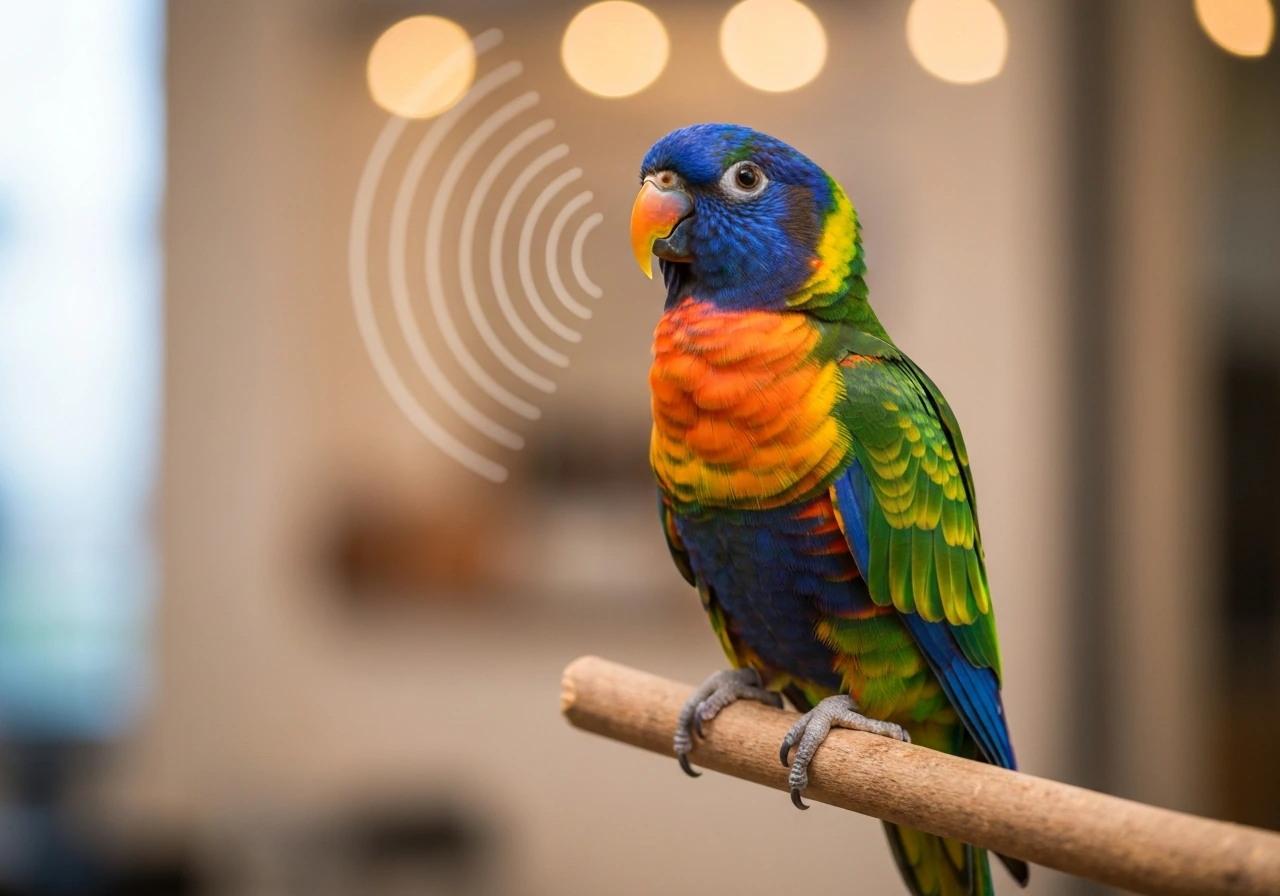
As a verb, 'to parrot' means to repeat exactly what someone else has said without understanding it or thinking about its meaning. Every major dictionary agrees on this core definition. Cambridge says it plainly: to parrot is 'to repeat exactly what someone else says, without understanding it or thinking about its meaning.' Oxford adds the social dimension: you're parroting someone when you repeat their words without engaging your own judgment. It carries a mild but clear negative charge. Calling someone a parrot implies they're not processing information, just bouncing it back.
The adverb 'parrot-fashion' stretches this idea further. If you learn something parrot-fashion, you've memorized it by rote, mechanically, without any real understanding of what it means. Students who cram vocabulary lists for a test without grasping usage are learning parrot-fashion. The phrase is especially common in British English.
In casual slang, 'parrot' is also used in a few regional and playful ways. British slang sometimes uses it to describe someone who talks excessively or repeats gossip. The 'dead parrot' phrase, made famous by Monty Python, entered the cultural vocabulary as shorthand for something that has obviously failed but is being stubbornly presented as fine. That sketch resonated because it mapped perfectly onto the verb sense: denial as a form of parroting a false narrative.
What parrots symbolize across cultures
Parrots carry surprisingly rich symbolic weight across different cultures, and a lot of it revolves around the themes you'd expect from a bird that can talk back to you: communication, voice, intelligence, and the fine line between genuine expression and empty mimicry.
Communication and the power of voice
Across South Asian traditions, the parrot has long been a messenger bird. In Hindu mythology, the parrot (called 'shuka' in Sanskrit) is the vehicle of Kamadeva, the god of love, and is associated with sweet speech and desire. Parrots in Indian folk literature often carry secret messages between lovers, which is why the bird became a symbol not just of communication but of intimate, trusted speech. This stands in interesting contrast to the Western verb sense, where parroting implies unthinking repetition rather than meaningful message-carrying.
Color, exoticism, and status
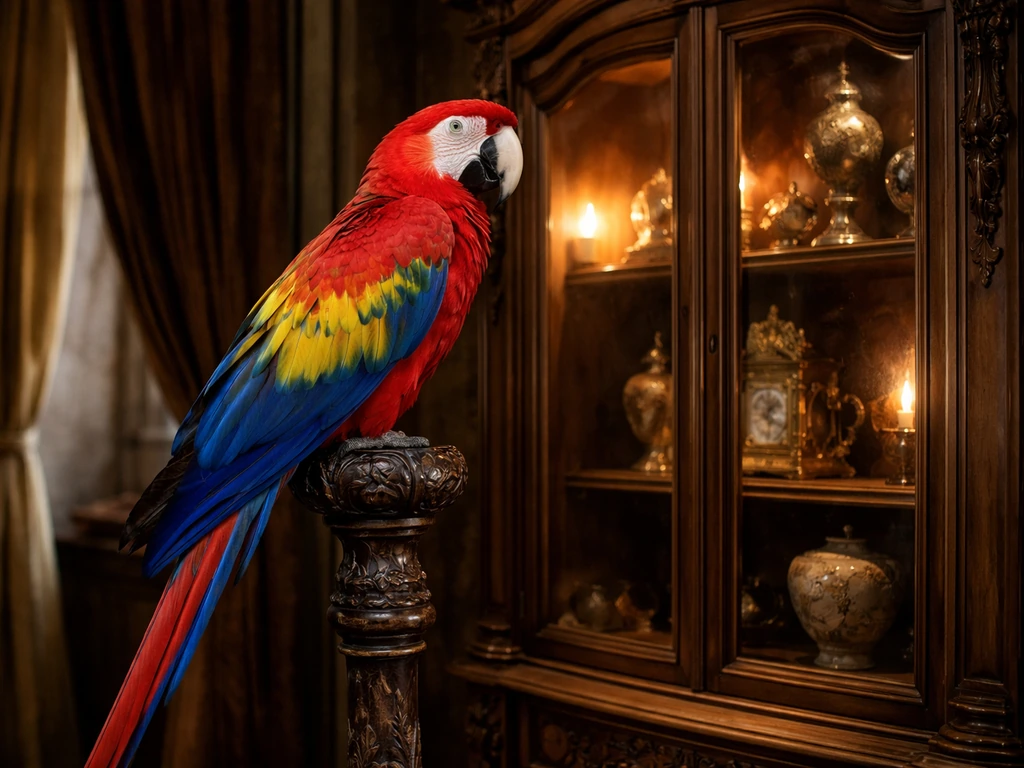
In European history, parrots arrived as exotic imports from tropical colonies, and owning one was a status symbol for the wealthy. Paintings from the 15th through 18th centuries show aristocrats and royalty posed with parrots as a signal of global reach and wealth. This gave the parrot an association with exoticism, luxury, and the unusual. The vivid colors of species like macaws and eclectus parrots reinforced this: a parrot was not a subtle bird. It announced itself. That flamboyance maps onto how the word 'parrot' is sometimes used today to describe someone who is loud, colorful in personality, or hard to ignore.
Trickery, deception, and empty words
On the shadow side, parrots in Western symbolism often represent deception or false speech. Because the bird says words it doesn't understand, it became a symbol of people who speak without wisdom, whether that's a gossip, a flatterer, or a politician repeating talking points. Pirates and sailors kept parrots, which gave the bird an association with rough edges and a transient, untrustworthy lifestyle in popular imagination. This is the symbolic root of the modern verb: parroting is speaking without the backing of genuine thought.
How parrot symbolism compares to similar birds
If you're exploring bird symbolism more broadly, it's useful to compare the parrot to related birds. The peacock, for instance, also carries themes of color and display, but its symbolism leans toward pride and watchfulness rather than communication. If you’re looking for peacock bird meaning, the symbolism often centers on pride, watchfulness, and being seen The peacock, for instance, also carries themes of color and display. The macaw, which is technically a type of parrot, carries its own specific symbolism rooted in Mesoamerican culture and solar imagery. These distinctions matter when you're trying to interpret a specific bird reference in a text or conversation.
Parrot in idioms, phrases, and everyday speech
The parrot shows up in a handful of well-used expressions, and each one clusters around the same core theme of unthinking repetition or noisy talk. Here are the ones you're most likely to encounter:
- "To parrot someone" or "to parrot something": to repeat what another person said, word for word, without adding your own thinking. Used critically. ("He just parrots whatever the talking heads say.")
- "Parrot-fashion": to learn or repeat something mechanically, by rote, with no real understanding. Common in British English. ("She recited the speech parrot-fashion but couldn't explain what it meant.")
- "Dead parrot": borrowed from Monty Python, now used to describe something that has obviously failed but is being denied or dressed up as working. ("Their strategy is a dead parrot at this point.")
- "Sick as a parrot": British English slang meaning deeply disappointed, often used in a sports context. ("He was sick as a parrot after the penalty miss.")
- "Pretty Polly": an old-fashioned phrase referencing the stereotyped pet parrot name, sometimes used to mock hollow or empty flattery.
In all of these phrases, the underlying idea is consistent: parrots talk, but their talk is surface-level. The idioms use that quality to describe people, situations, or organizations that produce noise without real substance. When you hear someone call a colleague 'a parrot,' they're almost certainly commenting on that person's tendency to repeat others without contributing original thought.
Where the word 'parrot' actually comes from
The etymology of 'parrot' is genuinely interesting and helps explain why the word carries the meanings it does. The word entered English in the early 16th century, most likely from the Middle French 'Perrot,' a pet form of the name Pierre (the French equivalent of Peter). This was a common way of naming parrots in France at the time, similar to how English speakers would later use 'Polly' or 'Polly Parrot.' It was a personified name: the bird got a person's name because it seemed to talk like a person.
The word replaced the older English term 'popinjay,' which had been in use since the 14th century and came from Old French 'papegai' (itself from Arabic 'babagha' and possibly tracing back further east). Popinjay survived in the language too, though it evolved to mean a vain or conceited person. The shift from popinjay to parrot as the dominant bird name mirrors the cultural shift toward emphasizing the speech-mimicry aspect over the visual showiness. Once 'parrot' was established as a noun, the verb use followed naturally: if someone echoed your words back, they were 'doing what a parrot does,' and eventually 'parroting' you.
Interestingly, many other languages use a different animal to describe the same concept of mindless repetition. In German, for example, you might say someone 'nachbeten' (prays after, like a parrot reciting prayers). In other European languages, monkeys or cuckoos fill the same metaphorical role. English landed on the parrot specifically because of how central the mimicry behavior became to the cultural image of the bird.
Parrots in dreams, omens, and spirit animal interpretations
If you're trying to interpret a parrot that showed up in a dream, a recurring sighting, or a spiritual context, the key is to hold both the positive and shadow sides of the symbolism at once, because the parrot genuinely carries both.
Dream interpretations
Dreaming of a parrot talking is most commonly interpreted as a prompt to examine whether you're speaking authentically or just repeating what you've been told. It can be a signal from your subconscious that you need to find your own voice in a situation. A brightly colored parrot flying freely often reads as a positive sign around communication, creativity, and self-expression. A caged parrot or one that is silent tends to carry the opposite meaning: voice being suppressed, ideas being trapped, or a message that isn't reaching its destination.
Dreaming of a parrot mimicking you specifically, rather than just talking in general, is sometimes interpreted as a warning to pay attention to how your words are being used by others, or whether someone in your life is presenting your ideas as their own.
Omens and sightings
In cultures where parrots are native (parts of South Asia, Central and South America, sub-Saharan Africa, and Australasia), wild parrot sightings have been read as omens for centuries. In Indian folk tradition, a parrot appearing before a journey was considered auspicious, linked to the bird's role as a message-carrier. In some indigenous Mesoamerican traditions, macaws and parrots were connected to the sun and to sacred fire, so a sighting could carry solar or transformational significance. In some traditions, people connect specific macaw sightings to spiritual themes like communication and transformation, which is part of the wider macaw bird meaning people discuss today.
In contemporary Western contexts, people who work with spirit animal frameworks often describe the parrot as a guide toward authentic communication, urging you to think before you speak rather than just echoing the crowd. The spirit animal interpretation flips the common negative of the verb sense into a positive challenge: the parrot appears to ask whether your words are truly yours.
Practical questions to ask yourself
Before you commit to any one interpretation of a parrot in a dream or omen context, it helps to ground yourself in a few concrete questions about what you actually experienced:
- Was the parrot talking, silent, or mimicking you specifically? Each has a different symbolic weight.
- Was it caged or free? Freedom versus confinement is a consistent theme in parrot symbolism.
- What color was it? Vivid green and red parrots carry different cultural associations than grey parrots do.
- What were you feeling in the moment of the sighting or in the dream? Your emotional response is part of the meaning.
- Is there a communication situation in your current life that feels unresolved? Parrot imagery often points there.
How to pin down the exact meaning for your context
Because 'parrot' can mean at least four different things depending on context (the bird, the verb for rote repetition, a symbolic or omen-based reference, or a specific idiom), the best approach is a quick triage: figure out which category you're dealing with first, then go deeper. In spirit-animal and omen circles, the umbrella bird meaning is often tied to protection, shelter, and guiding you to speak with intention.
| Context | What 'parrot' most likely means | Best next step |
|---|---|---|
| Used as a verb in a sentence | Rote repetition without understanding | Check the Cambridge or Oxford definition of 'parrot (verb)' and look at the surrounding sentence for who is being criticized |
| Used in an idiom or phrase (e.g., 'sick as a parrot', 'parrot-fashion') | A fixed expression with its own meaning | Look up the specific phrase, not just the word 'parrot,' in a dictionary of idioms |
| Appearing in a dream | Symbolic message around communication or voice | Apply the symbolic framework above; cross-reference with any current life situation involving communication |
| A literal wild sighting in an unusual location | Potentially an omen or memorable natural event | Research the cultural tradition most relevant to your background; note behavior and color |
| In a literary or historical text | Often figurative: mimicry, flattery, deception, or exoticism | Check the period and culture of the text; parrot symbolism shifts significantly between 16th-century Europe and contemporary usage |
| In conversation about a person's behavior | Informal criticism: the person repeats without thinking | Context is everything; 'he's a parrot' is almost always a criticism of intellectual independence |
If you're researching bird symbolism more broadly, it's worth knowing that 'parrot' sits in an interesting cluster with birds like the macaw (a type of parrot with its own distinct symbolism), the peacock (display and status), and the dove or peace bird (the opposite of the parrot's noisy complexity). The peace bird meaning can help you interpret passages that contrast calm, harmony, and gentleness with more noisy or deceptive symbolism. Each of these birds carries a specific symbolic identity, and comparing them can sharpen your understanding of what any one of them means in a specific context.
The short version: whenever 'parrot' comes up, ask whether someone is describing a behavior (verb), an animal (noun), a specific saying (idiom), or an experience (dream or sighting). If you came here specifically to understand the partridge bird meaning, make sure you distinguish it from the symbolism of the parrot. That single question will point you to the right interpretive framework, and from there the meaning becomes clear pretty quickly.
FAQ
When someone says “parrot” in conversation, how can I tell if they mean the bird or the verb (repeating)?
Check whether it’s describing an action or a person’s behavior. If it’s followed by “everything,” “words,” “phrases,” or a quote-like object, it’s usually the verb sense. If there’s mention of feathers, species, “in the wild,” or a real sighting, it’s the bird.
Is it okay to call a person “a parrot”? Is it always meant as an insult?
In most everyday contexts, yes, it’s taken negatively because it implies they lack judgment. If you want a softer alternative, you can say “they repeat what others say” or “they echo other people,” which avoids the sharpness of the idiom.
What does “parrot-fashion” imply, and is it the same as “rote learning” or “cramming”?
It strongly implies memorization without understanding, the same idea as learning by rote. The nuance is that it’s about mimicry of information, not just quantity, so it often fits vocabulary list cramming or regurgitating definitions without applying them.
Can “parrot” ever be used neutrally, or is it always negative as a metaphor?
As a verb-metaphor, it typically carries a mild negative charge. Neutral uses are more likely when someone’s goal is accuracy, for example “I need you to repeat it exactly” or “train your team to follow the script,” where “parroting” is about precision rather than thoughtless repetition.
What’s the difference between “parrot” and “echo” when describing someone repeating others?
“Echo” can be neutral, meaning to repeat or reflect. “Parrot” usually adds the criticism that the speaker is not processing meaning. If the point is “they repeated it,” echo fits better; if the point is “they repeated it without understanding,” parrot fits better.
Are there common mix-ups between “parrot bird meaning” and “partridge bird meaning”?
Yes, because the spellings and bird categories get confused. “Parrot” usually ties to speech mimicry in English usage, while “partridge” tends to point to different symbolism (often earthiness or provision depending on tradition). Treat it as a spelling-critical distinction, not an interchangeable one.
If I see “dead parrot” in text, does it always refer to denial or can it mean something else?
In most popular usage, “dead parrot” signals denial of an obvious failure, often implying someone insists everything is fine after a clear problem. If the surrounding text is about humor, bureaucracy, or cover-ups, that’s usually the best match for the idiom.
How should I interpret a dream involving a parrot if the dream is positive overall?
Even in positive dreams, it can be a prompt to check authenticity. Look for details like freedom versus confinement (flying freely often points to self-expression, a caged or silent parrot points to voice being blocked). If the dream resolves with the parrot being trusted, that leans toward meaningful communication rather than empty mimicry.
Does “parrot mimicking me” in a dream mean I’m being copied, or that I’m being dishonest?
Interpretations often split: mimicry can symbolize how others frame your words, or it can reflect how you mirror other people. A practical check is to ask whether the dream focuses on control and ownership (who is speaking for whom). If your words are being used, it’s more about external influence; if you feel compelled to speak the “wrong” way, it’s about internal echoing.
If I’m using symbolism, how do I avoid forcing the “parrot” meaning when other birds are mentioned too?
Compare what each bird is doing in the scene. If the passage emphasizes speech, voice, or repetitive commentary, parrot is likely the best match. If it emphasizes display or visibility without speech emphasis, peacock-type themes may be doing the work. When multiple birds appear, prioritize the one tied most directly to the action or emotion in the sentence.
Next Article
Umbrella Bird Meaning: Literal Name, Symbolism, and Examples
Clear umbrella bird meaning: literal vs figurative use, symbolism like shelter and guidance, plus real examples.