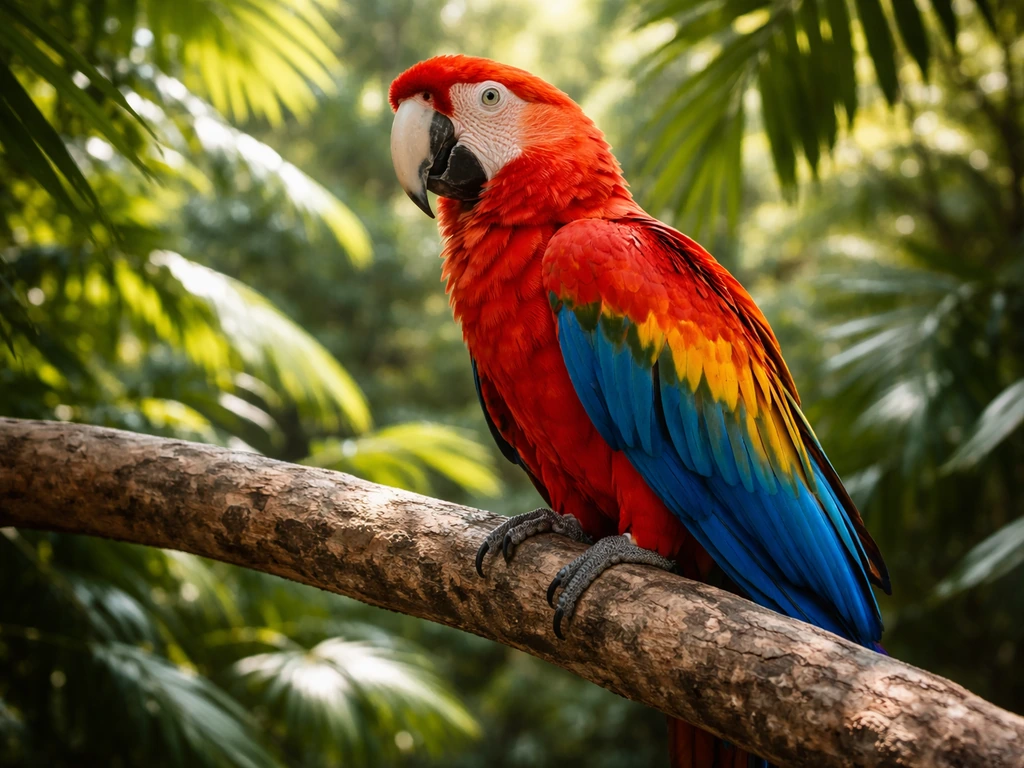
When someone says 'peace bird,' they almost certainly mean a dove, specifically the white dove carrying an olive branch that has been the go-to peace symbol in Western culture for centuries. Collins Dictionary defines 'bird of peace' as a dove, Cambridge calls the dove 'often used as a symbol of peace,' and icon libraries tag peace-bird artwork as 'peace dove' by default. So if you saw the phrase on a greeting card, a tattoo, or a piece of wall art and wondered what it means, the short version is: it's a dove, and it stands for peace, hope, and reconciliation.
Peace Bird Meaning: Symbol, Variations, and How to Interpret It

Marcus Whitley
4 Jun 2026
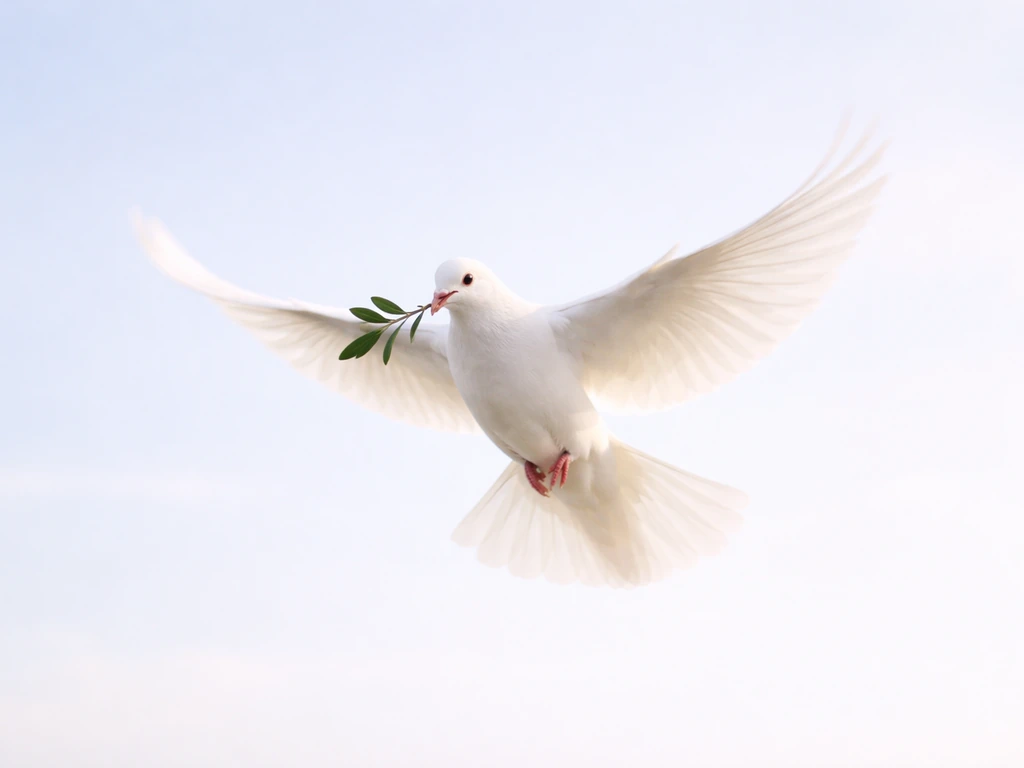
What most people mean by 'peace bird'
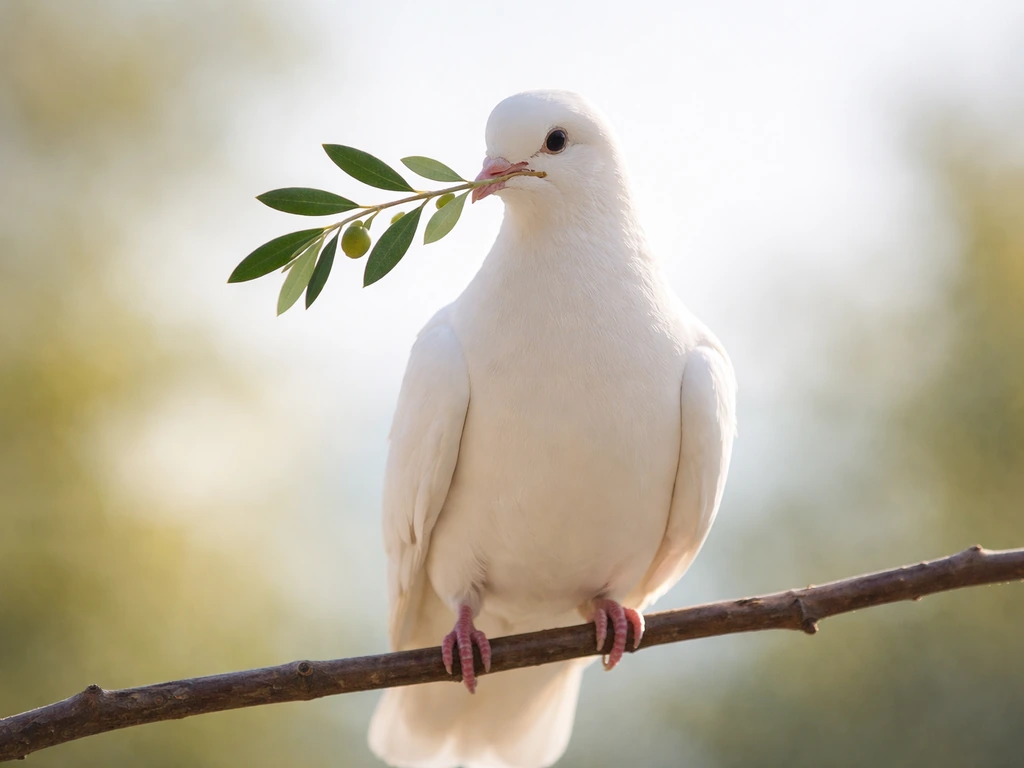
The phrase 'peace bird' works as an informal label for any bird used to represent peace, but in practice it almost always points to the dove-with-olive-branch icon. You'll see it on UN commemorative stamps (which explicitly feature a white dove carrying an olive branch in blue outline), on Dove of Peace replicas sold as official UN gifts, and in hundreds of everyday graphics where the bird silhouette stands in for the concept of harmony.
UN stamps called “Dove of Peace” embroidered stamps feature a white dove carrying an olive branch, in blue outline, to symbolize a shared commitment to peace UN “Dove of Peace” embroidered stamps. The United Nations itself describes the dove-and-olive-branch pairing as 'accepted in many religions and places as a symbol of love and peace,' which tells you how universally the shorthand has landed.
That said, 'peace bird' is a descriptive phrase rather than a fixed proper noun, so it can technically attach to other species. A 1971 statue actually titled 'The Bird of Peace' (also known as 'Mute Swans') uses swans as the peace-associated bird, not doves. So the phrase has some flexibility. But for everyday use in greetings, art, tattoos, and conversation, dove is the default reading by a wide margin.
Dove vs. generic peace imagery: what's the actual difference?
Not every 'peace bird' image is a dove, and not every dove image is really about peace. Here's how to tell them apart.
A true dove-based peace symbol has a recognizable visual grammar: a small, rounded bird (often white or pale) in flight or with wings spread, usually holding or hovering near an olive branch. That combination is the standard. Encyclopaedia Britannica notes that the 'dove of peace' is specifically a white domestic pigeon, not a wild bird, which is why the icon looks so clean and idealized rather than naturalistic. When both the dove form and the olive branch are present, you're looking at the core symbol with no ambiguity.
Generic peace iconography drops one or both of those elements. Picasso's 1949 lithograph 'La Colombe' (which became the emblem for the World Peace Council and was used as the poster for an international peace congress in Paris) was simply a realistic picture of a pigeon with no olive branch at all.
Wikipedia's discussion of doves as symbols also notes that Picasso's La Colombe (The Dove), from 1949, depicts a pigeon/dove without the olive branch, showing peace symbolism can omit the olive motif La Colombe (which became the emblem for the World Peace Council and was used as the poster for an international peace congress in Paris) was simply a realistic picture of a pigeon with no olive branch at all. .
The dove silhouette was enough to carry the meaning by that point. So a bird-in-flight image without an olive branch can still be a peace-bird symbol if the context supports it, but it's less immediately clear.
| Feature | Classic dove peace symbol | Generic peace-bird imagery |
|---|---|---|
| Bird species shown | White dove or domestic pigeon | Dove, swan, or stylized bird silhouette |
| Olive branch present | Usually yes | Often absent |
| Color | White or very pale | Any color; may be abstract |
| Context clues | UN, peace events, religious art, greeting cards | Tattoos, abstract art, stationery, protest imagery |
| Meaning clarity | Immediately reads as 'peace' | Requires context to confirm peace intent |
The symbolism behind the peace bird: peace, hope, and reconciliation
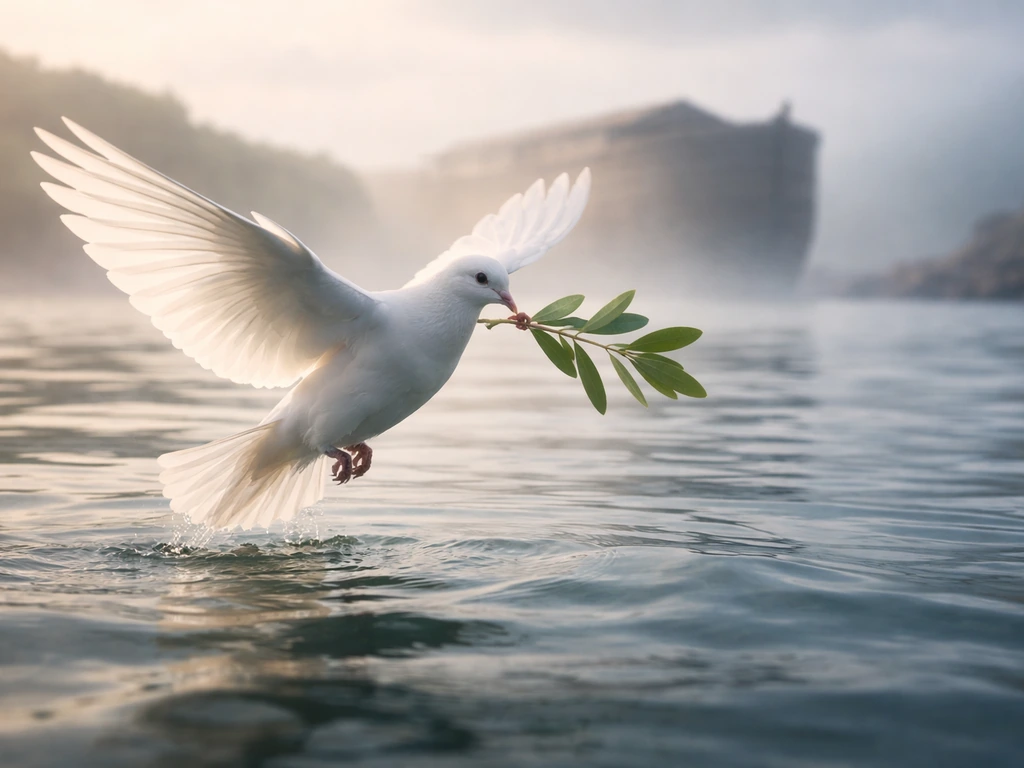
The dove became a peace symbol because of the specific story it comes from. In the biblical account of Noah's Ark, a dove returns carrying an olive branch after the flood, signaling that the waters have receded and the earth is habitable again. That's not just a peace image, it's a restoration image. The dove wasn't just announcing calm; it was announcing that crisis was over and life could resume. That layering of peace, hope, and reconciliation all came bundled together in a single bird carrying a twig, and it stuck.
Early Christians took that image and used it in funerary art alongside the word 'Peace,' cementing the dove as a carrier of both hope for the afterlife and peace in the present. Over time, that explicitly religious imagery crossed into secular use. The key turning point was Picasso's post-World War II dove, which stripped away the religious framing and made the dove a purely political symbol of peace between nations. National Geographic notes that the dove's durability as a peace symbol comes 'in part' from the Noah story, but the Picasso connection gave it reach into 20th-century mass culture.
So when you see a peace bird today, the symbolism can carry any combination of these themes depending on context: simple peace and calm, active reconciliation between opposing parties, hope after a hard period, or harmony between people or nations. The olive branch sharpens the meaning toward active peace-making rather than just serenity.
How culture and religion change what the peace bird means
The dove-as-peace-bird is primarily a Western and Christian-influenced symbol. In Christianity, the dove carries a double layer of meaning: it represents peace from the Noah story and also the Holy Spirit, which descended as a dove at Jesus's baptism. That overlap means a dove in a Christian religious context might be about divine presence as much as peace. When you see a dove in a church, in baptism imagery, or on a memorial stone, the peace reading and the spiritual reading sit side by side.
Outside Christianity, the dove-peace association is still widely recognized but may not carry that same Holy Spirit layer. The United Nations uses the dove-and-olive-branch specifically because of its broad cross-religious and cross-cultural acceptance, describing it as a symbol recognized across many faiths and regions. That makes the dove peace symbol unusually portable globally, even if its roots are Abrahamic.
In East Asian contexts, the crane is the bird most closely associated with peace, longevity, and good fortune, not the dove. If you're looking at Japanese or Chinese art and encounter a bird that seems to carry peaceful or auspicious meaning, the crane is often the relevant species there. Similarly, in some folk traditions and modern art, swans (as in the 'Mute Swans' peace statue) carry peace associations through their quiet, graceful presence on water. The dove's dominance as a peace bird is real, but it's not the only bird that culture has assigned to this role.
How to read a peace-bird image: a practical checklist
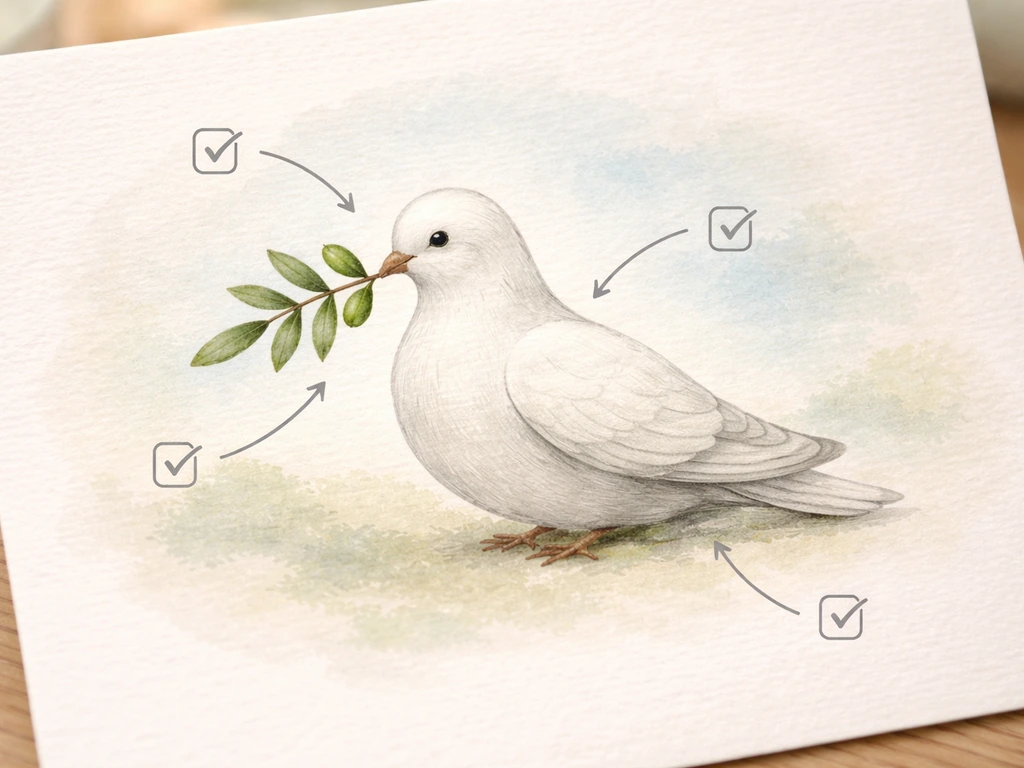
If you encounter a peace-bird design on a tattoo, a piece of art, a gift, or a greeting card and want to know exactly what it's saying, these are the visual cues that nail down the meaning:
- Bird shape: Is it a small, rounded dove or pigeon silhouette? That's the clearest species cue for the standard peace-bird icon.
- Color: Is it white or very pale? White strongly reinforces the peace-dove reading. Colored or abstract birds are more likely to be decorative or carry a personal interpretation.
- Olive branch: Is the bird holding or touching an olive branch or small leaves? This is the single biggest confirmation that the image is specifically about peace, reconciliation, or hope, not just a generic bird.
- Flight posture: Is the bird shown in flight with wings spread? That posture signals freedom and peace rather than, say, a watchful perched bird (which reads differently).
- Accompanying text or symbols: Words like 'peace,' 'shalom,' 'pax,' or 'hope' make the intent explicit. A peace symbol or olive wreath nearby confirms the reading.
- Context of use: A tattoo on someone's forearm at a memorial service reads differently from the same design on a wedding invitation, even if the image is identical. Reconciliation and calm coexist in the symbol, but context tips which one is foregrounded.
- Cultural or religious markers: A halo or rays of light around the dove shifts it toward Holy Spirit imagery in Christian contexts. No such markers usually means a secular peace intent.
If the image has a white bird in flight with an olive branch and no religious markers, you're looking at a straightforward secular peace symbol. If the olive branch is missing but the dove silhouette is clean and white, it's still almost certainly a peace reference, just in the Picasso-influenced stripped-down mode. If the bird is a swan, a crane, or something more ambiguous, the accompanying text or cultural context will tell you whether peace is the intended read.
How people actually use 'peace bird' in everyday language
In everyday conversation and writing, 'peace bird' shows up in a few distinct ways. Macaws are bright, social birds, and their meaning is often tied to traits like communication, confidence, and strong bonds peace bird. The umbrella bird meaning is often tied to ideas like protection, shelter, and guidance peace bird. Most commonly it's used as a shorthand label in visual contexts: someone describing a tattoo idea might say 'I want a peace bird on my shoulder,' meaning a dove with or without an olive branch. It also appears in craft and gift descriptions, where 'peace bird ornament' or 'peace bird print' signals a dove-themed item with peaceful decorative intent.
The phrase 'bird of peace' (the slightly more formal variant) shows up in speeches, poetry, and diplomatic language to evoke harmony without getting specific about religion. Saying 'may the bird of peace fly over this conflict' works as a secular, culturally broad metaphor that avoids explicitly Christian dove symbolism while still carrying the same weight.
You'll also see 'peace bird' used loosely to describe any calm, gentle bird in someone's garden or life, the way people say 'that little bird always sits quietly on my fence, my personal peace bird.' That's a personal metaphorical use that borrows the symbolism but applies it informally. In those cases the 'peace bird' is whatever bird that person associates with calm, and it might not be a dove at all.
If you're building a design, choosing a gift, or writing about the concept, the cleanest version of the symbol is still the white dove with an olive branch. It communicates instantly and travels across cultural and generational lines in a way that few other symbols manage. Other peace birds like the peacock (often associated with beauty and pride), the parrot (linked to communication), or the macaw exist in broader bird symbolism, but none of them carry the specific 'peace' semantic load the dove does. Other peace birds like the peacock (often associated with beauty and pride) are sometimes discussed as part of bird symbolism, so if you are looking up the peacock bird meaning, focus on the context and the cultural source of the symbol.
FAQ
If I see a “peace bird” in a non-Western artwork, does it still mean a dove?
Not always. The Western dove-with-olive-branch is the default in greetings and mass media, but some cultures use other birds for peace or auspicious meanings, such as cranes in East Asian contexts. If the piece includes cultural motifs, language, or a specific bird species, use that as the primary clue rather than the phrase alone.
What visual details should I look for to confirm it is the classic peace symbol?
Look for both elements together: a dove-like bird shape (often white or pale, stylized) and an olive branch (or a branch held near the beak). If the olive branch is missing, it can still reference the peace symbol in a simplified “Picasso-style” way, but you should treat it as less certain unless the surrounding context supports it.
Can “peace bird” mean something political, not just peaceful calm?
Yes. When the dove is presented in a stripped, modern icon style (often without explicit religious markers), it is frequently tied to 20th-century political peace messaging, meaning reconciliation between nations or parties, not only personal serenity.
Does a dove image always imply “peace,” or could it mean something else?
A dove can carry other meanings depending on the setting. For example, in Christian contexts it can reference the Holy Spirit alongside peace. If the artwork is church-related, includes baptism imagery, or has religious text, the “peace” reading may share space with spiritual meaning.
What does the “olive branch” specifically add compared with a dove alone?
The olive branch usually shifts the meaning toward active peace-making and restoration after conflict, rather than just general calm. A dove silhouette without the branch can still signal peace, but it tends to be more symbolic and less specific about the “peace after crisis” story.
I’m choosing a tattoo, how can I avoid accidentally using the “wrong” species or symbolism?
Confirm the exact species in the design and check for the olive branch. If you want the universally recognized peace shorthand, request a white dove in flight or with wings spread, with an olive branch included. If you prefer other peace associations (like swans or cranes), make that intent explicit in the artwork brief.
Is “peace bird” the same as “bird of peace,” or are there subtle differences?
They are close, but “bird of peace” can appear as a more formal title and sometimes refers to specific works or species in context, not just the common dove icon. When it is used as a formal phrase, pay attention to whether the surrounding description names a particular bird (for example, a swan-based statue).
Why do some images show a pigeon or a non-realistic dove style?
Many “dove peace” visuals are intentionally idealized, so they may not look like a wild bird. Some depictions use a domestic pigeon or simplified dove shape for clean, instantly readable symbolism, which is why the icon can look graphic or “too perfect” compared with natural birds.
How should I interpret “peace bird” when someone uses it as a personal phrase, like “my peace bird”?
Treat it as a metaphor created by the person. In that kind of sentence, the “peace bird” is whatever bird they associate with calm in their own life, so it may not match the dove meaning at all. The safest assumption is personal symbolism, not a universal emblem.
If the text says “peace bird ornament” or “peace bird print,” what should I expect the product to depict?
Most of the time it will be a dove-themed design, often white and sometimes paired with an olive branch, because that is the most recognizable peace icon. Still, check the preview image for species and whether an olive branch is present, since “peace bird” can be used loosely to sell other peace-associated birds.
Next Article
Macaw Bird Meaning: Symbolism, Dreams, Sightings, and More
Macaw bird meaning in dreams and sightings: symbolism of color, freedom, voice, loyalty, playfulness, and context-specif