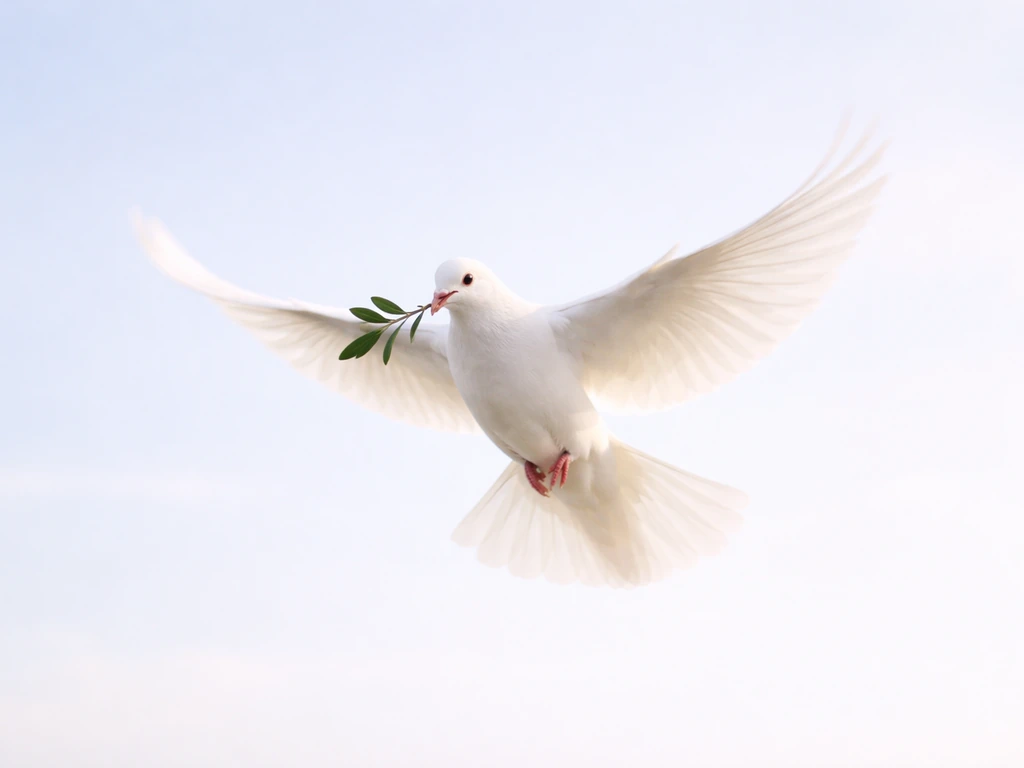
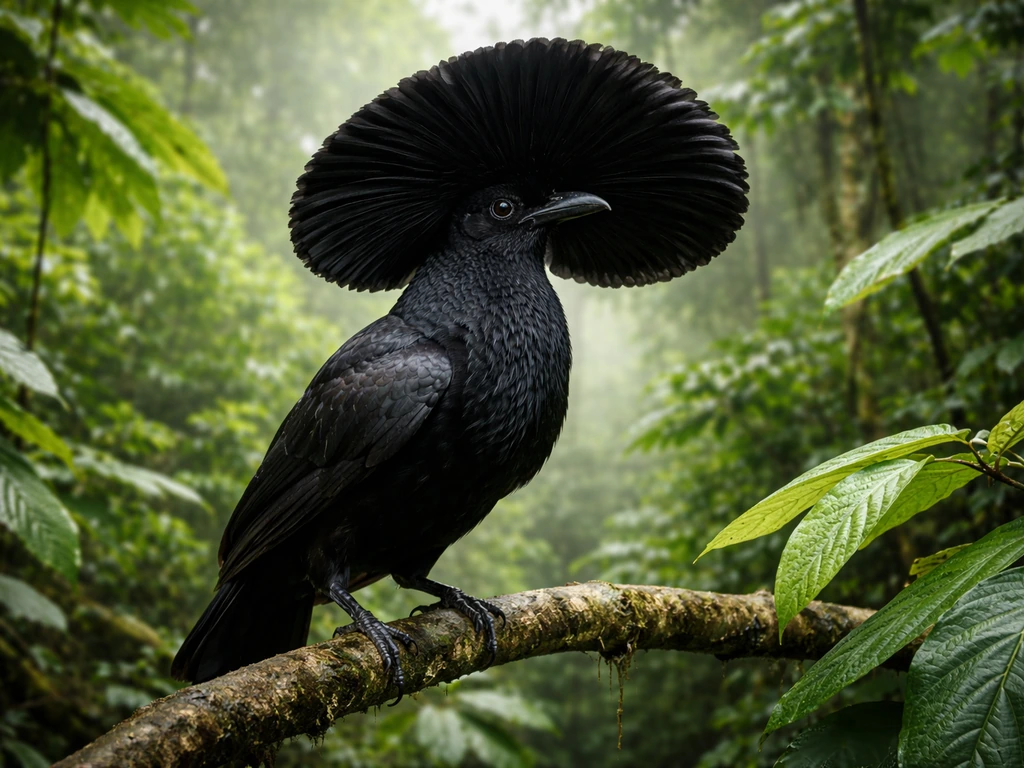
When someone says "umbrella bird," they are almost always referring to a real bird: the umbrellabird, a striking black-feathered species from South and Central America in the genus Cephalopterus. The name comes directly from the male's wild, radiating crest that fans out over its head like an open umbrella. That said, people also encounter the term in figurative or metaphorical contexts, where the imagery of an umbrella (shelter, protection, standing out) gets layered onto the bird's visual identity. To know which meaning applies to you, the single most useful question is: where did you see it? That answer unlocks everything.
Umbrella Bird Meaning: Literal Name, Symbolism, and Examples

Marcus Whitley
11 Jun 2026
What "umbrella bird" actually refers to (literal vs. figurative)
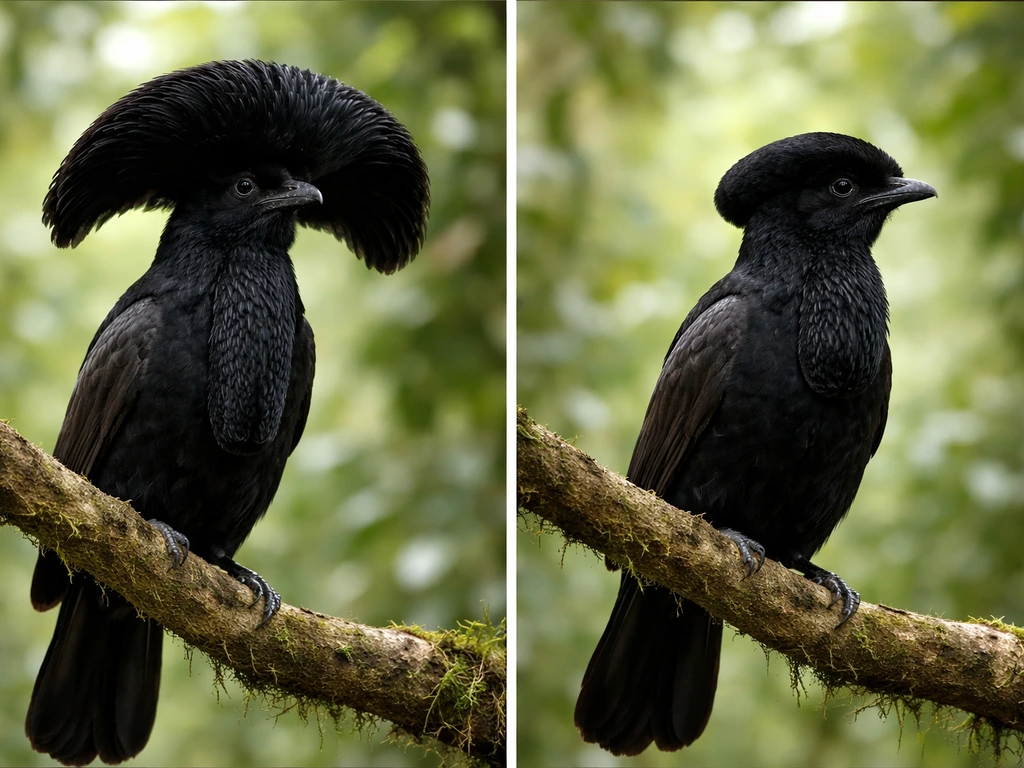
The literal meaning is well established and unambiguous. Merriam-Webster defines "umbrella bird" as any of several South and Central American birds of the genus Cephalopterus, specifically noted for the male's entirely black body, a radiating crest that arches over the head, and a long feathered lappet (the fleshy, dangling ornament hanging from the chest). Collins English Dictionary confirms the same, adding the alternate one-word spelling "umbrellabird" and placing the species in the cotinga family (Cotingidae). The most famous species is the long-wattled umbrellabird (Cephalopterus penduliger), a male of which can stretch its wattle to a length nearly equal to its own body, which it inflates and fans out during courtship displays.
The figurative meaning is less standardized but very real in casual use. Because the umbrella is such a loaded visual symbol (more on that below), writers, social media users, and even birding enthusiasts sometimes use "umbrella bird" as a loose metaphor for something that shelters, leads, or stands dramatically apart from the crowd. Think of it as a nickname or poetic shorthand rather than a fixed idiom.
You will mostly see this in personal essays, creative writing, Instagram captions, or when someone is describing a person or a concept rather than an actual bird. If you are looking for the peace bird meaning, use the same approach: check where the phrase appears and what qualities it is meant to signal. The partridge bird meaning in everyday speech can be different from this umbrella-bird usage, so the surrounding context matters.
Quick definition you can use right now
Here is the cleanest version you can take away immediately: the umbrella bird (or umbrellabird) is a large, black cotinga from tropical Americas whose male wears an arching, umbrella-shaped crest and a long feathered wattle.
Collins English Dictionary (American English) defines “umbrella bird” as any of the genus Cephalopterus of large black South and Central American birds (family Cotingidae), noted for an umbrellalike erectile crest and a long feathered wattle Collins English Dictionary defines “umbrella bird” (American English) as any of the genus Cephalopterus of large black South and Central American birds (family Cotingidae). If you are reading a nature article, a wildlife guide, or a dictionary, this is the meaning, full stop.
If you are reading a poem, a motivational post, or a creative piece and the "bird" seems to represent a person, an idea, or a feeling rather than an animal, then the umbrella imagery is likely doing the heavy lifting symbolically, and you need to read the context more carefully to pin down what the author intends.
What the umbrella imagery actually symbolizes
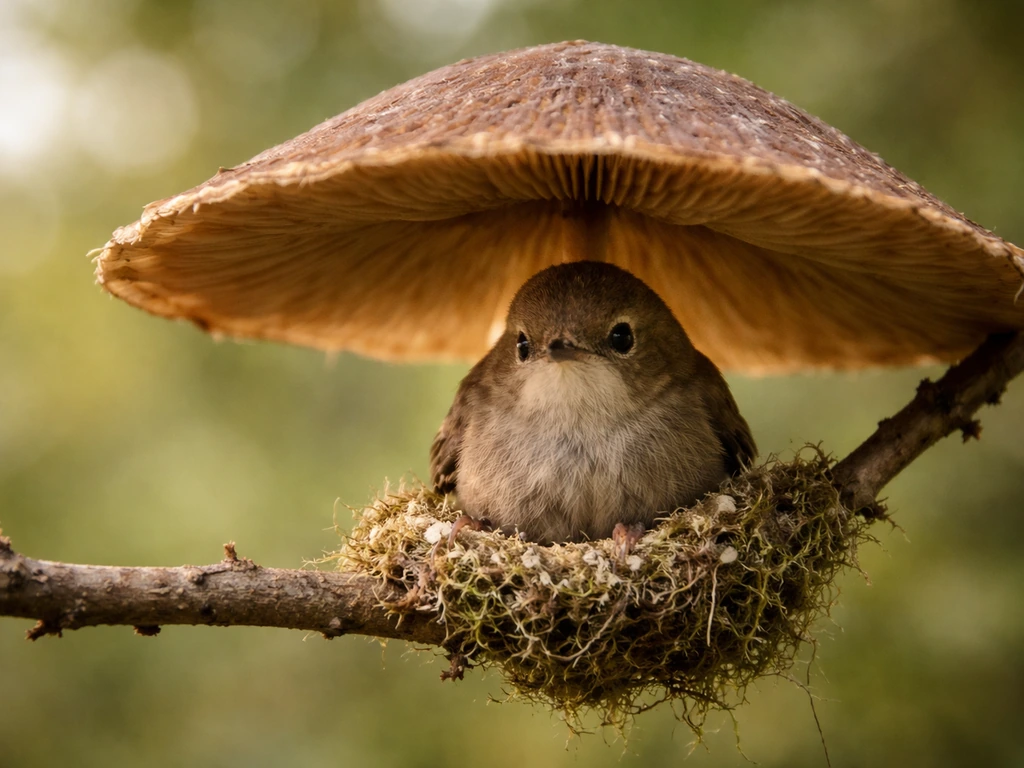
Umbrellas carry consistent symbolic weight across cultures, and that weight transfers naturally to any creature named after one. The core ideas that cluster around umbrella symbolism are protection, shelter, and covering. An umbrella shields what is underneath it from outside forces. When that concept attaches to a bird, you get a creature that metaphorically stands over others as a guardian or provider of safety. This makes "umbrella bird" a naturally evocative phrase for describing leadership, parental care, or any figure who shields a group from harm.
There is also the element of standing out. The male umbrellabird's crest is not subtle. It is one of the most visually dramatic displays in the bird world, and National Geographic has documented males fanning out their enormous wattles specifically to command attention during mating season. So the symbolism cuts two ways: protection on one side, conspicuous self-display on the other. When someone uses "umbrella bird" metaphorically, they might mean a quiet protector or a flamboyant showstopper, and context is the only thing that tells you which.
- Protection and shelter: covering others, absorbing what would otherwise fall on them
- Guidance and leadership: being the one others gather beneath
- Warmth and safety: creating a space where vulnerability is allowed
- Standing out: the umbrella crest as a mark of distinction, confidence, or spectacle
- Covering as concealment: less commonly, "umbrella" can imply hiding something, which can shade the metaphor toward secrecy or shielding from scrutiny
Cultural and literary associations: how the term actually shows up
In scientific and nature writing, "umbrella bird" is purely descriptive. The name is a direct translation of the bird's visual feature, coined by European naturalists in the 1800s who observed the crest and reached for the most obvious comparison in their vocabulary. It is one of those bird names, like the hooded merganser or the crested pigeon, that is almost entirely physical in origin rather than mythological or cultural.
In literature and creative writing, the umbrella bird tends to appear when a writer wants to invoke tropical exoticism, dramatic beauty, or a sense of something rare and overwhelming in its presence. Because the species is genuinely obscure to most general readers, it can function as a signifier of specialized knowledge or an unexpected comparison. A poet comparing someone to an umbrella bird is reaching for something very specific: not just any bird, but one that is entirely black, visually commanding, and built around the idea of sheltering coverage.
On social media, the term surfaces most often in nature photography communities, where the long-wattled umbrellabird is a sought-after subject for birders in Ecuador and Colombia. Outside of wildlife contexts, you might see it used as a creative nickname for someone who takes care of a group, a protective parent figure, or even an umbrella term (a phrase used in completely unrelated ways that just happen to collide with this bird's name). If you spotted it on social media and it did not involve an actual bird photo, look at the surrounding text for protective or leadership themes.
It is worth comparing how other similarly striking birds carry their symbolism. The peacock, for instance, maps almost entirely to vanity and pride because of its display behavior. If you are comparing symbolism, the peacock bird meaning often centers on pride and display, rather than shelter and leadership. The macaw maps to vitality and tropical abundance.
If you were wondering about a different bird’s symbolism, you might also look up the macaw bird meaning for clues about vitality and tropical abundance. The umbrella bird's symbolism is more layered because its defining feature does double duty: the crest both shelters and shows off at the same time, making it a richer (and slightly more ambiguous) metaphor than a bird whose meaning has been culturally locked in for centuries.
How to read the meaning in your specific situation

The fastest way to decode "umbrella bird" in context is to run through a short mental checklist based on where you encountered it. Here are concrete examples of how the term plays out differently depending on the source.
| Where you saw it | Most likely meaning | What to look for next |
|---|---|---|
| A field guide, nature article, or encyclopedia | Literal bird: Cephalopterus species | Check for species name, habitat description, or taxonomy |
| A poem, novel, or song lyric | Metaphor for shelter, protection, or conspicuous beauty | Look at what or who the bird is being compared to |
| A social media caption with a bird photo | Literal bird, possibly with light symbolic commentary | Check the photo itself and the hashtags |
| A motivational or personal essay | Umbrella imagery: protection, leadership, covering others | Look for themes of guardianship, sacrifice, or standing apart |
| A nickname for a person or place | Protective or standout figure | Ask what that person or place is known for doing |
| A translation from another language | May have a distinct local idiom, not a direct English parallel | Verify the original language phrase before assuming a meaning |
For example, if a wildlife documentary says "the umbrella bird is found in cloud forests from Panama to Ecuador," that is purely biological. But if a novelist writes "she stood over her children like an umbrella bird, black coat spread wide, daring anything to get through," that writer is using the bird's visual silhouette to layer in protection, sacrifice, and an almost theatrical sense of defiance. Both uses are valid; they just require different reading frameworks.
Related terms, common confusion, and how to verify the meaning
The biggest source of confusion around "umbrella bird" is the overlap with the phrase "umbrella species," a conservation term for a species whose protection incidentally shelters many other species sharing its habitat. The two are not the same thing, though the conceptual Venn diagram overlaps: the umbrella bird (Cephalopterus) has actually been proposed as a candidate umbrella species in cloud forest conservation efforts because protecting its habitat protects a wide range of other species. So if you are reading an ecology paper or conservation policy document and see "umbrella bird," it might be doing both jobs at once.
Another common confusion: "umbrella" as a modifier in English frequently shows up in compound nouns and terms (umbrella term, umbrella policy, umbrella company), so a reader might assume "umbrella bird" is itself an umbrella term for a broader category of birds. It is not. It refers specifically to Cephalopterus. If you need to verify this, a quick check of Merriam-Webster or Collins will confirm the definition is tied to that genus and not used as a catch-all label.
If you saw "umbrella bird" in another language and are trying to translate its meaning back into English, be careful. Some languages have bird names or idioms that translate literally to "umbrella bird" but refer to different species or carry different cultural connotations entirely. Always check the original-language source rather than assuming the English definitions apply directly.
Finally, if none of these frameworks resolve your question, the most practical next step is to copy the exact sentence or phrase where you encountered "umbrella bird" and search for it directly. The context surrounding the phrase almost always gives away whether the author is talking about a real bird in the cotinga family, invoking shelter and protection metaphorically, or using the term in a niche community sense that sits somewhere between the two. If you are trying to figure out the parrot bird meaning instead, the context and the exact phrasing will help you separate that from the umbrella bird reference.
FAQ
Is “umbrella bird” the same thing as “umbrella species” in conservation writing?
Not exactly. “Umbrella bird” is usually the Cephalopterus species, but it can also appear in conservation contexts if that bird is being proposed as an umbrella species candidate. If the text talks about habitat protection benefiting “many other species,” that is umbrella-species logic, not a general definition of the phrase.
How can I tell whether “umbrella bird” is literal (Cephalopterus) or metaphorical in a caption or quote?
Look for biological cues like habitat range, courtship, crest, wattle, or family/genus terms. If the surrounding words focus on leadership, protection of loved ones, standing out, or emotional shelter without any anatomy or location clues, it is likely metaphorical.
Does “umbrella bird” mean the same thing as “umbrellabird” (one word)?
In most dictionary and species contexts, yes. “Umbrellabird” is the alternate single-word spelling used for the genus in common reference, and it is still tied to Cephalopterus rather than a generic umbrella-related bird category.
What if I saw “umbrella bird” used as a nickname for a person or brand, is it still about the bird?
Often it is inspired by the bird’s silhouette and symbolism, but you should treat it as a reference by intention rather than a claim of species. If the post emphasizes protection, caretaking, or dramatic presence, it is probably borrowing the metaphor, not discussing the actual animal.
Can “umbrella bird” refer to multiple species within the Cephalopterus genus, or just the long-wattled one?
Both can happen. General definitions may cover several Cephalopterus species, while a specific description like “long-wattled” or details about the wattle length typically narrows it to Cephalopterus penduliger. When the text is vague, assume “genus-level” until named traits clarify.
What are the most common mix-ups when searching online for “umbrella bird meaning”?
Confusing it with umbrella terms in language (like umbrella policy), thinking it is a catch-all for “umbrella” bird categories, or assuming every use is metaphorical. Another common error is ignoring conservation-policy context where “umbrella” has a separate technical meaning.
Does translation change the “umbrella bird meaning”?
Yes. Some languages may use a literal equivalent that points to a different bird or carries different cultural associations. If the original language is not English, check whether the author described the crest, habitat, or the specific species instead of relying on an English definition.
If I find “umbrella bird” in an ecology or policy document, what should I look for to interpret it correctly?
Scan for whether it is being used as a conservation strategy term. Keywords like “protecting habitat,” “benefiting multiple taxa,” or “umbrella species candidate” indicate the term is functioning in the umbrella-species framework, even if the focal organism is Cephalopterus.
Is there a quick verification method if I want to be sure of the meaning?
Paste the exact sentence around “umbrella bird” into a search and check the source type. Nature guides and dictionaries usually mean Cephalopterus, while poems, essays, and social posts usually mean protection or standout presence. The surrounding modifiers are the fastest truth serum.
Next Article
Peace Bird Meaning: Symbol, Variations, and How to Interpret It
Peace bird meaning explained with symbolism, common variations, cultural context, and a checklist to interpret doves or