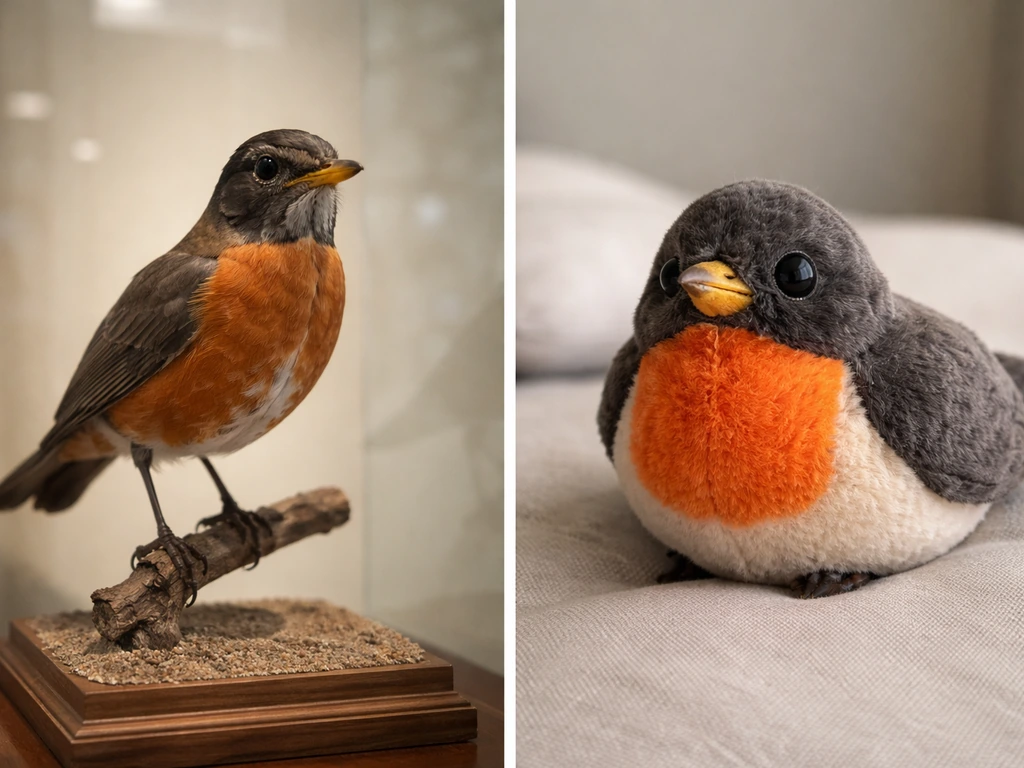
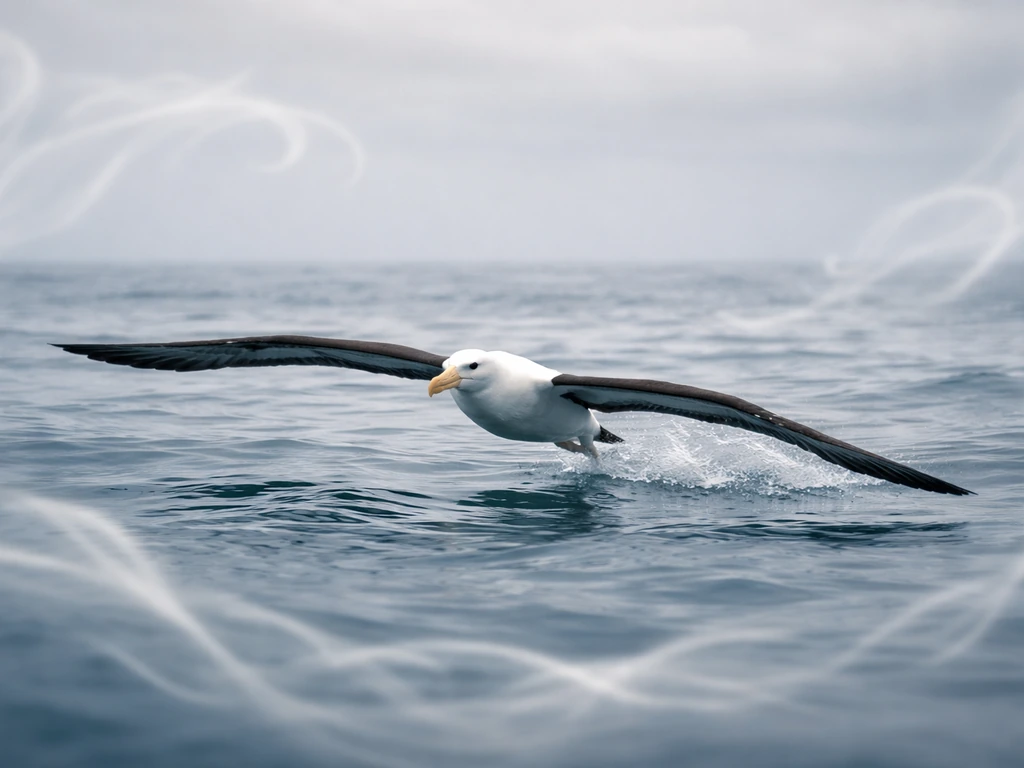
A pelagic bird is a bird that lives primarily in the open ocean, far from coastlines, spending most of its life at sea rather than near shore or on land. The word "pelagic" comes from Greek, meaning "of the sea," and in ecology it specifically refers to the open water column away from the coast and the seafloor. So when someone calls a bird pelagic, they're describing its lifestyle and habitat, not a formal scientific category. Think albatrosses, shearwaters, and storm-petrels: birds that might go months or even years without touching land, eating, sleeping, and traveling entirely over the open ocean.
Pelagic Bird Meaning: Definition, Examples, and Symbolism

Marcus Whitley
20 Jun 2026
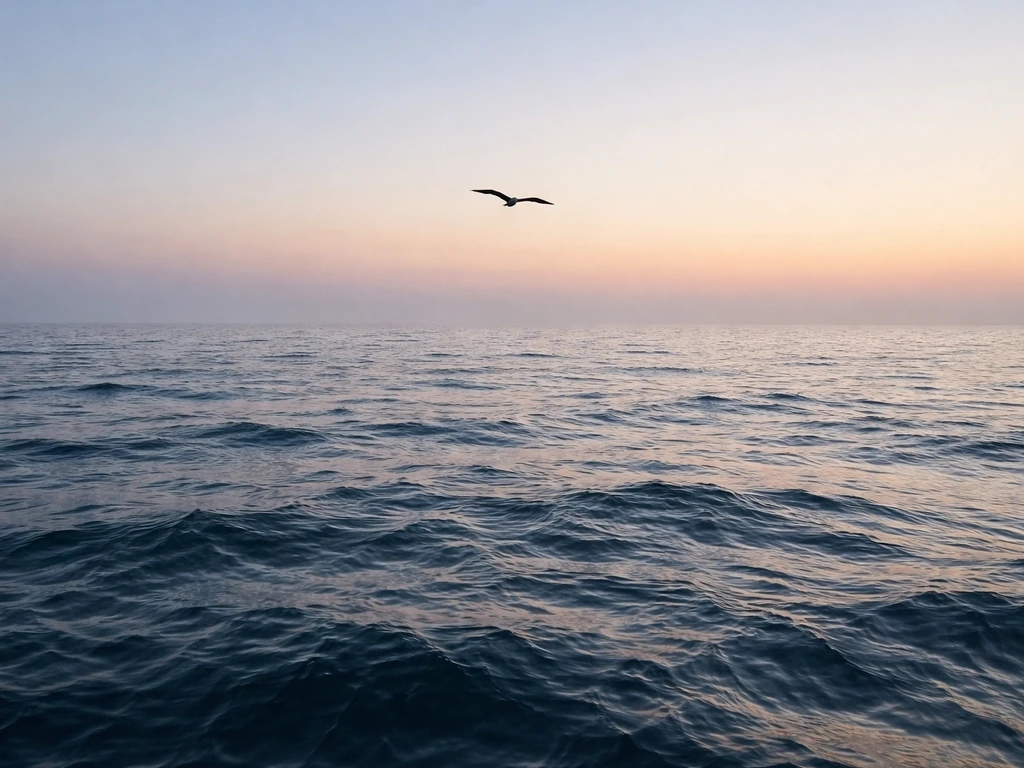
What "pelagic" actually means, in plain English
Oceanographers divide the ocean into zones, and the pelagic zone is the open water: everything that isn't a coastline, reef, or seafloor. It's just ocean, stretching from the surface down into the depths. In that sense, a pelagic creature is one that calls that vast open water home. Merriam-Webster defines pelagic simply as "of, relating to, or living in the open sea," and it's used as a synonym for "oceanic." When biologists and birders apply it to birds, they mean birds that are genuinely adapted to and dependent on that open-ocean environment, not just ones that occasionally fly over the beach.
It's worth knowing that "pelagic" is an ecological label, not a taxonomic one. There is no official family or order called "pelagic birds. " NOAA Fisheries is clear that there isn't even a single definitive definition of what makes a bird a seabird, let alone a pelagic one.
NOAA National Marine Sanctuaries describes “seabird” as encompassing bird species that spend a substantial part of their lives in a marine environment, foraging and breeding NOAA Fisheries is clear that there isn't even a single definitive definition of what makes a bird a seabird.
The term describes where and how a bird lives, which makes it genuinely useful when you're trying to understand a sighting or a field guide entry, but it also means you should treat it as a description rather than a hard boundary.
Which birds actually count as pelagic
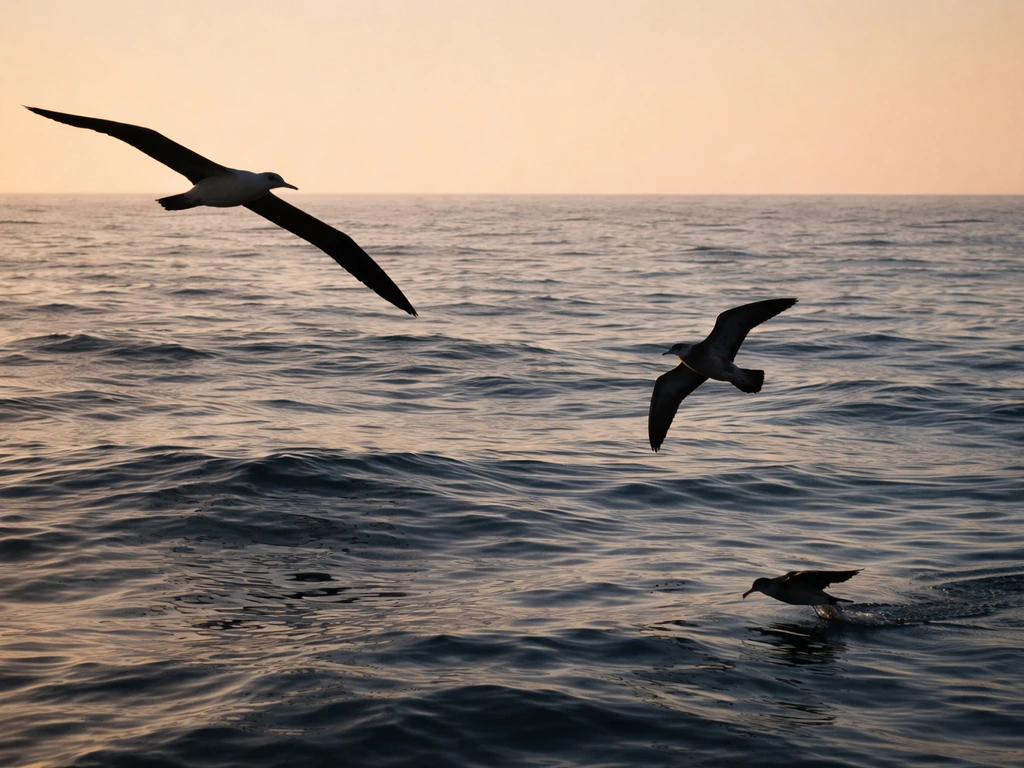
The most unambiguously pelagic birds belong to the order Procellariiformes: albatrosses, petrels, shearwaters, and storm-petrels. These birds are sometimes called "tubenoses" because of the tubular nostrils on their beaks, and they are genuinely built for the open ocean. They have specialized salt-excreting glands, they glide and soar efficiently over long swells, and outside of the breeding season they don't come to land at all. The Center for Coastal Studies puts it directly: Procellariiformes are "truly pelagic" and "built for the open ocean."
Here are the birds you'll most commonly see described as pelagic, organized loosely by where in the world you're likely to encounter them:
| Bird | Region | Notes |
|---|---|---|
| Wandering Albatross | Southern Ocean, global | Among the most extreme pelagic birds; can travel millions of miles at sea |
| Sooty Shearwater | Pacific and Atlantic, widespread | Cornell calls it one of the most numerous pelagic seabirds in the world |
| Manx Shearwater | North Atlantic, UK/Ireland | Described as "entirely marine," flies within about 10 m of the sea surface |
| Leach's Storm-Petrel | North Atlantic and North Pacific | Described as "highly pelagic"; comes to land only at night to breed |
| Wilson's Storm-Petrel | Atlantic Coast, US and beyond | Audubon notes it's often the most common seabird off the US Atlantic coast |
| Northern Fulmar | North Atlantic and Arctic | Forages at sea year-round; part of the tubenose group |
| Red Phalarope | Open ocean during migration | A shorebird that becomes genuinely pelagic outside breeding season |
| Southern Giant Petrel | Southern Ocean | Ranges throughout the Southern Ocean; large and distinctive at sea |
Phalaropes are worth a special mention because they blur the category nicely. They look and act like shorebirds on the breeding grounds, but outside that season they head to the open ocean and become genuinely pelagic. Cordell Bank National Marine Sanctuary explicitly groups them as "pelagic shorebirds" in the open ocean context. It's a good reminder that pelagic is about lifestyle, not lineage.
Pelagic vs seabird vs coastal: how to tell the difference
These three terms get used interchangeably a lot, and they're related but not the same thing. Here's how to think about each one:
- Pelagic bird: lives in and depends on the open ocean, generally far from shore. Rarely or never seen from land outside of storms. The label is about habitat distance from shore and the bird's ecological dependence on open water.
- Seabird: a broader term covering any bird that spends a substantial portion of its life in a marine environment. This includes pelagic birds but also coastal species like gulls, terns, cormorants, and pelicans that stay much closer to shore. All pelagic birds are seabirds, but not all seabirds are pelagic.
- Coastal bird: typically forages and lives along or near shorelines, estuaries, and inshore waters. These birds are marine-associated but don't venture far offshore. Herons, oystercatchers, and most gulls fall here.
One genuinely confusing example: the Pelagic Cormorant. Despite its name, blank" rel="noopener noreferrer">Cornell's All About Birds states flat-out that "pelagic" is "not a good description" for this bird, because it's rarely seen more than a few miles from land. Its scientific name includes the Latin "pelagicus," meaning "of the sea," but that's a historical naming choice, not an accurate ecological badge. One related idea you may see online is the stuffed bird meaning, which is a different concept from pelagic birds and is usually about taxidermy or symbolism. So if you're trying to interpret whether a bird is truly pelagic, the name alone can mislead you. You have to look at how far offshore it actually forages.
Where you'll actually run into this term
The word "pelagic" shows up in a few very specific contexts, and knowing them helps you understand what someone means when they use it. If you’re wondering about the meaning of “pip bird,” it’s usually tied to how people use the phrase to describe a specific type of bird call or behavior pip bird meaning.
Birdwatching and field guides
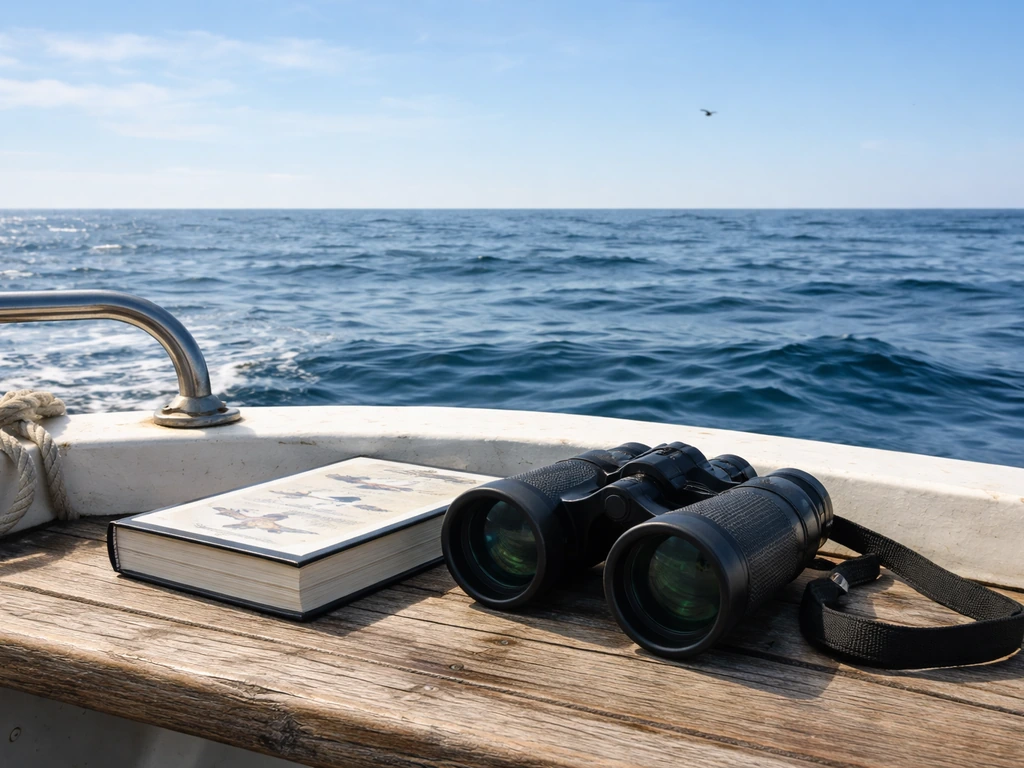
This is where you'll see it most. "Pelagic trips" are organized boat excursions that take birders out into open ocean specifically to find birds they'd never spot from shore. If you are wondering about the puffin bird meaning of a term you heard, the best match is to look up how that phrase is used in birding guides and local notes Pelagic trips.
The American Birding Association and local Audubon chapters run these regularly, with trips off places like Monterey Bay being especially well-known. Platforms like eBird use "pelagic" as a habitat tag for offshore sightings. When a field guide describes a species as "highly pelagic," it's a practical warning: you're not going to see this bird at the beach, so you'll need a boat if you want to tick it.
For example, Audubon notes that Wilson's Storm-Petrel is often the most common seabird off the Atlantic Coast of the United States.
Nature documentaries and marine science
In documentaries, "pelagic" tends to come up when describing the scale and isolation of a bird's life at sea. Albatross sequences are a classic example: narrators use the term to underline how extraordinary it is that a bird can circle the Southern Ocean for years without ever touching land. Marine scientists use it similarly in research papers and public-facing materials from NOAA and equivalent agencies.
Shoreline and casual sightings

If someone onshore says they spotted a "pelagic bird," they usually mean they saw something unusual: a bird that shouldn't be near land. The phrase “picherie bird meaning” is usually a nickname or local label, so it helps to confirm the exact bird species and the context where the term is used. Storm-driven pelagic birds do occasionally appear inshore after storms, and when they do it's a notable event in the birding community. So "pelagic bird" in a casual sighting context often signals: this was unexpected, and something pushed it here.
How to identify a pelagic bird you've spotted
Pelagic birds are notoriously hard to identify even for experienced birders. You're often dealing with fast-moving birds, rough water, brief views, and species that look remarkably similar to each other. But there are practical cues that help narrow things down quickly.
- Look at the flight style. Shearwaters glide low over the water on stiff, narrow wings, tilting from side to side with the swells. Storm-petrels have a bounding, erratic flight that Cornell compares to a nighthawk, often hovering to pick food from the surface. Albatrosses bank and soar in long arcing sweeps. If the bird is doing any of these, you're almost certainly looking at a tubenose.
- Check for the "tubenose" structure. Albatrosses, shearwaters, petrels, and storm-petrels all have distinctive tubular nostrils on top of the beak. If you can get a close look (binoculars or a photo), that nasal structure is a solid confirmation you're in pelagic seabird territory.
- Note the body size and coloring. Albatrosses are enormous, with wingspans up to 11 feet. Shearwaters are gull-sized with dark-and-light patterning. Storm-petrels are small, often sparrow-to-swallow sized, sometimes with white rump patches.
- Consider where you are. If you're miles offshore on a boat, most unusual seabirds are legitimately pelagic. If you're standing on a beach and something odd flew past during a storm, it could be a storm-displaced pelagic bird, and that context matters for identification.
- Use eBird and Cornell's All About Birds immediately. Search the species you think you saw, check the range map for your location and date, and compare your sighting details to the photos and behavioral descriptions. These platforms use community sightings to show where pelagic species have actually been reported near you.
If you're completely stumped, posting a clear photo to iNaturalist or a regional birding Facebook group with your location and date will usually get you a confident ID from local experts within hours. The birding community is genuinely helpful about pelagic IDs precisely because these birds are exciting to find.
What pelagic birds symbolize in language and culture
Because this site is about the meanings birds carry in culture and language, it's worth sitting with what "pelagic" really evokes beyond the ecology. If you came across “piecost bird meaning,” it’s the same idea: how people interpret a bird’s presence or symbolism in language and culture meanings birds carry in culture and language. These are birds of genuine isolation: creatures that exist almost entirely outside human sight, in a world most people never see. That position gives them a distinct symbolic weight that's different from the birds most commonly referenced in idioms and folklore.
The albatross is the most culturally embedded of the pelagic birds, largely because of Coleridge's "The Rime of the Ancient Mariner," where killing the bird brings catastrophic bad luck to a ship's crew. The albatross in that poem functions as a guide and omen in a world of pure ocean, and its death severs the sailors' relationship with nature. In modern English, "an albatross around your neck" means a persistent burden you can't escape, which is a direct inheritance of that maritime symbolism. The metaphor works precisely because the albatross is a creature of the open sea, appearing as if from nowhere, belonging to a realm humans can barely survive.
More broadly, pelagic birds in cultural imagination tend to carry themes of freedom, endurance, and solitude. A bird that can cross an entire ocean without landing represents a kind of radical self-sufficiency. In literature and poetry, open-ocean birds often appear in moments of reckoning with the vastness of existence: they are the only living things in a scene otherwise defined by water and sky. That's very different from, say, a robin or sparrow, whose symbolism is domestic and approachable. Pelagic birds belong to a wilder register. In folklore, “plover bird” is often discussed as having symbolic meaning, so its symbolism is sometimes called the “plover bird meaning.”.
There's also a thread of metaphor around guidance during uncertainty. Sailors historically read seabirds as signs of land, of weather, of the health of the sea. A petrel appearing meant a storm was coming. A shearwater skimming low over water was just part of the landscape, but seeing one unexpectedly near shore meant something had shifted. In that tradition, pelagic birds are interpreters of the ocean's mood, creatures that know things humans don't. That role as harbinger or messenger persists in how writers reach for open-ocean birds when they want to signal something ominous or expansive in nature.
Compare this to other bird symbols on this site: a puffin carries humor and charm, a plover suggests coastal intimacy and modest persistence, a puffed-up bird in an idiom suggests pretension or pride. Pelagic birds operate in a completely different register, one of scale, survival, and distance. They don't perch on fence posts or visit gardens. They belong to a world that humans enter only as visitors, which is exactly what makes them compelling as symbols whenever a writer or speaker wants to evoke something immense, lonely, or free.
Your next steps if you're trying to nail down a specific bird
If you landed here because someone called a bird you saw "pelagic" and you want to know what you actually spotted, here's the short version of what to do: start with Cornell's All About Birds and search by the physical description you remember, filtering by your location and the time of year.
If you are also wondering about a different phrase you heard, like plump bird meaning, it usually points to a bird described as rounded or well-fed in that context. If you were on a boat offshore, the list of likely candidates is much shorter than if you were onshore. Note the flight style, size relative to nearby gulls, and any distinctive markings like a white rump patch or dark cap.
Then cross-reference with eBird's recent sightings in your area to see what pelagic species have been showing up locally. That combination will get you to a confident identification faster than almost anything else.
FAQ
If I saw a bird offshore once, does that automatically mean it was a pelagic bird?
Usually, yes, but only as long as the bird is actively using the open ocean rather than just flying past offshore. A good rule of thumb is to treat “pelagic” as meaning where it forages and spends most of its time (especially feeding), not just where it happened to be photographed.
Can a bird be called pelagic even if it breeds on land or close to shore?
Not necessarily. Some birds are called “pelagic shorebirds” during nonbreeding periods, so you need the season context. If the sighting is during breeding season, the same species may behave like a shore or nearshore bird, even if it later becomes truly offshore.
Do pelagic birds ever land on islands or the mainland?
“Pelagic” is habitat language, so it is compatible with birds that occasionally land. Many truly pelagic species only come to land during breeding, and others may land briefly for specific activities, but the defining factor is whether their routine lifestyle depends on the open ocean.
Why would someone spot a “pelagic bird” near land after a storm?
Yes. Storms, strong winds, and lost navigation can push seabirds closer to shore, even if they normally forage far offshore. For that reason, a shore-based “pelagic” sighting should be treated as unusual or weather-driven until you confirm the species and likely offshore behavior.
What signs help tell whether an offshore bird is truly foraging pelagically versus just passing by?
Look for whether your bird is behaving like it is feeding at sea. Practical cues include repeated low passes over water, specific foraging flight patterns, and feeding near slicks or currents. A bird merely transiting offshore at cruising speed is less suggestive than one repeatedly hunting.
How do I avoid being misled by a bird’s name, like “Pelagic Cormorant”?
Yes, the naming can mislead. “Pelagic” is sometimes embedded in a scientific or common name for historical reasons that do not match modern habitat use. If the bird is regularly seen within a few miles of land, it may not meet the practical meaning birders use for pelagic.
What does it really mean when a guide says a species is “highly pelagic”?
Field guide language like “highly pelagic” is meant as a practical warning. If a bird is described that way, plan your identification around the assumption that you need offshore viewing, and be cautious about forcing the ID if you only have a beach-level sighting.
What are the fastest identification cues for pelagic birds when you have only brief views?
Use the location and time, plus the bird’s flight style and relative size compared with nearby gulls. In open-ocean conditions, many IDs hinge on small details like tail shape, wingbeat cadence, and any obvious head or rump coloration, so note those before you look up range.
What information should I include when posting a pelagic bird sighting for confirmation?
Try to capture effort, not just a single image. Record the exact date, your distance offshore if you know it, weather conditions, and whether the bird was on the surface or diving. This context often matters as much as appearance when experts confirm IDs for pelagic sightings.
If someone uses “pelagic bird” metaphorically, how is that different from the ecological meaning?
If you are trying to interpret cultural phrases, “pelagic bird meaning” is usually metaphorical rather than ecological. The strongest connection is that writers borrow the bird’s distance, rarity, and ocean solitude, but the “meaning” depends on the specific bird and the exact phrase used.
Next Article
Stuffed Bird Meaning: Literal, Figurative, and How to Tell
Learn stuffed bird meaning: literal taxidermy or plush toy, plus figurative slang and how to tell by context.