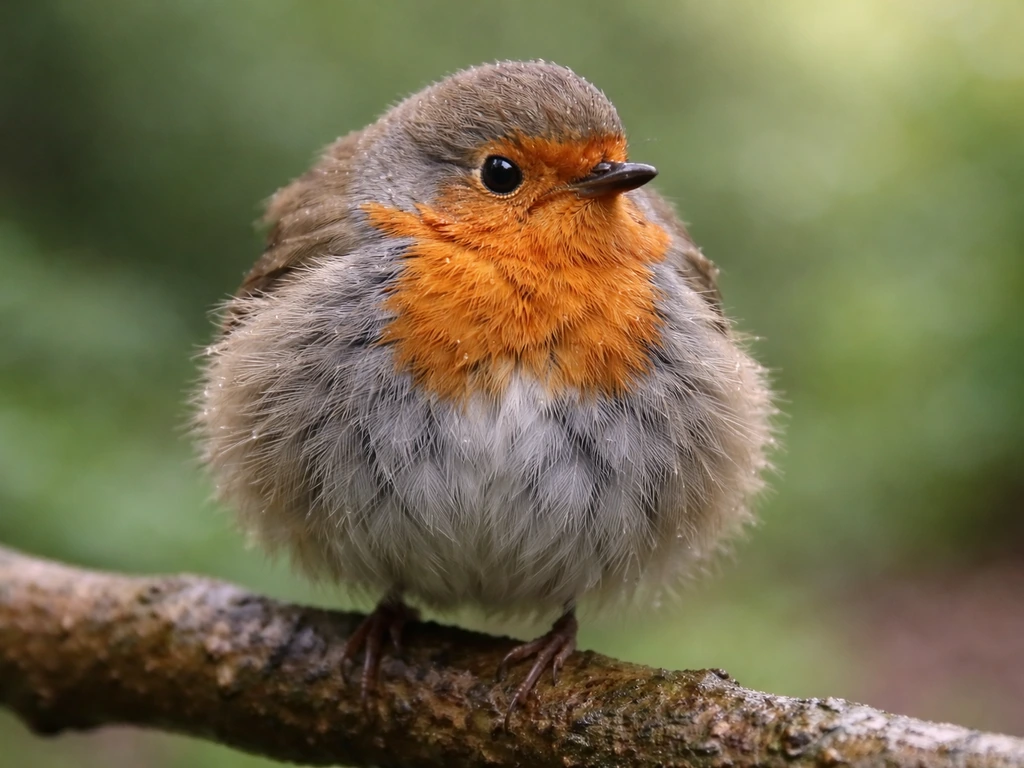
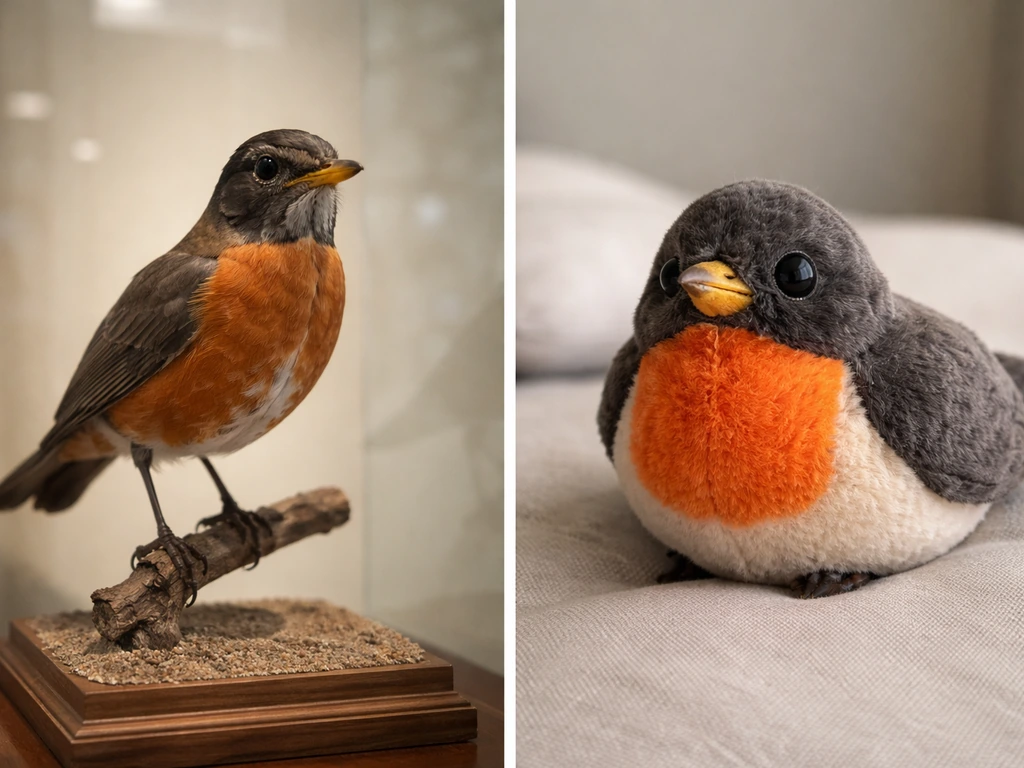
A "stuffed bird" almost always means one of three things: a taxidermied bird preserved and mounted for display, a soft plush toy shaped like a bird, or occasionally a figurative or symbolic use in literature and art. The most common meaning by far, especially in older writing, antiques contexts, and natural-history settings, is a real bird preserved through taxidermy. But the phrase alone is genuinely ambiguous, and the surrounding words in any sentence are what nail down which meaning you're dealing with.
Stuffed Bird Meaning: Literal, Figurative, and How to Tell

Marcus Whitley
16 Jun 2026
What "stuffed bird" literally means
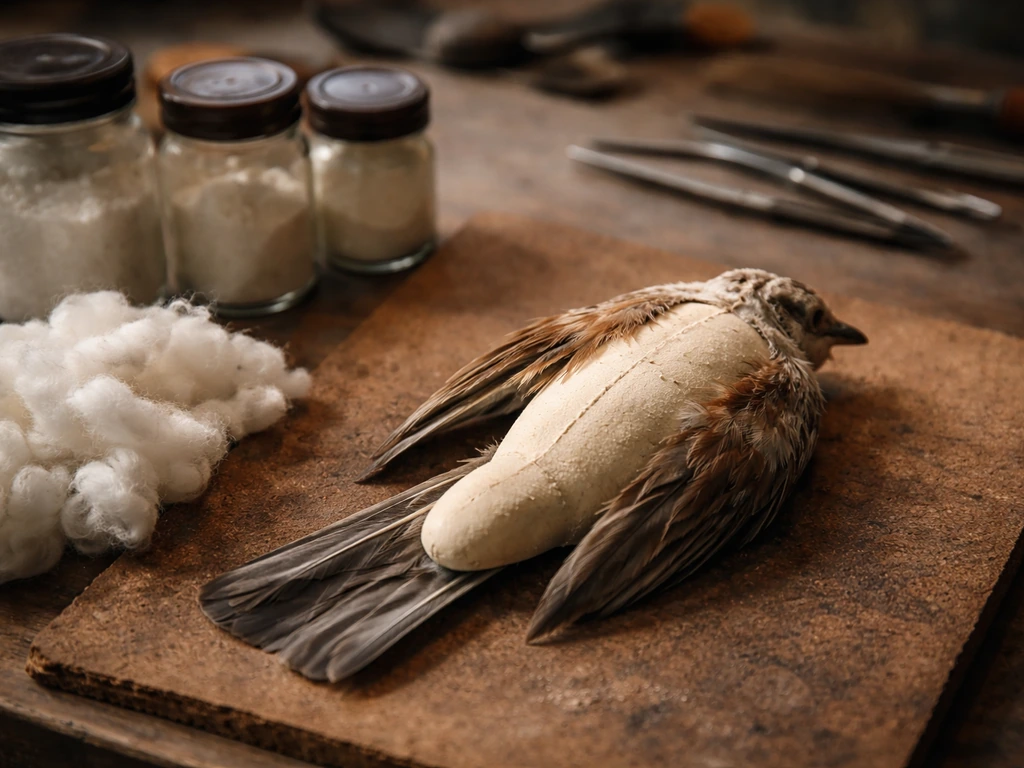
The core definition comes straight from how taxidermy works. When a bird dies, a taxidermist removes the skin, treats it, and fills it with a special material so the bird keeps the shape and posture it had when alive. Cambridge Dictionary captures this precisely: "stuffed" applied to an animal or bird means "filled with special material so that it keeps the shape it had when it was alive." Collins English Dictionary goes further with a direct example describing "an old stuffed bird... a poor example of the taxidermy art," making the preserved-display meaning crystal clear.
This practice has a long history. Digitized taxidermy manuals from the 1800s use "stuffed bird" throughout to describe the finished product of specimen preparation. By the time natural-history museums became popular in the 19th century, stuffed birds were serious scientific and decorative objects, collected, displayed in glass cases, and traded as curiosities. The phrase carried genuine technical weight. Today you'll still see it on taxidermy retailer sites, Etsy listings for vintage mounts, and auction catalogs, often paired with words like "mounted," "specimen," or a specific species name.
Everyday vs figurative meaning: idioms, insults, and phrases
Outside the taxidermy world, "stuffed" carries a dismissive, defiant edge in certain dialects. The British expression "get stuffed" is a blunt way of telling someone to go away or get lost. So if someone uses "stuffed bird" in a figurative or slang sense, it can imply defeat, dismissal, or something rendered useless and inert. Think of it as a bird stripped of the very thing that defines it: flight, life, movement. A stuffed bird can't fly anywhere. That imagery lends itself naturally to metaphors about being trapped, frozen in place, or rendered powerless.
There's also a historical footnote worth knowing. The origin story of the phrase "stool pigeon" involves hunters tying a dead or stuffed pigeon to a stool as a decoy lure. In that context, "stuffed" bird means something deliberately inert, used to manipulate or trap others. So figuratively, a stuffed bird can sometimes signal a decoy, a fake, or something used cynically to lure in the unsuspecting.
These figurative uses are less common than the literal ones, but they're worth keeping in mind when you encounter the phrase in creative writing, political commentary, or satire.
The four main contexts you'll see this phrase
Home decor and interior display
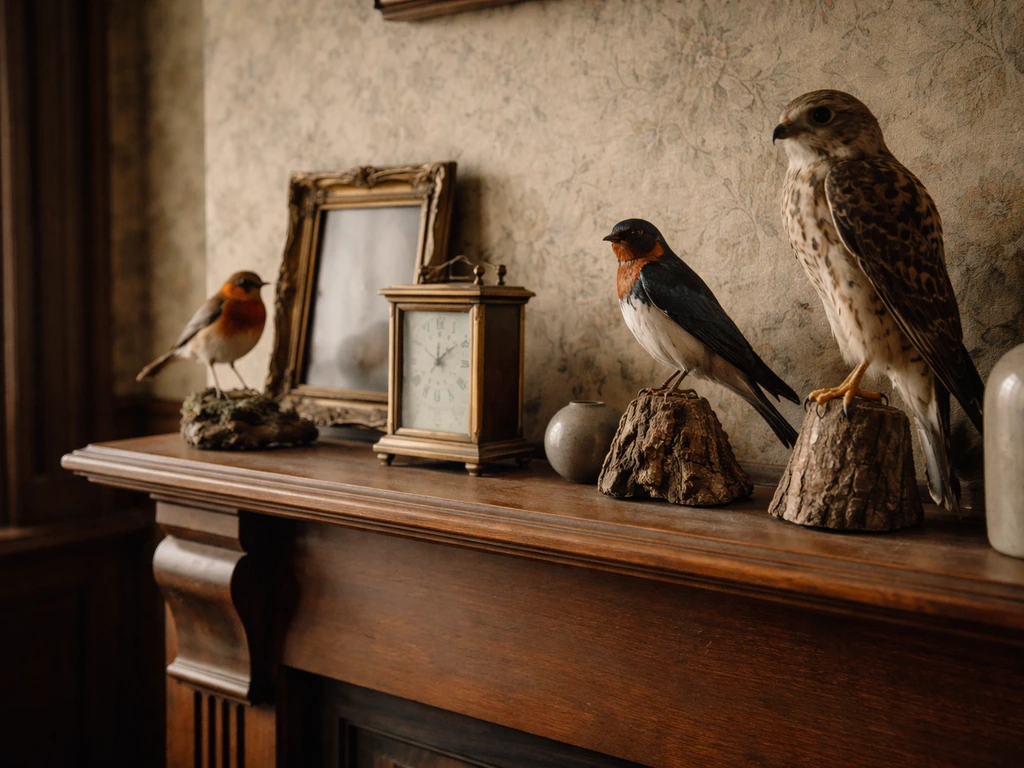
Taxidermied birds have never fully gone out of fashion as decorative objects. You'll find them in antique shops, Victorian-style interiors, natural-history-inspired rooms, and contemporary eclectic decor. An Irish Times article titled "The Stuffed Bird in the Parlour" uses the phrase in exactly this sense, describing a preserved bird in a domestic display context alongside references to glass cases and taxidermy. An Irish Times article titled "The Stuffed Bird in the Parlour" discusses the preserved-display meaning in a domestic setting, including references to glass cases and taxidermy. Decor-focused taxidermy retailers describe their products as "stuffed birds" that "show how beautiful and true to nature" a mounted specimen can be.
Hunting trophies and taxidermy collecting
In hunting and taxidermy communities, "stuffed bird" is standard vocabulary for a preserved game bird or wild specimen. If you’re trying to decode the pip bird meaning, the surrounding context will usually tell you whether the phrase is referring to an actual bird or a specific kind of figurative or product usage.
Collectors on Reddit's r/Taxidermy and r/Ornithology routinely use the phrase to ask for species identification on birds they've found or inherited, with discussions covering the bird's age (sometimes 80-100 years old), how it was prepared, and whether it should be stored in a glass case. Legal sources also use the term in this sense, such as FindLaw articles on taxidermy law that discuss [permits for "dead migratory birds"](https://www. findlaw.
com/legalblogs/legally-weird/taxidermy-law-is-it-legal-to-stuff-your-pet-1/) and the legal status of a "stuffed bird" as a preserved specimen.
Plush toys and children's products
Here's where the ambiguity kicks in hard. In retail and toy contexts, "stuffed bird" can just mean a soft plush toy bird filled with stuffing material. Plump bird meaning can come up when someone is describing a bird as especially full or well-fed, so the surrounding context matters. Picherie bird meaning is a different kind of reference, so it helps to separate that usage from the literal stuffed-bird definitions (taxidermy versus plush) stuffed bird.
Companies like AnimalDen. com use the phrase "Plush Stuffed Bird" for toy products described as "snuggly" and suitable for children. That said, most mainstream toy retailers lean toward labeling these as "plush" rather than "stuffed," so when "stuffed" appears without "plush" alongside it, the taxidermy interpretation is usually the stronger guess. A Target listing for a similar product uses "plush pet bird" framing, which shows sellers themselves often try to clarify with that extra word.
Art, literature, and collectibles
In art and literature, "stuffed bird" takes on a more loaded symbolic meaning. Picasso created a work titled "Oiseau empaillé" (Stuffed Bird), which art scholars connect to vanitas themes, the artistic tradition of depicting objects that symbolize the futility of life and the inevitability of death. A taxidermied bird in a painting or literary description isn't just a decorative object; it becomes a meditation on mortality, preservation, and the strange impulse to hold onto something after life has left it. Etsy also uses "stuffed bird mount" as a collectibles category, bridging the commerce and cultural worlds.
How "stuffed" changes bird symbolism
Birds on their own carry some of the most powerful symbolism in human culture. They represent freedom (flight), the soul, omens of death or good fortune, peace (the dove), wisdom (the owl), and transition between worlds. If you’re asking “plover bird meaning,” that’s the specific symbolism tied to the plover rather than the general phrase “stuffed bird.” the dove. Across traditions from Celtic to East Asian to Indigenous American, birds act as messengers between the living and the dead, or between the earthly and the divine.
When you add "stuffed," that symbolism shifts dramatically. A living bird signals freedom, movement, possibility. A stuffed bird signals preservation, control, and stasis. It's something once wild and free that has been captured, shaped, and frozen in place by human hands. That tension between the bird's natural symbolism and the act of stuffing it is exactly why the image works so well in vanitas art and literary metaphors about mortality. Pelagic bird meaning can vary by culture and context, but it often points to birds associated with life over the open sea. The stuffed bird is a reminder of what was, not what is. It's life held still, which is a kind of beautiful and slightly unsettling contradiction.
Compare this to other bird descriptors: a puffed-up bird signals aggression or bluster; a plump bird suggests abundance and health; a pelagic bird evokes distance and freedom at sea. "Stuffed" is uniquely about the aftermath of life, which is what gives it such staying power as a symbol.
How to tell which meaning someone intends
The phrase by itself is genuinely ambiguous, but the words around it almost always give it away. Here's what to look for:
| Nearby clue word or phrase | Most likely meaning |
|---|---|
| taxidermy, mounted, specimen, glass case, museum | Preserved taxidermy bird |
| plush, toy, snuggly, sound chip, children's | Soft toy / plush bird |
| decor, antique, Victorian, parlour, display | Decorative taxidermy mount |
| vanitas, painting, futility, mourning, art | Symbolic / artistic use |
| stool, lure, decoy, hunter | Decoy or figurative trap |
| stuffed and mounted (together) | Always taxidermy, not a toy |
| get stuffed, told to go stuff itself | British slang for dismissal |
Source type matters just as much as individual words. A forum on r/Taxidermy using the phrase is almost certainly talking about a preserved specimen. A product page on a children's toy site using it is almost certainly describing a plush toy. An art history article is likely using it symbolically. When the source type and the nearby words agree, you can be confident in your interpretation.
How to confirm the meaning for your specific situation
If you're still not sure which meaning applies to the exact sentence or context you're looking at, here's a practical checklist to work through:
- Check for taxidermy collocations: if "mounted," "taxidermy," "specimen," "glass case," or a specific bird species name appears nearby, you're almost certainly looking at a preserved bird.
- Check for toy collocations: if "plush," "toy," "snuggly," "stuffed animal," or "authentic sound" appears, it's a soft plush product.
- Identify the source type: a natural-history article, auction listing, or taxidermy forum points to literal preservation; a children's retailer or gift shop points to a plush toy; an art history or literary analysis piece points to symbolic use.
- Look for a photo or product image if the phrase appears in a commercial context. Taxidermy mounts and plush toys look nothing alike, and a single image resolves the ambiguity instantly.
- If you're reading fiction or poetry, ask whether the bird's "stuffed" state is being used to comment on something larger (loss, control, death, memory). That's a strong signal you're in symbolic territory.
- If the phrase appears in a legal, forensic, or scientific document, assume literal taxidermy specimen unless the document specifies otherwise.
Nine times out of ten, one of those steps will give you a confident answer. The phrase "stuffed bird" has a dominant literal meaning rooted in taxidermy and natural-history collecting, but context is everything, and the surrounding words are never lying to you. Trust them.
FAQ
How can I tell if “stuffed bird” in a listing means taxidermy or a plush toy?
Check for specificity like “species name,” “mounted,” “specimen,” “glass case,” or “taxidermy,” those strongly indicate a real taxidermied bird. If you see “plush,” “snuggly,” “for ages,” “soft,” or “machine washable,” it is almost certainly a toy (even if the seller uses “stuffed”).
If someone says “stuffed bird” but also mentions “vintage” or “antique,” does that automatically mean taxidermy?
Not automatically. Vintage plush exists, but antique or vintage paired with terms like “mounted,” “cased,” “original paper label,” “curiosity,” or “museum style” points to a preserved specimen. Look for material cues, such as glass display accessories or taxidermy-related maintenance language.
What’s the most common figurative meaning of “stuffed bird” in conversation or satire?
Most commonly it functions as an image for being rendered powerless, trapped, or dismissed, because “stuffed” implies the bird is inert after capture. You may also see it as a “decoy” idea in hunting-adjacent or historical allusions, but that is less general than the defeat or stasis metaphor.
Does the phrase ever refer to a bird that was simply dried, not taxidermied?
Sometimes sellers or authors use “stuffed” loosely for preserved displays, including dried specimens. To avoid mistakes, rely on preparation details: true taxidermy descriptions usually mention skin treatment and a built form, while craft or dried-specimen listings often mention “dried,” “pressed,” or “preserved plant-style” cues.
If I’m reading art criticism, how should I interpret “stuffed bird” symbolically?
Treat it as a prompt about preservation and the aftermath of life, especially in vanitas-related contexts. The key is the contrast, a once-living symbol of freedom now fixed in place, authors and scholars usually signal this with words like mortality, futility, decay, or memento mori.
Is it correct to use “stuffed bird” when I mean “taxidermied bird” specifically?
In many natural-history and collecting contexts it’s acceptable shorthand, but “taxidermied” is more precise and reduces ambiguity. If you’re writing academically, documenting provenance, or discussing legality, use “taxidermied” or “preserved specimen” when possible.
Are there any red flags that a “stuffed bird” item is being misdescribed?
Yes. Red flags include missing species identification, contradictory photos (for example, a taxidermy mount described as “toy,” or a toy described as “real specimen”), vague wording with no display or preservation details, and claims of legality or permits without any clear documentation for the jurisdiction.
When people talk about age, like an “80-year-old stuffed bird,” what should I look for?
Look for provenance markers, such as labels, handwritten tags, collector notes, or catalog numbers. Also pay attention to condition and preservation method mentioned, because age alone does not confirm whether it was taxidermy versus another type of preservation.
Does “stuffed bird” have legal meaning in addition to literal meaning?
Often yes, in discussions of wildlife regulations, “stuffed bird” can be treated as a preserved wildlife item subject to permit or import rules. If you are buying, shipping, or inheriting one, confirm the exact species and the origin, legality usually depends on that level of detail rather than the general phrase.
If the phrase appears without “bird,” for example “stuffed,” “mounted,” or “oiseaux empaillés,” how should I adjust my interpretation?
“Mounted” and “specimen” are usually closer to taxidermy than plush, “stuffed” alone is ambiguous, and a foreign title like “Oiseau empaillé” typically signals a taxidermied-bird artwork. If the surrounding sentence is about meaning or theme rather than an object description, expect symbolic usage.
Next Article
Puffed Up Bird Meaning: Fluffed Feathers, Metaphors, What to Do
Meaning of puffed up bird: fluffed feathers explained, metaphor uses, and how to tell normal fluffing from distress