There is no bird called a 'piecost' or 'piebcost' in ornithology, folk taxonomy, or cultural symbolism. When you see 'piecost bird' written somewhere, you are almost certainly looking at one of three things: a slang joke (the most common online use), a misspelling of a real bird name like 'pied' something or 'pie' (an old word for magpie), or a very regional/dialectal nickname that got garbled in transit. The good news is that figuring out which one applies to your situation takes about two minutes with the right context clues.
Piecost Bird Meaning: What It Refers To and How to Check

Marcus Whitley
21 Jun 2026
What 'piecost' and 'piecoster' actually refer to
Online, 'piecost' lives almost entirely in slang territory. SlangDefine and Urban Dictionary both index it as a non-bird term: one set of entries describes 'piecost' as part of a classic joke-setup (similar to joke-slang words like 'henway'), while other entries use it as an adjective meaning cheap or poor quality, or as an insult/slang nickname. The Urban Dictionary page for 'Piecost' (capitalized) resolves to the same slang cluster, and 'pie-cost' hyphenated has its own entries in the same vein. None of these mainstream slang sources treat 'piecost' as a bird name.
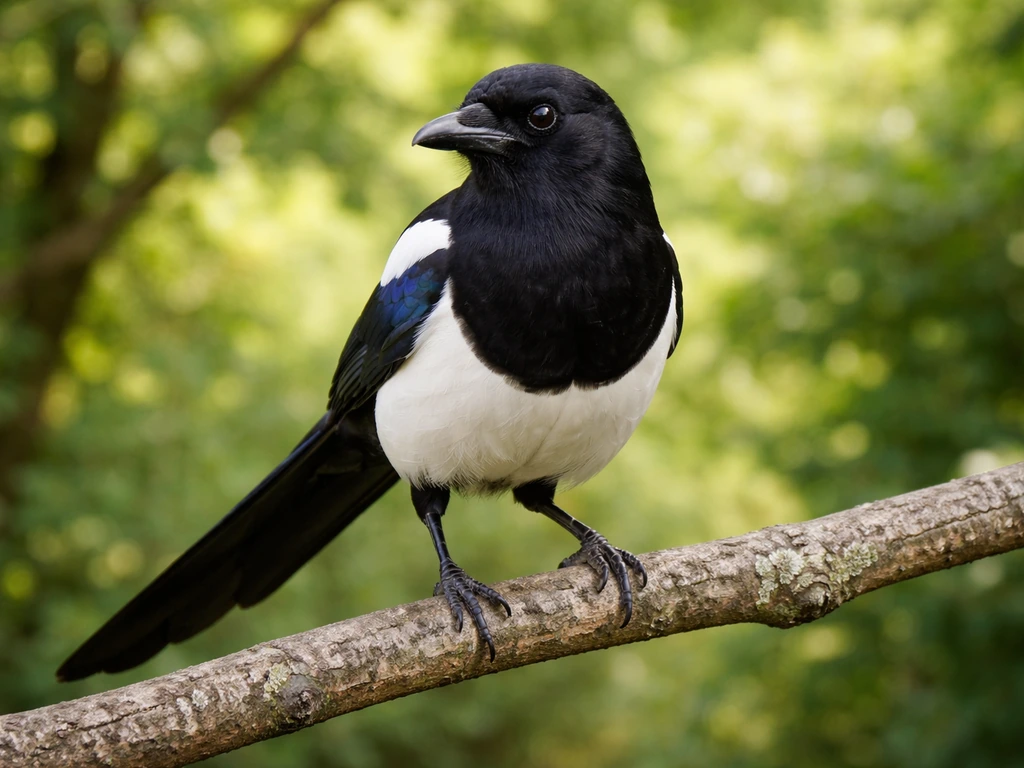
That said, the word is clearly constructed from 'pie' plus 'cost' (or 'coster,' as in 'piecoster'), and 'pie' has genuine bird roots worth knowing. In older British English, 'pie' was a standard shorthand for the magpie, derived from the Latin 'pica.' The magpie's formal genus name is still Pica pica. So if someone in a historical text, a British dialect context, or a bird-symbolism thread writes about a 'pie bird,' they very likely mean a magpie. Because the phrase often points to the magpie, you may be looking for picherie bird meaning in a historical or symbolism context. The jump from 'pie bird' to 'piecost bird' could be a mishearing, a phonetic spelling, or an autocorrect chain that buried the original meaning.
How to figure out which meaning someone intended
Context is everything here. Ask yourself where you encountered the phrase, because that single question eliminates most of the ambiguity.
- Social media post or comment thread: Almost certainly slang or a joke. The 'piecost' joke format (set up like a riddle where the punchline is 'about three dollars fifty') circulates widely and has nothing to do with birds.
- Bird identification app, nature forum, or ornithology group: Likely a misspelling of a real bird. Think 'pied' (as in pied kingfisher, pied flycatcher), 'pie' (magpie), or possibly 'pipit' mistyped.
- British or Scottish dialect writing: 'Piecoster' or 'piecost' could be a regional nickname or a garbled form of a local bird name. The Urban Dictionary entry describing a 'curmudgeon from the broch' hints at a Scottish dialect origin for at least one sense of the word.
- Literary quote or poem: Look for the surrounding imagery. If the passage is about thieving, chatter, or black-and-white markings, a magpie reference is the best fit. If it references the sea or cliffs, something like a puffin or a plover might be the misread word.
- Bird symbolism list or meaning site: Probably a misspelling that slipped through, most likely of 'pie bird' (magpie) or a phonetically similar name like 'picherie' (another regional bird term readers sometimes search alongside this one).
The most likely bird identities behind the spelling
If you strip 'piecost' down phonetically and match it against real bird names, two candidates rise to the top.
The magpie (the 'pie' connection)
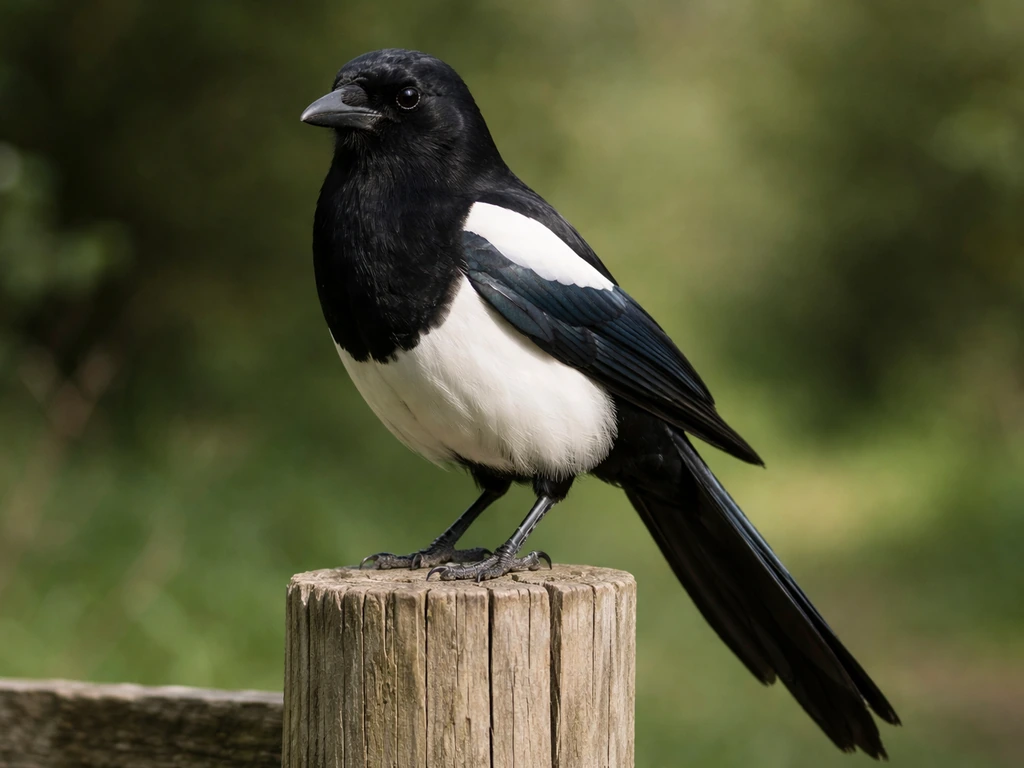
This is the strongest candidate. 'Pie' as a standalone word for magpie was common in English from at least the 13th century and persisted in British and Irish dialects well into the 20th. Phrases like 'pie bird,' 'pie chat,' or 'pie crow' all pointed to the magpie or magpie-like birds. If someone wrote 'piecost bird' in a context involving luck, omens, or chattering behavior, the magpie is almost certainly the intended reference, and 'cost' is likely a corrupted suffix or autocorrect artifact.
Pied varieties (pied kingfisher, pied flycatcher, and others)
'Pied' means having patches of two colors, usually black and white. It appears in the names of dozens of real birds: the pied kingfisher, pied avocet, pied flycatcher, and pied wagtail, among others. 'Piecost' could easily be a phonetic misread of 'pied coast bird,' a description of a coastal pied species rather than a formal name. If the context involves water, shorelines, or a bird described as black-and-white, one of these pied species is a strong candidate.
Symbolism and cultural meaning of the most likely match
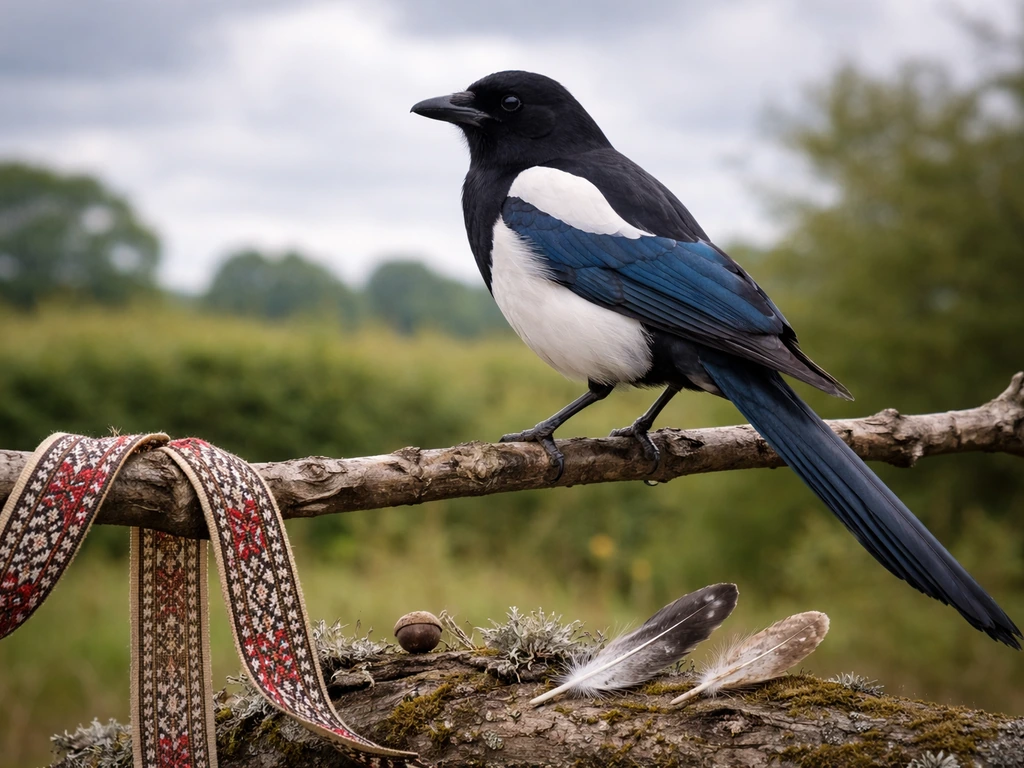
Because the magpie is the most probable underlying reference, its symbolism is the most useful to know here. The magpie carries dramatically different meanings depending on the culture, which is part of what makes it such a rich symbolic bird.
| Culture / Region | What the magpie symbolizes |
|---|---|
| British and Irish folk tradition | One magpie brings sorrow, two bring joy. The famous 'one for sorrow' rhyme frames the bird as an omen counter, tied to fortune-telling rituals. |
| Chinese culture | Joy, good luck, and marital happiness. The magpie is called 'xi que' (喜鹊), literally 'joy bird,' and appears on wedding decorations. |
| Norse mythology | Cunning and intelligence. Magpies were associated with Odin's ravens and the idea of a trickster messenger. |
| Native American traditions (varies by nation) | Often seen as a helper and guide, sometimes a trickster. In some Plains traditions, magpies signal when to follow bison herds. |
| Korean culture | A national symbol of good fortune and loyalty; the magpie is the national bird of Korea and appears in folk tales as a kind messenger. |
The pied species more broadly share a symbolic thread: their two-tone coloring has historically been read as duality, balance between light and dark, or the ability to move between worlds. In medieval European symbolism, a pied bird was sometimes associated with mediation or ambiguity, neither fully one thing nor another. Some people also use the term “plover bird meaning” when they are searching for the symbolism behind a plover.
How 'piecost bird' shows up in everyday language
In practice, you are going to see 'piecost bird' in three main situations, and each one carries a completely different intent. If you are wondering about the stuffed bird meaning behind the phrase, the context clues usually point to which usage applies piecost bird.
- As a slang joke punchline: Someone asks 'what's a piecost?' and the answer is a price (e.g., 'about three dollars fifty'). Tagging it as a 'bird' can be part of extending the joke or mislabeling it in a list. This is not a real bird reference.
- As a garbled bird idiom: Someone trying to reference a 'pie bird' or a magpie-based saying (like 'chattering like a pie') may have mistyped or misremembered the phrase. In this context, the underlying idiom is about gossip, noise, or mischief.
- As a metaphor for someone two-faced or unpredictable: Borrowing from the magpie's reputation as a thieving trickster, calling someone a 'pie bird' (or its garbled variant) can imply they are flashy on the outside but opportunistic underneath. This use tracks closely with how 'magpie' is used as a metaphor for a person who collects shiny things or talks too much.
On social media specifically, 'piecost' appears mostly in blank" rel="noopener noreferrer">joke threads and has little to do with bird symbolism. If you spotted it in a bird-meaning context online, there is a real chance the poster was themselves confused, working from a misspelling, or using a hyper-local dialect term that has not been widely documented. Puffins are seabirds, and their “meaning” in symbolism is often linked to curiosity, teamwork, and adaptability puffin bird meaning.
How to confirm the right meaning and fix your search
Here is the fastest way to resolve this for your specific case. Start by searching the exact phrase you found in quotes (like 'piecost bird meaning') and note whether results cluster around slang/joke sites or bird/nature sites. If they cluster around slang, you have your answer. If you see bird results, check whether those results are actually discussing 'pied' birds or magpies under a folk name. If you meant the puffed-up bird meaning, use the phrase in quotes and compare whether the results are about slang or about real bird names pied' birds.
- Try alternate spellings: 'pie bird meaning,' 'pied bird meaning,' 'pie crow,' and 'pie chat' will each pull up distinct, verified results if the original word was a bird term.
- Check the sentence structure: If 'piecost' is being used as an adjective (e.g., 'that was a real piecost move'), it is the cheap/poor-quality slang sense. If it is used as a noun with 'bird' attached, you are looking at a naming attempt.
- Use ornithology databases: eBird, the Merlin Bird ID app, and the IOC World Bird List are searchable by common name. If 'piecost' returns zero results there, it is not a recognized bird name in any taxonomy.
- Cross-reference dialect dictionaries: The Dictionary of the Scots Language and the English Dialect Dictionary both index old regional bird names. If 'piecost' or 'piecoster' appears there, you have a genuine dialect term.
- Compare with phonetically similar terms: If you heard the word rather than read it, consider that 'picherie,' 'pipit,' 'plover,' and 'pied' all share phonetic overlap with 'piecost' and are all real, documented bird names.
The bottom line: treat 'piecost bird' as a puzzle with a short solution path. The slang interpretation is the most documented online, but if your context points toward bird symbolism or an older text, the magpie (and its 'pie' shorthand) is the strongest historical match. Fix your spelling to 'pie bird' or 'pied bird' and the right sources will open up immediately. Plump bird meaning is often discussed separately from these spelling mix-ups, so confirming what kind of bird is intended can clarify the term you actually mean pied bird.
FAQ
How can I tell quickly whether “piecost bird” is slang or a real-bird reference?
Treat “piecost bird” as an identification problem first. If the page or post is using it as a punchline, insult, or cheapness label, it is almost certainly slang. If it appears alongside words like omen, luck, chatter, or a specific habitat (coast, shoreline, fields), switch to the bird-meaning track and test whether the writer likely meant “magpie,” “pie bird” (magpie), or a “pied” species with black-and-white markings.
What search terms should I try if “piecost bird” seems like a typo?
Autocorrect and transcription errors are common. Try searching variations in quotes, for example “pie bird,” “pie-coster,” “pied coast bird,” and “pied bird.” If those searches pull up the same original source or same screenshot context, you have your intended phrase even if “piecost” was introduced by a typo.
Which context clues point to magpie versus pied species?
If the context describes a gray, black, and white bird with strong chattering behavior, the magpie path is the best fit. If the context emphasizes two-tone black-and-white plumage plus a coastal or water-related setting, the “pied” bird path becomes more likely. When you see “coast,” “shore,” or “waterline,” treat “pied” as the higher-priority correction.
Why do magpie and pied-bird meanings seem inconsistent across articles or cultures?
In symbolism discussions, the same visual feature can drive different interpretations by culture. For example, a magpie’s meaning can be positive in some folk traditions and warning-like in others, so it helps to record the country, language, and time period of the source you are reading. If you can identify that, you can avoid importing the wrong symbolism into your interpretation.
I saw “piecost bird” used for a stuffed toy or figurine, how do I verify the actual species?
If you are using “piecost bird meaning” to describe a stuffed bird, bookmark the original listing text and look for inventory details like “species,” “piebald/pied,” “magpie,” or “black-and-white.” Sellers often tag misnamed items, so the product description usually reveals the real bird type even when the title contains the incorrect phrase.
What are the most common misreadings people make with “piecost bird meaning”?
A common mistake is treating “pied” as “pier” or assuming “cost” is part of a real species name. “Pied” is a color-pattern label used in many bird names, while “pie” can be historical shorthand for magpie. So, if your source talks about patterning (patches of two colors) rather than character or luck, focus on “pied” first.
What if my searches show only slang results and no bird/nature context?
If you cannot find bird-related results for “piecost,” do not force it. That pattern usually means the term is confined to jokes or slang for quality or insults. In that case, the best next step is to capture the exact sentence where you saw it and identify surrounding slang cues (tone, punctuation, who is being referenced).
How do I avoid mixing up the different meanings when I ask about “piecost bird meaning”?
To prevent mixing threads, decide which of the three buckets you mean: (1) slang/joke usage of “piecost,” (2) historical “pie” shorthand for “magpie,” or (3) “pied” species based on black-and-white coloration. Once you pick one bucket, you can then refine by habitat (coast vs inland) and by described behavior (chattering vs general pattern description).
Does the time period or region of the source change the most likely meaning?
If you are trying to match a “piecost” reference in an old text, pay attention to the writer’s locale and spelling conventions. Older British and Irish sources more often use “pie” as magpie shorthand, which supports the magpie interpretation. If the text is modern and informal, slang or transcription error is statistically more likely.
Next Article
Pelagic Bird Meaning: Definition, Examples, and Symbolism
Learn pelagic bird meaning, which birds live at sea, examples by region, and symbolism of at-sea imagery.