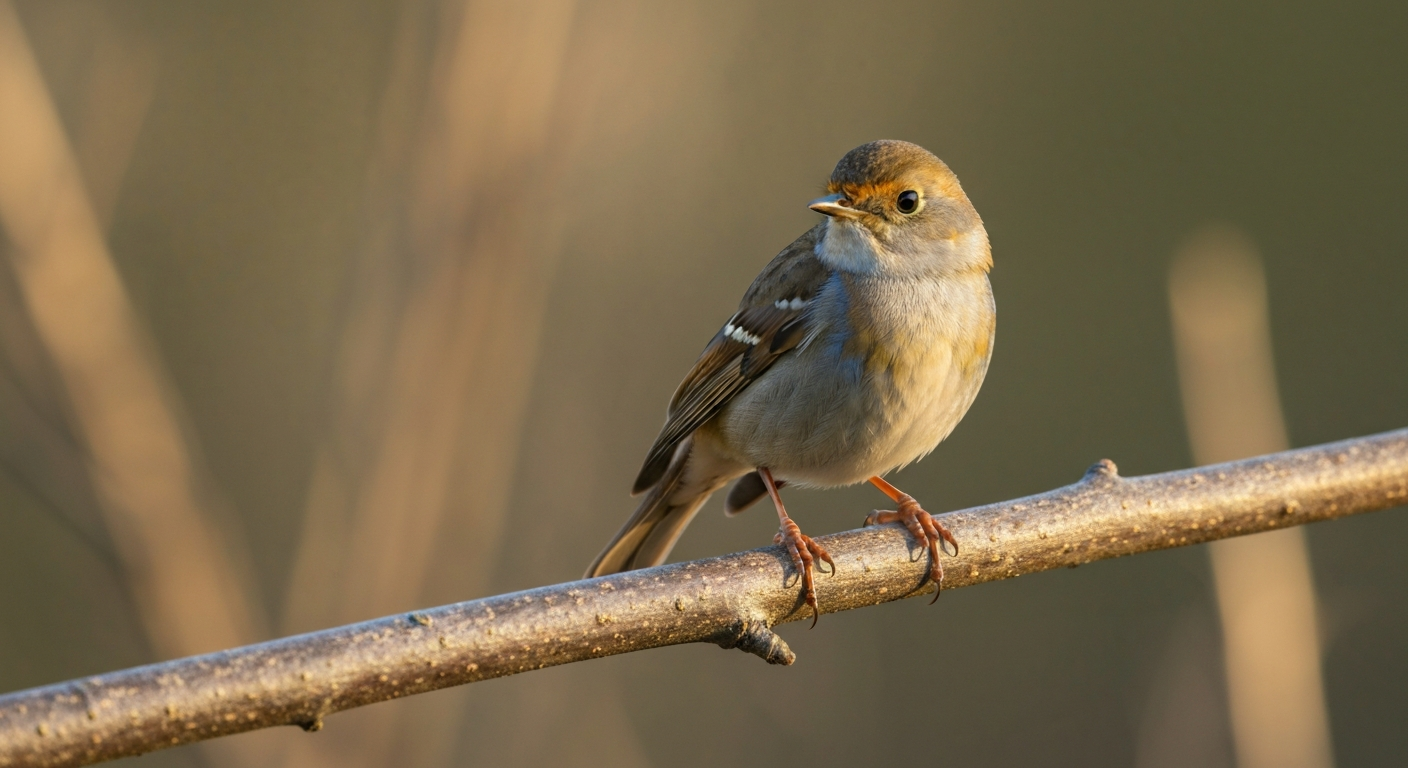
A puffed up bird is one that has fluffed out its feathers to look larger than it actually is, and depending on the context, that behavior means something very different. Literally, it's usually about temperature: birds trap warm air between their feathers to stay insulated on cold days. Figuratively, a 'puffed up' person is arrogant, self-important, or performing a kind of bluster that's more about appearance than substance. Knowing which meaning applies, and reading the signals correctly, is what this article is for.
Puffed Up Bird Meaning: Fluffed Feathers, Metaphors, What to Do

Marcus Whitley
1 Jun 2026
What 'puffed up' actually looks like on a bird
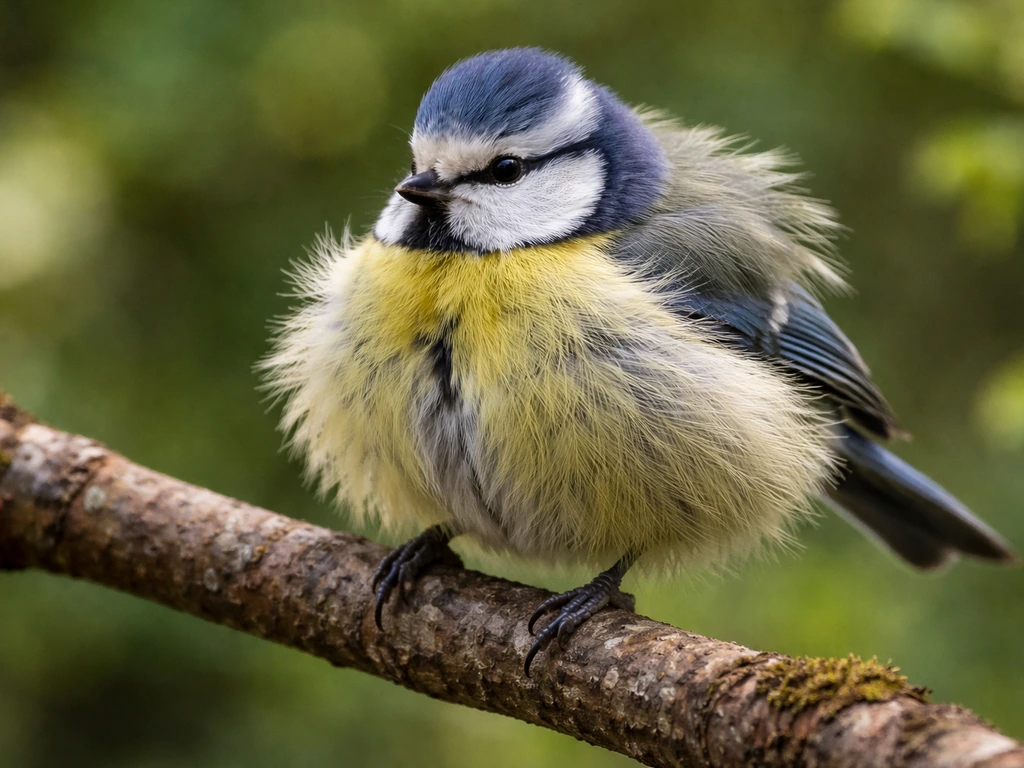
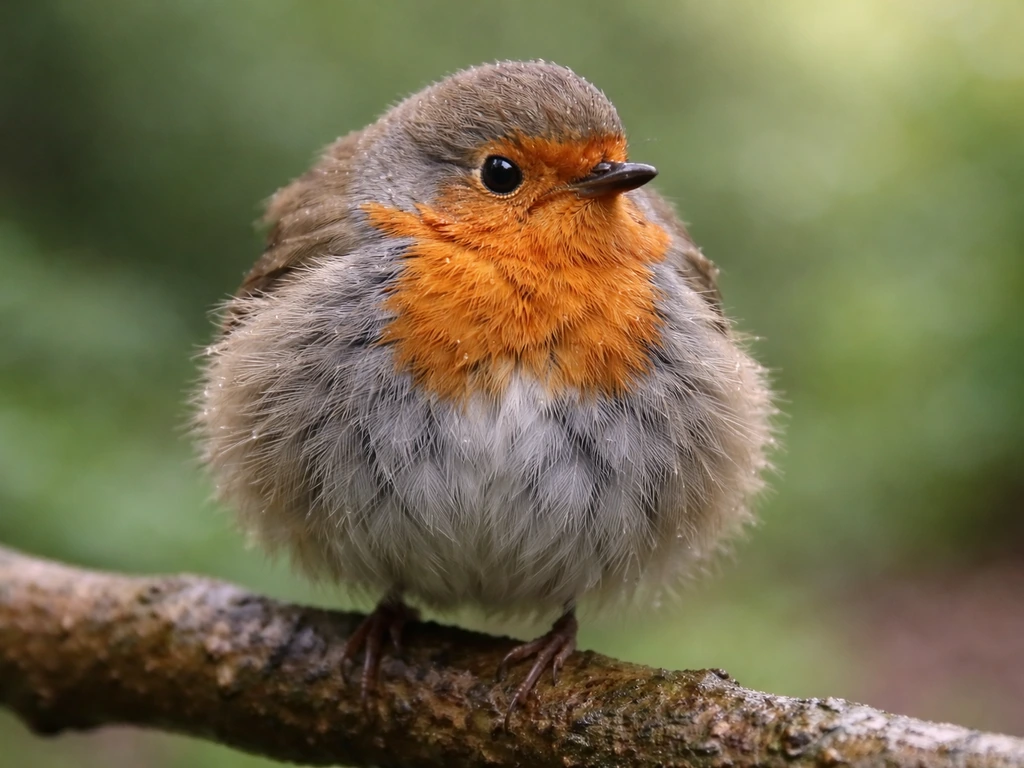
When a bird puffs up, it raises and loosens its feathers away from the body, creating a rounder, fluffier silhouette. The feathers aren't damaged or misaligned; they're being actively controlled by small muscles at each feather base. The result is a bird that looks noticeably bigger and rounder than usual, almost like a little sphere with a beak. This is the same mechanism behind the classic 'ball of fluff' look you see in sparrows huddled on a winter branch or a parrot sitting quietly on its perch.
The technical term you'll see in ornithology is 'fluffing' or 'ruffling,' and both describe the same visual. 'Puffed up' is the everyday phrase most people use, and it captures the appearance well. The key thing to understand is that the feathers themselves are doing structural work, not just sitting there decoratively. Each raised feather creates a tiny air pocket, and hundreds of those pockets together form a layer of insulation that functions a lot like a down jacket.
Why birds puff up: the real reasons behind the posture
There's more than one reason a bird holds this posture, and conflating them is the most common mistake people make. Here are the main ones.
Staying warm
This is the most common reason by far. In cold weather, birds fluff their feathers to trap warm air close to the body and boost insulation. Audubon describes it as creating hundreds of tiny air pockets between the feathers, turning the bird's own plumage into a thermal layer. A chilly morning, a drafty room for a pet bird, or a sudden weather drop can all trigger this. If the bird is otherwise active, alert, and eating normally, a puffed appearance in cool conditions is almost always just thermoregulation.
Confidence and display
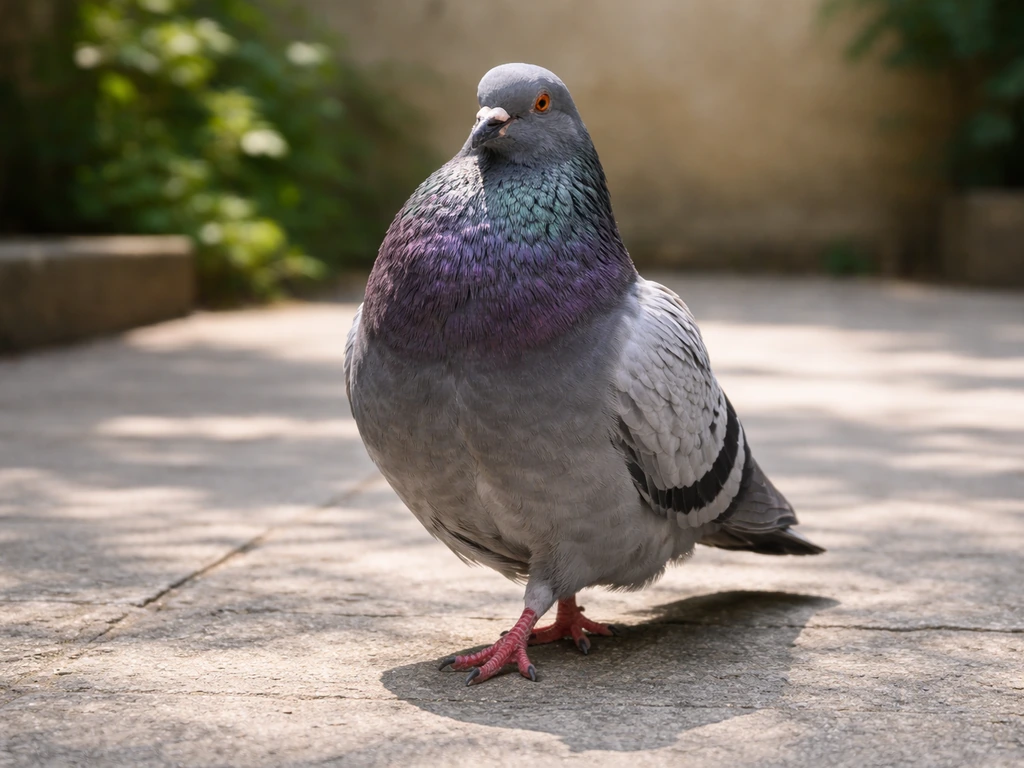
Birds also puff up during social interactions to appear larger and more dominant. Pigeons do this in courtship displays, puffing out their chest and strutting around a potential mate. Roosters flare their neck feathers before a confrontation. In these situations, the puffing is a deliberate posture signal: 'I'm bigger than you think.' It's not fear, it's projection of confidence or competitive status. This is exactly the behavior that fed the human idiom of 'puffing oneself up.'
Aggression and intimidation
Owls are a great example here. When threatened or trying to intimidate a rival, many owl species spread their wings and fluff their body feathers simultaneously to look as large and imposing as possible. Parrots do the same thing when they're defensive or angry. The body language is a warning: back off. This posture is often paired with other signals like a lowered head, locked eye contact, or a raised crest.
Fear and self-protection
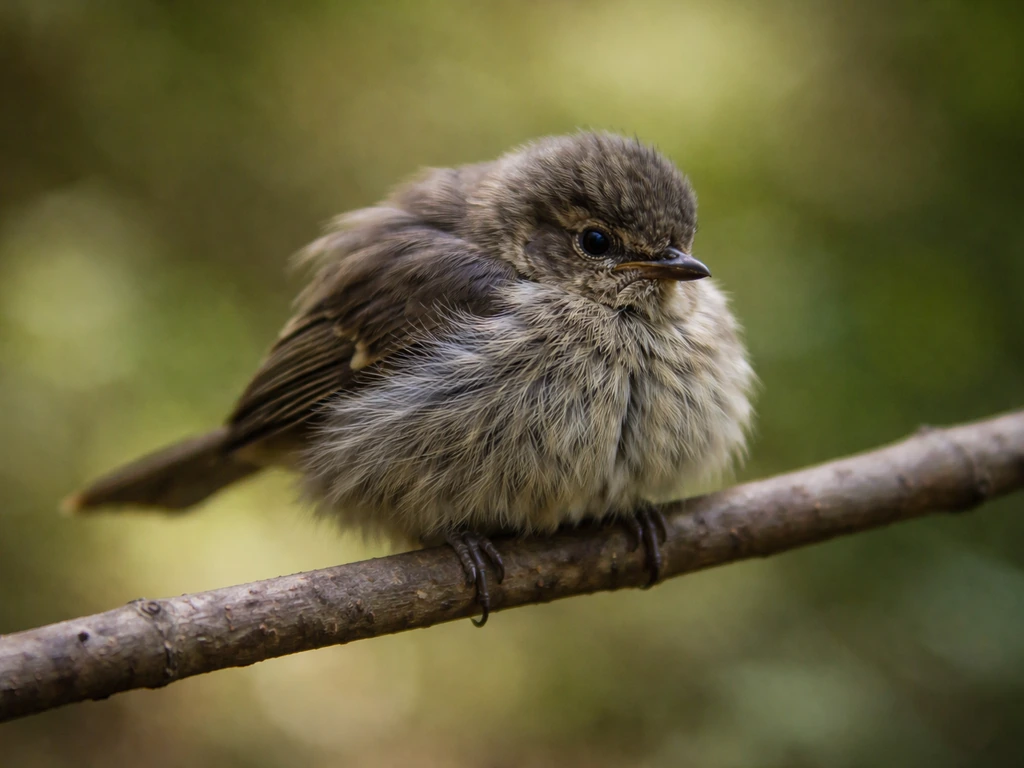
Sometimes puffing up is a fear response. A bird that feels cornered or overwhelmed may fluff its feathers as a reflexive attempt to make itself seem less vulnerable, even when it's actually frightened. You'll often see this in wild birds that have been handled or are in an unfamiliar environment. The posture can look similar to the confidence display, but the accompanying signals (avoiding eye contact, trying to escape, crouching low) give the fear away.
Illness and energy conservation
A sick or injured bird will also fluff its feathers, for a different reason: conserving energy. When a bird is unwell, maintaining normal body temperature takes more effort, so it puffs up to hold heat without burning extra calories on active movement. According to the Merck Veterinary Manual and LafeberVet, 'fluffed and ruffled feathers' appear consistently on illness checklists for pet birds. The posture alone doesn't confirm illness, but combined with other signs, it's a meaningful flag.
Normal behavior vs. a bird that needs help
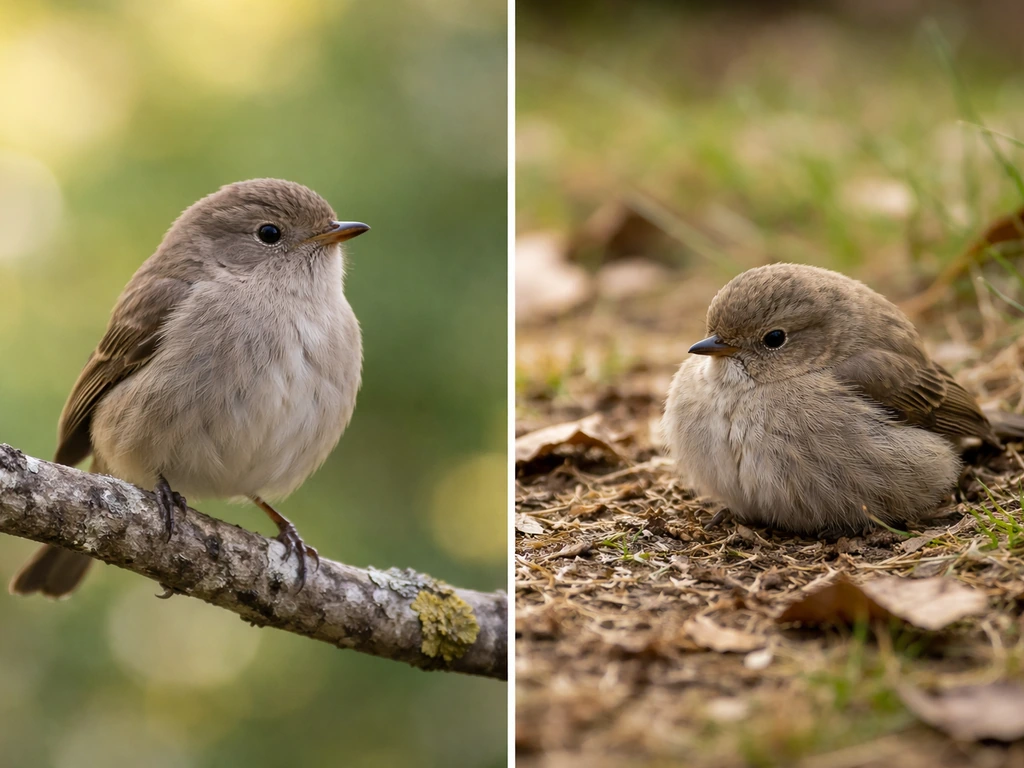
This is where it gets practical. A puffed-up bird is not automatically a sick bird, but knowing what to look for alongside the puffing can tell you a lot. In case you're also wondering about a piecost bird meaning, the same idea of reading the signal in context applies. The RSPCA explicitly warns against assuming a bird is sick just because its blank" rel="noopener noreferrer">feathers look fluffed, since cold weather alone explains it in most wild bird sightings. That said, here's how to read the full picture.
| Signal | Probably Normal | Possibly Unwell |
|---|---|---|
| Feather posture | Puffed in cold or during display, smooths out in warmth | Persistently puffed regardless of temperature |
| Activity level | Alert, moving, foraging, or engaging | Lethargic, eyes closing, staying in one spot |
| Breathing | Quiet and even | Open-mouth breathing, tail bobbing, wheezing |
| Eyes | Bright and responsive | Partially closed, dull, or squinting |
| Eating/drinking | Normal appetite and intake | Refusing food or water |
| Surroundings | Cold day, social interaction, display context | Warm conditions with no obvious trigger |
LafeberVet's avian illness checklist specifically calls out open-mouthed breathing, a 'flicking' respiratory pattern, and increased sleep as warning signs that go beyond feather posture. If you're watching a pet bird, tail bobbing while breathing is a particularly reliable sign that something is wrong. For a wild bird, the clearest red flag is one that lets you walk up close to it without flying away, since healthy wild birds don't do that.
The idiom: what 'puffed up' means about a person
The figurative meaning of 'puffed up' maps almost perfectly onto the bird behavior. In everyday English, calling someone puffed up means they're behaving in an arrogant, self-important, or pompous way, often without the substance to back it up. Cambridge, Merriam-Webster, Dictionary.com, and Collins all align on this: to be 'puffed up' is to inflate your own importance, to act bigger than you are.
The phrase carries a slight note of skepticism or mockery. When you call someone puffed up, you're not just saying they're confident, you're saying their confidence is performance. It's the linguistic equivalent of calling their bluff. The bird behavior is the perfect metaphor: the animal appears larger, but nothing about its actual size has changed. A puffed-up rooster is still the same rooster underneath all those feathers.
Merriam-Webster lists 'puff (up) with pride' as a specific idiom, which adds a slightly different shade: here, the puffing is about swelling with emotion, not necessarily empty bluster. You might say someone 'puffed up with pride' when their child won an award, which is warmer and more sympathetic. So the phrase sits on a spectrum: at one end it's genuine pride, at the other it's hollow self-importance, and context decides where any particular use lands.
Where the metaphor shows up in language and culture
The image of a bird puffing itself up has shown up across folklore, literature, and everyday speech for a long time, and it almost always carries the same core message: something or someone is performing size or status rather than possessing it. Aesop's fables used animal posturing as moral shorthand regularly, and the puffed-up bird archetype (the bird who overestimates itself) runs through that tradition. The strutting peacock, the inflated rooster, the pompous pigeon: these are all variations on the same symbolic idea.
In contemporary speech, you'll hear 'puffed up' applied to politicians, executives, social media personalities, and anyone else whose self-presentation seems to outrun their actual achievements. It's a vivid, efficient insult precisely because the bird image is so recognizable. Everyone has seen a bird do it; everyone knows what it looks like when the display is all feathers and no substance.
It's worth noting the connection to some related terms that operate in the same conceptual space. A 'stuffed bird' in symbolic terms can suggest something that was once alive but is now hollow and preserved for show, a parallel idea of form without function. If you're wondering about a stuffed bird, the stuffed bird meaning is similar but focuses on symbolism rather than the live behavior of puffing. Similarly, 'plump bird' carries associations of comfort and abundance rather than intimidation, which shows how closely the specific adjective matters when reading these bird-related phrases. If you’re comparing similar phrases, the plump bird meaning is usually about comfort and abundance, not intimidation.
Common misconceptions about puffed-up birds
The biggest mistake people make is assuming any puffed-up bird is sick. On a cold morning, this leads to unnecessary alarm about completely healthy wild birds doing exactly what evolution designed them to do. The RSPCA's guidance is sensible here: puffing in cold weather is normal, and you should look for other signs before drawing conclusions.
The second common error goes the other direction: assuming a puffed-up bird is just cold when it's actually unwell. If a bird is puffed up inside a warm house, sitting on the bottom of its cage, and not eating, cold weather isn't the explanation. The thermoregulation reading only makes sense when the context supports it.
A third misconception involves the figurative meaning: people sometimes use 'puffed up' when they mean straightforwardly 'proud' or 'excited,' without intending the critical edge the phrase usually carries. In most conversational contexts, 'puffed up' implies excess or hollowness. If you want to describe genuine, earned confidence, 'proud' or 'confident' usually serves better and avoids accidentally insulting the person you're describing.
What to do if you see a puffed-up bird today
If you spot a puffed-up wild bird, run through this quick checklist before doing anything else.
- Check the temperature and context first. Is it a cold morning? Is the bird in a flock and otherwise active? If yes, you're almost certainly looking at normal thermoregulation. Watch for a few minutes and see if it flies off or resumes normal behavior.
- Look for additional distress signals: open-mouth breathing, tail bobbing, inability to fly, letting you approach closely, or sitting on the ground in an exposed area. Any of these alongside puffed feathers changes the situation.
- If the bird looks injured or genuinely unwell, do not try to handle it extensively or offer food and water. Place it gently in a dark, quiet container (a shoebox lined with a cloth or paper towel works well) and keep it in a warm, calm spot indoors.
- Contact a wildlife rehabilitator or your local wildlife rescue center as soon as possible. The Cornell Lab of Ornithology's All About Birds resource recommends contacting a licensed rehabilitator or local veterinarian. The American Bird Conservancy notes that even birds that appear to fly away may still have an injury that needs treatment.
- For pet birds, a persistently puffed appearance in a warm environment is reason to call an avian vet, especially if accompanied by any of the breathing or appetite changes described above.
The Golden Gate Bird Alliance puts it plainly: put the bird somewhere dark, warm, and quiet, don't try to feed or water it, and then call a professional. Put the bird somewhere dark, warm, and quiet, do not attempt to feed or water it, and then call a wildlife rescue or rehabilitator for instructions dark, warm, and quiet, don't try to feed or water it, and then call a professional. That's the right sequence. Well-meaning attempts to nurse an injured bird at home without guidance often do more harm than good.
How 'puffed up bird' actually gets used in conversation
Here are some real-world scenarios to show how the phrase works in practice, both in its literal and figurative senses. In case you are also wondering about seabirds, the pelagic bird meaning helps clarify what “pelagic” refers to. The picherie bird meaning is another way people talk about how bird imagery can signal confidence or bluffing.
- Literal, normal behavior: 'Look at that little sparrow, all puffed up on the fence post. Must be freezing out there.' This is sympathetic observation, no alarm intended.
- Literal, possible concern: 'My cockatiel has been puffed up all morning and she hasn't touched her food. I'm going to call the vet.' Here the context (warm room, no appetite) signals something worth checking out.
- Figurative, critical: 'He walked into the meeting all puffed up like he'd already closed the deal, but he hadn't even made the call yet.' Classic use: the puffing is performance ahead of substance.
- Figurative, affectionate: 'She was puffed up with pride watching her son get his diploma.' Here the phrase leans positive, describing an overflow of genuine emotion rather than empty bluster.
- Symbolic or literary: A novelist might write that a minor antagonist 'puffed himself up like a ruffled cockerel' before delivering an ultimatum, using the bird image to undercut the character's self-seriousness.
- Cultural or idiomatic: In describing a political figure's overconfident speech, a commentator might say, 'The whole performance was a puffed-up bird act, all feathers and no flight.'
What these examples share is the underlying image: something making itself look larger than it is, whether that's a bird managing its body temperature, an animal signaling dominance, or a person inflating their own importance. If you are specifically curious about the puffin bird meaning, the same ideas apply: the posture can be about temperature, display, or signaling in social moments. The phrase travels well between the literal and figurative precisely because the bird behavior is so universally recognizable.
You may also see the term plover bird meaning in bird-related discussions, but it refers to different symbolism and naming than the general puffed-up behavior. You can also apply the same idea of meaning shifting by context when interpreting a pip bird meaning phrase literal and figurative. Once you've seen a sparrow ball itself up against the cold, or watched a pigeon puff out its chest in a park, the metaphor makes instant sense.
FAQ
How can I tell whether a puffed-up bird is just cold versus showing fear or aggression?
Check for behavioral companions. Cold thermoregulation usually pairs with normal alertness and ongoing feeding, while fear often includes crouching low, attempting to escape, and less direct attention toward you. Aggression or intimidation is more likely to include a stiff posture, raised crest or neck, and sustained “look” at the other bird or you.
If a pet bird puffs up while sitting at the bottom of its cage, what should I assume first?
Do not assume it is simply cold. Bottom-of-cage posture plus reduced activity and not eating suggests something beyond temperature, even if the feathers are fluffed. Focus on other signs like breathing effort, tail bobbing during respiration, and changes in droppings, then contact an avian vet.
Do birds fluff their feathers when they are relaxing or sleeping?
Yes, but the “sleeping” look is usually brief and relaxed, and the bird still settles normally when you leave it alone. A persistent, puffed-up silhouette with lethargy, reluctance to move, or breathing changes is more concerning than a momentary resting pose.
Can puffing up be a sign of mating or courtship rather than a problem?
Yes, especially in species that perform chest or neck displays. Look for additional courtship behaviors such as strutting, vocalizing, or directed behavior toward a specific mate or mirror. If the puffing happens alongside active display and normal eating, it is less likely to be illness.
Why do some birds look “rounder” than others when they puff up?
Different species and feather structures change the silhouette. Some birds have thicker down coverage or more prominent facial or neck feathering, so their “ball” effect is more dramatic. That means you should compare the bird to its own usual look, not to another species.
What is the safest way to respond if I find a puffed-up wild bird on the ground?
First, increase distance and avoid handling. Keep pets and people back, provide a calm, quiet space nearby if possible, and then contact a wildlife rehabilitator. The article’s “place it somewhere dark and warm, then call” approach is specifically about reducing stress before professional care.
Should I try to warm a wild bird by giving it water or food?
Usually not. Feeding or watering can increase risk, especially if the bird is injured or overheated, and some species have specialized diets. Warming and quieting it is safer as an interim step, then get expert guidance from wildlife professionals.
If I see puffing during the day in mild weather, does that rule out temperature as the cause?
Not completely. Birds can puff due to drafts, sudden weather drops, or being chilled by indoor airflow. However, puffing in warm, stable conditions is more likely to be defensive, social, fear-related, or illness-related, so you should look for additional cues.
What are common mistakes people make when interpreting puffed-up bird body language?
Two big ones are assuming all puffing means sickness, and assuming all puffing means cold. The more reliable method is context triage, compare normal behavior like eating and alertness, then look for specific respiratory signs before concluding anything.
If I want to use “puffed up bird meaning” as a metaphor, how do I avoid insulting when I mean “proud”?
Be precise with emotion words. “Puffed up” commonly implies performative or exaggerated self-importance, while “proud” or “confident” usually signals earned, appropriate feeling. If the tone might be misread as mockery, choose “proud” instead.
Next Article
Perched Bird Meaning, Literal, Symbolic, Usage, Examples
Perched bird meaning: clear literal and symbolic definitions, usage differences, examples, and quick reference.